

💨 Drift happens

When it comes to retirement savings, drift happens. More than 1 in 3 Americans (34%) say they may have lost track of funds from a former employer, according to new Empower research. The drift can start early: 50% of Gen Zers and 45% of Millennials say old accounts like 401(k)s may have slipped off their radar.
Job hopping could be making it harder to keep track. More than half of Americans (53%) have changed employers at least three times, and nearly 2 in 5 (39%) have retirement savings spread across different employers.
Out of sight doesn’t mean gone. Former employers, old account statements, and federal and state databases can all help locate left-behind accounts. Once found, you can explore your account options — including rolling funds into an IRA or a new employer’s plan. Learn more about how to fix retirement drift.
— The Editors

⛆ Ripple effect: Inflation accelerated to 3.7% in September as higher energy costs put more pressure on household budgets. Gas prices jumped 9.1% for the month — up 34.2% annually — while grocery prices saw some relief, dipping 0.1% for the month. Looking ahead, Social Security benefits will get a 3.6% cost-of-living adjustment (COLA) in 2027 to help offset rising costs.
📋 Auto-start: Trump Accounts have shifted to automatic enrollment at the Treasury Department, with more than 60 million eligible children receiving accounts. Parents and guardians must take action to claim and activate the accounts — and separately elect to get the $1,000 federal seed money for eligible children born from 2025 through 2028.
🛟Savings lifeline: An emergency fund can help keep your finances on steady ground when unplanned expenses hit. While 68% of Americans have emergency savings, 46% say they have less set aside than the year before. Whether you’re getting started with $500 or funding three to six months of essential expenses, see how to build an emergency fund that fits your budget.
⏩ Fast track: The 2027-28 Free Application for Federal Student Aid (FAFSA) can take as little as 15 minutes to complete, thanks to clearer questions, text invites for parents, and quicker verifications. Families spent an average of $34,019 on college last academic year, with scholarships and grants covering 27%. Don’t forget state or college deadlines* for FAFSA since aid can be limited and first-come, first-served.

Open to change
Open enrollment season is more than a chance to revisit your health plan — it’s an opportunity to review your broader financial well-being.
Small adjustments can make a big difference over time: If your plan offers a health savings account (HSA), you may be able to tap into a potential triple advantage. HSA contribution limits increase to $4,500 for individuals and $9,000 for families in 2027. Unused funds can be invested since there is no “use it or lose it” rule.
Rather than letting last year’s choices drift over, check that new elections still align with your needs, budget, and goals. You can also look for new plan perks and ways to help optimize retirement savings. Bumping contributions to a 401(k) or other workplace plan by just 1% can potentially add up over time through the power of compounding.

Don’t take the bait
Scammers are finding new ways to target people’s money, including lifetime savings. Americans reported losing $3.5 billion to imposter scams in 2025, while six-figure losses among adults 60 and older jumped nearly sevenfold between 2020 and 2024.
The tactics vary. Some criminals pose as banks or government officials, claiming accounts are compromised, while others build trust through online romances. Phishing emails and texts can also trick people into revealing sensitive financial information.
Three simple steps can help protect your savings: pause, verify, and protect. Learn how to spot the warning signs of suspicious requests on The Currency™.

Sink or swim
Getting into vacation mode may come with a high price tag. Airline fares are up 22.4% year over year, according to the latest Consumer Price Index. Still, the pull to get away remains strong: Three in four travelers (76%)* say having a trip on the calendar gives them something to work toward.
A little planning can help your budget stay afloat. Setting aside money gradually in a sinking fund can make travel expenses easier to manage when it’s time to book — without sending your finances off course. Unpack how sinking funds work on The Currency and learn which expense categories may be worth saving for.

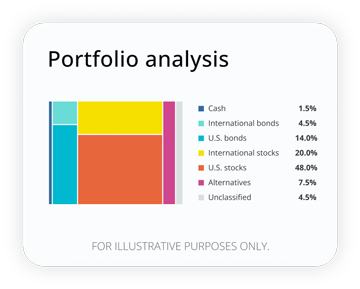
How well are your investments performing?
Analyze your portfolio in minutes and receive a target allocation for your goals.
*Third-party data is obtained from sources believed to be reliable; however, Empower cannot guarantee the accuracy, timeliness, completeness, or fitness of this data for any particular purpose. Third-party links are provided solely as a convenience and do not imply an affiliation, endorsement, responsibility, or approval by Empower of the contents on such third-party websites.
RO6029425-1026 WF7223100-1026
 Get The Currency newsletter



The Currency editors
Staff contributors
The CurrencyTM writers and editors cover the latest financial news and insights shaping how we live, work, and play. The team provides accurate, data-driven, and timely content aimed at empowering financial freedom for all.
The content contained in this blog post is intended for general informational purposes only and is not meant to constitute legal, tax, accounting or investment advice. You should consult a qualified legal or tax professional regarding your specific situation. No part of this blog, nor the links contained therein is a solicitation or offer to sell securities. Compensation for freelance contributions not to exceed $1,250. Third-party data is obtained from sources believed to be reliable; however, Empower cannot guarantee the accuracy, timeliness, completeness or fitness of this data for any particular purpose. Third-party links are provided solely as a convenience and do not imply an affiliation, endorsement or approval by Empower of the contents on such third-party websites. This article is based on current events, research, and developments at the time of publication, which may change over time.
Certain sections of this blog may contain forward-looking statements that are based on our reasonable expectations, estimates, projections and assumptions. Past performance is not a guarantee of future return, nor is it indicative of future performance. Investing involves risk. The value of your investment will fluctuate and you may lose money.
Certified Financial Planner Board of Standards Inc. (CFP Board) owns the certification marks CFP®, CERTIFIED FINANCIAL PLANNER™, CFP® (with plaque design), and CFP® (with flame design) in the U.S., which it authorizes use of by individuals who successfully complete CFP Board's initial and ongoing certification requirements.