

What is a meme stock? Everything investors need to know
What is a meme stock? Everything investors need to know
Stocks get social buy-in as retail investors look for untapped potential.
What is a meme stock? Everything investors need to know
Stocks get social buy-in as retail investors look for untapped potential.

07.31.2025
Key takeaways
Meme stocks arise from social media discussions and a desire to identify missed opportunities.
Retail traders drive more than 20% of total stock volume.
Investors should consider how any meme stock profits can be impacted by taxes.
2025’s revival of meme stocks can connect to Americans’ beliefs around what drives financial success.
More than a quarter of people (27%) think investing in stocks can help increase success, according to Empower research. Strength in numbers has been playing out in real time: Amid tariff talk and rate-cut chatter, the U.S. stock market has been setting fresh highs — on Friday, July 25, the S&P 500 Index posted its 14th record close of the year at 6,388.64.1
It’s not just big institutions making trades and seeing returns: Retail traders are essential players in the U.S. stock market, making up 20.5% of total volume.2
As Big Tech names announce earnings, other companies that are typically out of the spotlight have seen their stock swing on seemingly no news — it’s a revival of meme stocks.
Meme stocks resurface in 2025
In late July, a tiny healthcare company, Healthcare Triangle, saw its stock price more than double (to just over 5 cents) after more than 3 billion shares were traded in one day. That amount of one company’s stock changing hands had been unheard of — equivalent to around 15% of the total shares traded on U.S. exchanges for the day.3
The flurry of transactions follows a Monday earlier in July, in which small investors swarmed into an array of companies — an assortment that hadn’t garnered much recent Wall Street attention: Krispy Kreme (DNUT) in food, Kohl’s (KSS) in big-box retail, and Rocket Mortgage (RKT) and Opendoor (OPEN) in the real estate tech space. By that Wednesday, shares ultimately pulled back after hours of immense trading producing big valuation swings.4
The meme stock trend taps into consumers’ instinct to keep up with what’s popular or trending (“meme” means an idea or style that spreads through imitation, often through social media).5
Stocks in general have been getting attention across young investors. According to Empower Personal DashboardTM data, U.S. stocks account for around 40% of younger Americans’ assets as of July. People in their 20s hold a median of nearly $115,000 in U.S. stocks, while those in their 30s have just over $198,000, and people in their 40s top $321,000.
Read more: What is the average asset allocation by age?
On the whole, meme stocks can be a leap of faith for investors: Two in five Americans think uncertainty across markets and the economy can be prime time for money moves, believing that “the bigger the risk, the bigger the reward.” Younger Americans agree with the sentiment even more, with 51% of Gen Z and 49% of Millennials locked in, according to Empower research.
How did meme stocks start?
Meme stocks entered the scene in January 2021, when Gamestop (GME) and AMC Entertainment (AMC) made headlines after discussions on social media sparked a surge in trading.6 The GME stock price rose 51% on Jan. 22 that year, with a daily trading volume of around 789 million.7
With goals of boosting prices by identifying opportunities outside of the typical Wall Street analyst scope (i.e, heavily shorted, low price), individual investors converged into a basket of stocks they believed were at a discount, including the former public company Bed Bath and Beyond.8
Financial FOMO — fear of missing out — is real and can be especially strong when it comes to meme stocks. Traders boast of their transactions on online forums, and readers can be inspired by the success stories. The thrill can translate to tangible action for younger Americans, according to Empower research: Over four in five Gen Zers (86%) and Millennials (82%) say seeing financial milestones shared online motivates them to improve their own financial situations.
Considerations for investing in meme stocks
With news and trading cycles that tend to be measured in days or weeks, meme stocks can bring even more complexity beyond the transactions — in the form of short-term capital gains taxes. These apply to people who own a stock for a year or less before selling it for a profit, and the amount is taxed the same as ordinary income. In contrast, long-term capital gains are those realized after owning a stock for more than a year and have a lower scale of tax rates.
Read more: Ways to avoid or minimize capital gains tax
Buying any stock doesn’t guarantee profitable performance. Meme stock prices and volumes can be especially volatile, with regulators even pausing trading for those seeing extreme swings. During this month’s Kohl’s rally, a market halt to limit volatility — called a limit up-limit down pause — was triggered after the stock shot up 105%.9
For meme-stock investors who have faced a loss of capital, one way to try and strike a balance is with tax-loss harvesting — by selling another stock that saw capital gains around the same time. With this strategy, the two outcomes can cancel each other out at tax time and could benefit active stock traders.
All stocks call for due diligence
Half of Americans (51%) think luck and circumstance play a role in whether they’re successful, according to Empower research. However, having a solid financial plan and putting time into learning about investments can pay off for the long term — whether it’s figuring out how to start investing or navigating market volatility.
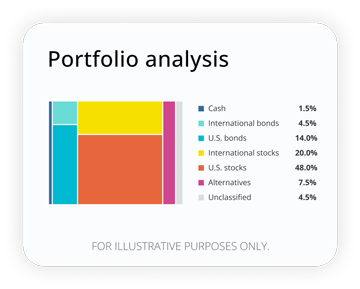
How well are your investments performing?
Analyze your portfolio in minutes and receive a target allocation for your goals.
1 CNBC, “S&P 500 posts fifth straight record close this week, powered by solid earnings: Live updates,” July 2025.
2 Bloomberg, “Meme Stock Fever Is Spreading Like It’s 2021 With Kohl’s Soaring,” July 2025.
3 Bloomberg, “Five-Cent Meme Stock Makes Up 15% of Trading on US Exchanges,” July 2025.
4 The New York Times, “The Stock Market’s Most Unserious Season Is Back and Dorkier Than Before,” July 2025.
5 Merriam-Webster, “Dictionary: Meme,” accessed July 2025.
6 Bloomberg, “Return of Meme Stock Mania Has Traders on Alert for Market Froth,” July 2025.
7 CNN, “Why this meme stock frenzy is different from 2021,” June 2024.
8 Bloomberg, “Meme Stock Fever Is Spreading Like It’s 2021 With Kohl’s Soaring,” July 2025.
9 Barron’s, “Kohl’s Stock Surges. It’s the Newest Meme Play.” July 2025.
RO4710262-0725
 Get The Currency newsletter



The Currency editors
Staff contributors
The CurrencyTM writers and editors cover the latest financial news and insights shaping how we live, work, and play. The team provides accurate, data-driven, and timely content aimed at empowering financial freedom for all.
The content contained in this blog post is intended for general informational purposes only and is not meant to constitute legal, tax, accounting or investment advice. You should consult a qualified legal or tax professional regarding your specific situation. No part of this blog, nor the links contained therein is a solicitation or offer to sell securities. Compensation for freelance contributions not to exceed $1,250. Third-party data is obtained from sources believed to be reliable; however, Empower cannot guarantee the accuracy, timeliness, completeness or fitness of this data for any particular purpose. Third-party links are provided solely as a convenience and do not imply an affiliation, endorsement or approval by Empower of the contents on such third-party websites. This article is based on current events, research, and developments at the time of publication, which may change over time.
Certain sections of this blog may contain forward-looking statements that are based on our reasonable expectations, estimates, projections and assumptions. Past performance is not a guarantee of future return, nor is it indicative of future performance. Investing involves risk. The value of your investment will fluctuate and you may lose money.
Certified Financial Planner Board of Standards Inc. (CFP Board) owns the certification marks CFP®, CERTIFIED FINANCIAL PLANNER™, CFP® (with plaque design), and CFP® (with flame design) in the U.S., which it authorizes use of by individuals who successfully complete CFP Board's initial and ongoing certification requirements.