

What does an HSA cover?
What can I use my HSA for?
A guide to the out-of-pocket expenses your health savings account can cover
What can I use my HSA for?
A guide to the out-of-pocket expenses your health savings account can cover

02.04.2026
Key takeaways
- HSA funds cover many things, from medical treatments and prescribed medications to dental care and some insurance premiums.
- HSAs offer triple tax benefits: pre-tax contributions, tax-free growth potential, and tax-free withdrawals for eligible healthcare costs.
- HSA funds roll over year to year, making them potentially useful for long-term and retirement healthcare savings.
- Individuals can contribute $4,400 to HSAs ($8,750 for families) 2026
If you’re worried about healthcare expenses in retirement, you’re likely not alone. Some couples could need as much as $413,000 to cover medical costs in retirement. While you can’t necessarily control rising inflation or healthcare costs, you can take steps to help minimize the impact on your personal finances. For starters, if you have a high-deductible health plan, you can use a health savings account (HSA) to set aside money to save and invest to pay for some medical expenses tax-free in the future.*
What is an HSA?
An HSA is a type of savings account that allows individuals enrolled in a high-deductible healthcare plan to contribute pre-tax dollars to pay for qualified medical expenses.
How much can you contribute to an HSA?
In 2026, you can contribute up to $4,400 if you are covered by a high-deductible health plan just for yourself, or $8,750 if you have coverage for your family.1 Those aged 55 and over can contribute an additional $1,000 as a catch-up contribution.
What can I use my HSA for?
You can use HSA funds to pay for deductibles, copayments, coinsurance, and other qualified medical expenses.2 Generally, qualified expenses include doctor and dentist visits, as well as vision care and medical equipment. Your HSA may be used to cover the cost of care for you, your spouse, and any dependents. Withdrawals to pay for eligible medical expenses are tax free.
Read more: What are the benefits of a health savings account
HSA eligible products and services3
Medical treatments |
|
Medical imaging and tests |
|
Prescribed medicines |
|
Medical supplies |
|
Vision care |
|
Dental care |
|
Mental health care |
|
Special education expenses | Tutoring and schooling in:
|
Addiction treatment |
|
Certain health insurance premiums |
|
In addition to the qualified expenses in the table above, you can also use your HSA funds to cover health expenses that might not immediately spring to mind. Visit the Complete HSA Eligibility List to identify all the products and services deemed eligible for tax-free spending with your HSA.4
What an HSA doesn’t cover
Keep in mind not every kind of medical expense is reimbursable. Here are some common expenses that an HSA specifically does not cover:5
- Controlled substances, even if legalized in your state
- Funeral expenses
- General household help
- Teeth whitening
- Elective cosmetic procedures
Read more: What the big, beautiful bill could mean for wallets nationwide
Frequently asked questions about HSAs
How can I open an HSA?
You can open and contribute to a Health Savings Account (HSA) only if you are enrolled in a qualified high-deductible health plan (HDHP). For the 2026 plan year, the IRS defines an HDHP as a health plan with an annual deductible of at least $1,700 for self-only coverage or $3,400 for family coverage.6 Once you are enrolled in an HDHP, you can open an HSA. If you receive health insurance through your employer, they may offer an HSA as part of their benefits. If your employer does not offer an HSA, you can open one on your own with many banks, credit unions, or other financial institutions.
How much should I contribute to my HSA?
How much you should contribute to an HSA depends on a variety of factors and is different from person to person. If you’re financially able, you might want to consider contributing the maximum amount allowed by the IRS to make the most of the HSA’s tax advantages. Since you don’t lose unspent funds at the end of the calendar year, you can use your HSA savings to cover expenses now, in the near future, or during retirement. If maxing out your HSA isn’t financially viable for you right now, you can calculate what you anticipate spending on eligible healthcare expenses in the coming year and contribute enough each month to cover those expenses.
What is the difference between HSAs and FSAs?
HSAs and FSAs are savings accounts designed to help you put money aside for medical expenses. Contributions to both HSAs and FSAs are made with pre-tax dollars, though there are some key differences.
HSAs may offer higher contribution limits and allow you to rollover unused contributions to the following year, but you're only eligible if you're enrolled in a high-deductible health plan. FSAs cover a wider variety of expenses but have lower contribution limits and operate on a “use-it-or-lose-it” basis, with a carryover limit of $660 or a short grace period.
What are the tax advantages of an HSA?
HSAs offer the potential for a triple-tax advantage: tax-deferred contributions, potential investment growth, and tax-free withdrawals for qualified expenses. You can contribute pre-tax dollars via your paycheck and any contributions you make directly to your account will be tax deductible. Any earnings from your account are tax-deferred, so investing funds in your HSA if allowed after meeting a minimum cash threshold enables you to potentially earn more on that money than you would if you left all your HSA money in the cash account. Plus, you can make tax-free withdrawals to pay for qualified healthcare expenses.
HSAs are not “use-it-or-lose-it” accounts, meaning that you can let the account potentially grow for as long as you would like. With an HSA, there is generally no time limit to reimburse yourself for qualified medical expenses that you pay for out of pocket. Deferring withdrawals from your HSA until your later years can be a great way to have the ability to draw from the account when you are taking your RMDs to pay for medical expenses without incurring additional taxable income and related income taxes.
The bottom line
HSAs can be a great way to pay for your current healthcare costs. But it’s also important to point out there’s no “use it or lose it” provision (like with FSAs), so you can rollover unused funds each year. And you could potentially get more out of your HSA when you use it to save for the future. That’s because HSAs offer a “triple tax advantage”: Tax-deductible contributions, tax-free potential growth, and tax-free withdrawals for qualified medical expenses.
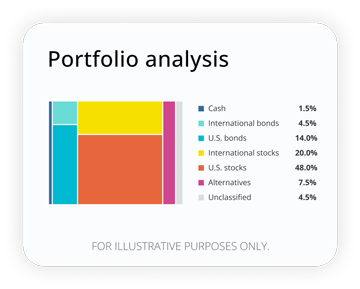
How well are your investments performing?
Analyze your portfolio in minutes and receive a target allocation for your goals.
1 IRS, “Expanded Availability of Health Savings Accounts under the One, Big, Beautiful Bill Act (OBBBA),” accessed February 2026.
2 HealthCare.gov, “How HSA-eligible plans work,” accessed February 2026.
3 HSA Store, “The Complete HSA Eligibility List,” accessed February 2026.
4 Ibid.
5 HSA Store, “The Complete HSA Eligibility List,” accessed February 2026.
6 IRS, “Revenue Procedure 2025-19,” accessed February 2026.
*Contributions, any earnings and withdrawals are federal income tax-free if used to pay for qualified medical expenses. State income taxes may still apply. HSA funds used for nonqualified medical expenses may be subject to applicable federal and state income taxes and/or penalties.
RO5184852-0226
 Get The Currency newsletter



Scott Hipp, CPA
Contributor
Scott Hipp is a CPA and Certified Financial Planner™ professional at Empower. Prior to his work at Empower, Scott has over 20 years of experience providing income tax preparation and strategic tax and financial planning for individuals and small business owners. Scott holds a B.B.A. in Finance and Economics and an M.S.A. in Accounting from the University of Missouri at Kansas City.
The content contained in this blog post is intended for general informational purposes only and is not meant to constitute legal, tax, accounting or investment advice. You should consult a qualified legal or tax professional regarding your specific situation. No part of this blog, nor the links contained therein is a solicitation or offer to sell securities. Compensation for freelance contributions not to exceed $1,250. Third party data is obtained from sources believed to be reliable; however, Empower cannot guarantee the accuracy, timeliness, completeness or fitness of this data for any particular purpose. Third party links are provided solely as a convenience and do not imply an affiliation, endorsement or approval by Empower of the contents on such third party websites. Certain sections of this blog may contain forward-looking statements that are based on our reasonable expectations, estimates, projections and assumptions. Past performance is not a guarantee of future return, nor is it indicative of future performance. Investing involves risk. The value of your investment will fluctuate and you may lose money. Advisory services are provided for a fee by either Personal Capital Advisors Corporation ("PCAC") or Empower Advisory Group, LLC (“EAG”) depending on your specific investment advisory services agreement. Both PCAC and EAG are registered investment advisers with the Securities and Exchange Commission (“SEC”) and subsidiaries of Empower Annuity Insurance Company of America. Registration does not imply a certain level of skill or training. © 2023 Empower Annuity Insurance Company of America. All rights reserved. “EMPOWER” and all associated logos, and product names are trademarks of Empower Annuity Insurance Company of America.