

What percentage should I contribute to my 401(k)?
What percentage should I contribute to my 401(k)?
401(k) contributions are an important way to start retirement planning and keep working on your nest egg
What percentage should I contribute to my 401(k)?
401(k) contributions are an important way to start retirement planning and keep working on your nest egg

11.20.2025
Key takeaways
- Payroll deductions can make funding your 401(k) plan more convenient and harness the potential power of compounding
- Savers can set aside $24,500 toward their 401(k) for 2026, and those 50 and older can contribute an additional $8,000.
- Making large enough 401(k) deferrals to unlock any employer match can accelerate your overall contributions
401(k) contributions are deductions from your take-home pay, and workers have flexibility to adjust this amount. The tax advantages of workplace accounts can give retirement savings room for potential growth.
You give, and you get.
Your contribution rate is the percentage of your wages that is deducted from your paycheck and moved into your 401(k) or other retirement plan account.
In most cases, you choose the value you want to put in. While your take-home pay will be reduced, your retirement nest egg has the potential to grow.
Contributing 10% (or even more) to your retirement plan account can make a big difference toward growing your future savings.
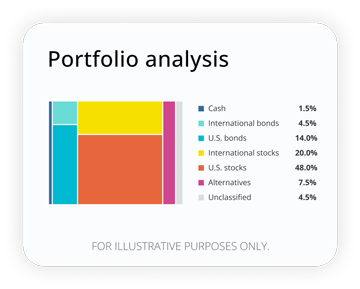
How well are your investments performing?
Analyze your portfolio in minutes and receive a target allocation for your goals.
When should I start contributing?
The earlier, the better.
If you’re eligible to participate in your employer-sponsored retirement plan, consider saving now. Even if you can’t afford to set your contribution rate to 10% right away, you can still boost your balance thanks to compound growth potential. With compounding, not only could your investments have the potential to grow, but any earnings could also add to your balance because earnings may be reinvested — tax-free — into your retirement account.
Above all, as you’re climbing the ladder toward 10% as you age, your savings balance could continue to rise with you.

FOR ILLUSTRATIVE PURPOSES ONLY. This is a hypothetical illustration to show the value of an increase in contributions; it is not intended as a projection or prediction of future investment results, nor is it intended as financial planning or investment advice. It assumes a 6% average annual rate of return, 12 pay periods, $50,000 starting salary with no increases invested over 30 years, a 25% federal income tax bracket, reinvestment of earnings and that the payee lives 20 years in retirement. Rates of return may vary. This illustration does not include any charges, expenses or fees that may be associated with your Program. The tax-deferred accumulations shown above would be reduced if these fees had been deducted.
How can I grow my 401(k) contribution?
Little by little, you can make huge strides.
If you want to stay on track for your future, consider increasing your 401(k) contribution by 1% every year until you reach the 10% target. To help remain on schedule (and so you don’t forget!), check with your 401(k) provider to see if it offers an automatic escalation feature — which can help you gradually gain ground each year.
Read more: Here’s what saving 1% more could mean for your retirement
Should I max out my 401(k)?
You don’t have to stop contributing at 10%.
If you max out your 401(k), also known as deferring up to the IRS limit, you can help potentially strengthen your nest egg at an even faster pace. The IRS sets contribution limits on an annual basis when it comes to how much you can save for retirement. In 2026, you can contribute up to $24,500 to your 401(k) plan, up from $23,500 in 2025.1 If you’re aged 50 or older in 2026, you may be eligible to sock away an additional $8,000 in catch-up contributions. People aged 60 to 63 in 2026 can contribute an additional $11,250 to their 401(k) plans — on top of the regular maximum contribution of $24,500.2
Read more: Can I contribute to a 401(k) and an IRA?
What about 401(k) matching?
If your company offers matching, it’s often referred to as “free money.” That’s because when you contribute to your 401(k) plan, many employers will usually match 50% or 100% of your contributions up to a certain amount. For example, if your organization offered a 100% company match up to 5% and you set your contribution rate to 5% (or higher), you would essentially double your total contribution when the money your employer added is fully vested.
Employer contributions are a great way to boost your overall retirement savings, so a good rule of thumb is to aim to contribute enough to your 401(k) to get the full employer match.
1 Internal Revenue Service, “401(k) limit increases to $24,500 for 2026, IRA limit increases to $7,500,” November 2025.
2 Internal Revenue Service, “401(k) limit increases to $24,500 for 2026, IRA limit increases to $7,500,” November 2025.
RO5005702-1125
Investing involves risk, including possible loss of principal.
 Get The Currency newsletter



The Currency editors
Staff contributors
The CurrencyTM writers and editors cover the latest financial news and insights shaping how we live, work, and play. The team provides accurate, data-driven, and timely content aimed at empowering financial freedom for all.
The content contained in this blog post is intended for general informational purposes only and is not meant to constitute legal, tax, accounting or investment advice. You should consult a qualified legal or tax professional regarding your specific situation. No part of this blog, nor the links contained therein is a solicitation or offer to sell securities. Compensation for freelance contributions not to exceed $1,250. Third party data is obtained from sources believed to be reliable; however, Empower cannot guarantee the accuracy, timeliness, completeness or fitness of this data for any particular purpose. Third party links are provided solely as a convenience and do not imply an affiliation, endorsement or approval by Empower of the contents on such third party websites. Certain sections of this blog may contain forward-looking statements that are based on our reasonable expectations, estimates, projections and assumptions. Past performance is not a guarantee of future return, nor is it indicative of future performance. Investing involves risk. The value of your investment will fluctuate and you may lose money. Advisory services are provided for a fee by either Personal Capital Advisors Corporation ("PCAC") or Empower Advisory Group, LLC (“EAG”) depending on your specific investment advisory services agreement. Both PCAC and EAG are registered investment advisers with the Securities and Exchange Commission (“SEC”) and subsidiaries of Empower Annuity Insurance Company of America. Registration does not imply a certain level of skill or training. © 2023 Empower Annuity Insurance Company of America. All rights reserved. “EMPOWER” and all associated logos, and product names are trademarks of Empower Annuity Insurance Company of America.