

What employees should know before their company goes public
What employees should know before their company goes public
Employee equity can change as a company takes on an IPO. Consider stock options, RSUs, lockup periods, and taxes as you prepare
What employees should know before their company goes public
Employee equity can change as a company takes on an IPO. Consider stock options, RSUs, lockup periods, and taxes as you prepare

09.14.2026
Key takeaways
- IPOs can change how employee equity is valued and managed
- Vesting schedules and lockup periods can affect when shares are sold.
- Stock options, RSUs, and share sales can have tax implications.
Whether you’re a longtime employee or a more recent hire, being a worker at a company during its initial public offering (IPO) can bring changes to any company equity — and possible new financial decisions to consider.
The IPO market has been revving up this year, with U.S. IPOs and share sales setting a new half-year high of $251 billion from the start of 2026 through June 26. The SpaceX stock-market launch in early June became the biggest IPO ever — at $86.2 billion.1
If you work for a company that could be in line for an IPO, you may have questions about how going public could affect your equity and finances. Here are some common considerations to keep in mind.
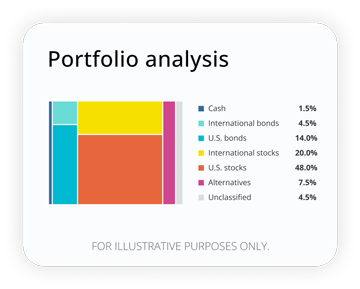
How well are your investments performing?
Analyze your portfolio in minutes and receive a target allocation for your goals.
What happens when your company goes public?
When a company transitions from private to public via an IPO, more is involved than just assigning a stock price to a name. It’s the first chance public investors have to interact with shares of that company.
Founder and employee appearances at exchange floors can garner news coverage and investor attention, though behind the scenes an IPO is about creating a public market for that company’s stock and raising capital for the firm.
With this transition, employees with company equity may gain more liquidity, though an IPO also affects how equity compensation — both existing and future — is administered and valued. The liquidity opportunity for employees isn’t always immediate: Companies can set rules around when workers are allowed to sell shares that they own.
Employees who acquire company shares while the company is private may hold shares that are subject to restrictions on transfer or sale. An IPO creates a public market for the company’s stock, although restrictions may continue to apply to employee-held shares.
Read more: Equity compensation: An employee guide
What can change for employees beyond their equity?
Becoming a public company inherently changes expectations of how the company operates. As an active employee, you may need to follow new guidance on confidentiality, internal communications, and any external speaking opportunities or appearances.
U.S. public companies report their financial results four times a year in what’s commonly known as quarterly earnings, though the SEC has proposed allowing companies to report twice a year instead.2 Written reports, press releases, and earnings calls provide a window for investors — including current and former employees — to get a sense of how the company has been performing and where leadership may focus its efforts next.
After a company becomes public, employees can gain a new source of information about their company and its business environment. Hearing company leaders discuss issues like tariffs or AI on earnings calls can provide better context on the forces shaping the company.3,4
What happens to employee stock options and equity in an IPO?
Workers who have accumulated employee stock options over their tenure may see an IPO as a turning point for their compensation, though the event can bring more complexity.
Stock options give people the right to purchase shares of a company’s stock at a certain price, known as the exercise price, grant price, or strike price. The act of buying the shares is referred to as exercising the option.5
Documentation received when you’re granted stock options will include the exercise price, along with the option term, which specifies how long you have to exercise the option before it expires.6
Vested and unvested options
Stock option disclosures will also outline vesting, or the requirements that must be met before you can exercise an option and purchase the shares.7
Pay attention to your vesting period, which can affect how your options are treated during an IPO. If you have several batches or tranches of stock options — for example, if you received a new grant at annual performance reviews over many years — the vesting dates may be staggered to encourage employee retention.
Read more: What are stock options & how do they work?
Treatment varies based on the plan and award terms. Unvested options may continue on their existing vesting schedule after an IPO, while vested options may remain exercisable according to the terms of the plan. Once you exercise an option, you purchase company shares at the exercise price. You may also be subject to additional rules around if and when you can exercise options or sell the resulting shares after the IPO.8
RSUs and already-owned shares
You may also have restricted stock units (RSUs) as part of your equity compensation. One key difference between RSUs and stock options is that RSUs generally provide shares of company stock once vesting and settlement conditions are met, while stock options give the right to purchase the shares at the exercise price specified in the award. RSUs are generally taxed as ordinary income when they settle and shares are delivered to you, depending on the terms of the award.
With an IPO involved, check your RSU grant documentation to see unvested RSUs will continue on their original vesting schedule or whether an IPO affects their vesting or settlement terms. Also check when shares settle, how tax withholding may be handled, and whether restrictions remain after settlement.
Exercise and administration changes
Be aware of what you own — including options, RSUs, their terms, any vesting requirements — by consulting your equity provider’s account statements.
In the lead-up to an IPO, your company may roll out new processes or vendors for payroll, compliance, and brokerage and equity platforms. It’s important that you keep up with the changes and update accounts accordingly — including payment or contact information — so you don’t miss essential documents or face delays or additional steps once the IPO arrives.
Read more: Restricted stock units vs. stock options: What’s the difference?
When can employees sell shares after an IPO?
Certain shareholders, including some employees and other holders of pre-IPO shares, may be subject to a lockup agreement, which sets what’s known as a lockup period.9 During this time, covered shareholders are unable to sell their shares until a specific time, and there may also be limits on how many shares can be sold over a designated period. These agreements are intended to prevent a flood of insider shares from hitting the public market too soon after the actual IPO.
If a company has lockup agreements in place, it must publicly disclose the terms in its registration documents, including its prospectus.10
The U.S. Securities and Exchange Commission maintains the EDGAR database, where investors can search by company name for disclosures like IPO prospectuses and financial statements, including 10-K (annual), 10-Q (quarterly), and 8-K (current) reports.11
How are pre-IPO shares valued?
Employees may hear estimates of market prices in headlines and news reports leading up to an IPO, though it’s important to understand the different ways options and shares are valued before and after the public debut:
Term | Definition |
|---|---|
Private-company fair market value | A more general, company-provided valuation used for broader tax, compensation, or plan purposes |
409A valuation12 | A valuation commonly used to establish the fair market value of private-company common stock for purposes including setting option exercise prices |
Strike price | The price specified in an option grant to acquire a share |
IPO offer price | The price set for shares sold in the offering |
Opening / public-market price | The price at which public-market transactions occur |
Post-IPO market price | The market price after public trading begins |
How can an IPO affect taxes on employee equity?
- Options: Depending on which type of stock options you have — incentive stock options (ISOs) or non-statutory stock options (NSOs) — exercising them can have different tax consequences. NSOs generally can trigger ordinary income tax when exercised, while exercising ISOs may have alternative minimum tax (AMT) implications. Selling shares acquired through either type of option can also have tax consequences, so it’s important to understand how taxes may apply at both exercise and sale.
- RSUs: Consult your RSU award documents to see how unvested RSUs are treated at the time of IPO. Depending on the terms of the award and when the RSUs vest or settle into shares, taxable income may be triggered.
- Capital gains or losses: After public shares are acquired, depending on the original price of the shares and what they were sold for, you may need to account for capital gains or losses.
What should employees review before the IPO?
As an IPO approaches, workers should get up to speed on their personal holdings and any guidance on next steps from the company:
- Know what you hold: Get an accurate count of your vested and unvested equity, including the types and amounts of awards you have, and key dates for vesting.
- Read company updates: The IPO process can be fluid depending on company developments and market conditions. Keep your contact information updated on all company and equity-plan platforms and ask questions if you’re unsure how situations affect you.
- Follow the rules: Failure to follow applicable confidentiality, trading, or lockup restrictions could have consequences, so understand the rules that apply to you. You may also need to communicate with family and friends if they also fall under these stipulations.
What should you consider after your company goes public?
Once your company goes public, you’ll want to understand when you can sell the shares you already hold. An IPO lockup may prevent employees from selling certain shares for a set period after the offering, while company trading policies or blackout periods may limit transactions at other times.
If you’re interested in buying additional company stock after the IPO, check which company rules and trading restrictions may apply.
Taxation plays another key role in how your equity is managed for the long term; continue to maintain your records, especially when you exercise options and when any shares settle.
You may want to consult a financial advisor or tax professional to outline scenarios for buying and selling shares — and how each could affect your bigger tax picture, including minimizing or avoiding capital gains tax. They can also give input on portfolio diversification in addition to any company-specific holdings.
Your options for acquiring company stock could also change after the IPO. As of 2024, 57% of public companies offered an employee stock purchase plan (ESPP), which allows employees to buy company shares, often at a discount, subject to plan terms.13 If your company offers an ESPP after going public, consider how participating could fit with your broader financial plan and existing exposure to company stock.
Beyond the IPO
Going public can be a major milestone and celebration for a company and its employees. For some, it can also be an opportunity to reevaluate short- and long-term financial goals. As the value and liquidity of company equity change, employees may need to reconsider how those holdings fit into their broader financial plans over time.
1 Bloomberg, “SpaceX Pushes US Share Sales to Record $251 Billion at Midyear,” June 2026.
2 Reuters, “US SEC proposes allowing public companies to opt out of quarterly earnings reports,” May 2026.
3 CFO Dive, “How tariff refunds are shaking up earnings calls,” August 2026.
4 Factset, “Highest Number of S&P 500 Earnings Calls Citing ‘AI’ Over the Past 10 Years,” June 2026.
5 National Center for Employee Ownership, “Stock Options, Restricted Stock, Phantom Stock, Stock Appreciation Rights (SARs), and Employee Stock Purchase Plans (ESPPs),” accessed September 2026.
6 National Center for Employee Ownership, “Stock Options, Restricted Stock, Phantom Stock, Stock Appreciation Rights (SARs), and Employee Stock Purchase Plans (ESPPs),” accessed September 2026.
7 National Center for Employee Ownership, “Stock Options, Restricted Stock, Phantom Stock, Stock Appreciation Rights (SARs), and Employee Stock Purchase Plans (ESPPs),” accessed September 2026.
8 NYSE, “IPO Guide, Third Edition,” accessed September 2026.
9 U.S. Securities and Exchange Commission, “Initial Public Offerings: Lockup Agreements,” accessed September 2026.
10 U.S. Securities and Exchange Commission, “Initial Public Offerings: Lockup Agreements,” accessed September 2026.
11 U.S. Securities and Exchange Commission, “Using EDGAR to Research Investments” accessed September 2026.
12 National Association of Stock Plan Professionals, “A Guide to 409A Valuations for Startups,” April 2024.
13 National Association of Stock Plan Professionals, “Trends in ESPPs: Five Facts and a Myth,” February 2025.
RO5916345-0926
 Get The Currency newsletter



The Currency editors
Staff contributors
The CurrencyTM writers and editors cover the latest financial news and insights shaping how we live, work, and play. The team provides accurate, data-driven, and timely content aimed at empowering financial freedom for all.
The content contained in this blog post is intended for general informational purposes only and is not meant to constitute legal, tax, accounting or investment advice. You should consult a qualified legal or tax professional regarding your specific situation. No part of this blog, nor the links contained therein is a solicitation or offer to sell securities. Compensation for freelance contributions not to exceed $1,250. Third-party data is obtained from sources believed to be reliable; however, Empower cannot guarantee the accuracy, timeliness, completeness or fitness of this data for any particular purpose. Third-party links are provided solely as a convenience and do not imply an affiliation, endorsement or approval by Empower of the contents on such third-party websites. This article is based on current events, research, and developments at the time of publication, which may change over time.
Certain sections of this blog may contain forward-looking statements that are based on our reasonable expectations, estimates, projections and assumptions. Past performance is not a guarantee of future return, nor is it indicative of future performance. Investing involves risk. The value of your investment will fluctuate and you may lose money.
Certified Financial Planner Board of Standards Inc. (CFP Board) owns the certification marks CFP®, CERTIFIED FINANCIAL PLANNER™, CFP® (with plaque design), and CFP® (with flame design) in the U.S., which it authorizes use of by individuals who successfully complete CFP Board's initial and ongoing certification requirements.