

How to buy U.S. Treasury bonds, bills, and notes
How to buy U.S. Treasury bonds, bills, and notes
Learn the buying process for Treasury securities and compare how options differ across terms, taxes, and payouts
How to buy U.S. Treasury bonds, bills, and notes
Learn the buying process for Treasury securities and compare how options differ across terms, taxes, and payouts

07.07.2026
Key takeaways
- Treasury securities include bills, notes, bonds, TIPS, and floating rate notes, each with different maturities and payment structures.
- Investors can buy Treasuries through TreasuryDirect or a broker, bank, or dealer, with a variety of bidding and trading options.
- Holding Treasuries to maturity can provide predictable income, while selling early may result in gains or losses based on interest rates.
“Treasury bonds” have been making headlines in the financial world, with more than $30.8 trillion in marketable Treasury securities being held by the public as of May 2026.1 Longer-term Treasury bonds, in particular, have been attracting attention because of their yields, which hit around 5.19% in May.2 When considering these investments, it’s important to sort through the benefits, differences, and how Treasury products like bills, notes, and bonds actually work.
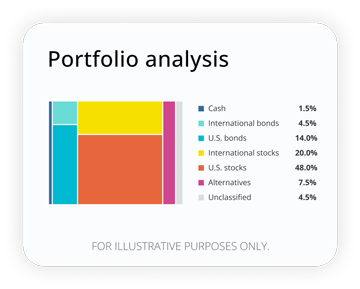
How well are your investments performing?
Analyze your portfolio in minutes and receive a target allocation for your goals.
How to buy Treasury bonds
While “Treasury bonds” in conversation can refer to many types of Treasury securities, you can buy these assets either directly through the government’s TreasuryDirect service at auction or through a bank, broker, or dealer. TreasuryDirect supports noncompetitive auction bids, while brokerages may also let investors buy Treasuries on the secondary market and — depending on the platform — submit competitive or noncompetitive bids.
Treasuries may be useful for a conservative investor seeking steady income or balancing inflation-sensitive goals, but the asset classes vary in terms of liquidity, maturity date, reinvestment preferences, and tax handling.
What kinds of Treasury securities are there?
The first thing to note about Treasuries is that naming of the securities can differ between what you hear mentioned in the news or in talks with friends or family — and the actual official names of what’s available.
People who are interested in "Treasury bonds" may mean Treasury bills or notes, based on government definitions. These terms are not interchangeable, and “bonds” refer to Treasury securities with 20-year and 30-year maturity dates.3
Other Treasury marketable securities include bills, notes (often mistaken as “short-term Treasury bonds”), bonds, TIPS, and FRNs. Make sure you compare the differences between the types of Treasuries:
Security type | Typical term (maturity date) | How payouts work | Possible uses |
|---|---|---|---|
Treasury bills | 4 to 52 weeks | Sold at a discount or at par, and you receive face value when it matures | Near-term cash uses |
Treasury notes | 2, 3, 5, 7, or 10 years | Fixed interest accumulates every six months until maturity | Medium-term money goals |
Treasury bonds | 20 or 30 years | Fixed interest accumulates every six months until maturity | Long-term income, exposure to bonds |
Treasury Inflation-Protected Securities (TIPS) | 5, 10, or 30 years | Fixed-rate based on inflation-adjusted principal | Hedge against inflation |
Treasury Floating Rate Notes (FRNs) | 2 years | Floating interest that resets with a 13-week bill index, plus spread | Shorter term exposure with variable rates |
I bonds | Not applicable because I bonds are savings bonds, not marketable Treasuries | Composite rate with both fixed and inflation components | Savings goals linked to inflation |
Read more: What are I bonds and how do they work?
Options for where to buy Treasury bonds
Investors have two routes when deciding how to buy U.S. Treasuries: directly from the federal Treasury department, or through various banks, brokers, or dealers.4 Determining which option to take should account for each bidding process, timing, and flexibility.
Purchasing Treasury bonds through TreasuryDirect
With a TreasuryDirect account, investors can buy and hold Treasury notes, bonds, bills, TIPS, and FRNs directly from the U.S. government. There’s also the option for account holders to create and link to a minor’s account to buy and hold securities for children under 18. However, TreasuryDirect does require a 45-day holding period before transferring or selling newly acquired securities — one aspect to consider if a quicker turn is desired.5
TreasuryDirect requires a minimum investment of $100 for Treasury bills, notes, bonds, TIPS, and FRNs, and all purchases must be made in $100 increments ($100, $200, $300).
Buying Treasury bonds through a broker, bank, or dealer
Using a financial institution to buy Treasury securities allows investors to access both competitive and noncompetitive bids in auctions — while TreasuryDirect only allows non-competitive ones.6
With competitive bidding, you disclose upfront either the yield, discount rate, or discount margin that you’ll accept for a particular security type in the auction. While this can give investors more control over their bids, there’s no guarantee that the bid will be accepted.7
Unlike TreasuryDirect's mandatory 45-day original-issue holding period, Treasury securities purchased and held through the commercial book-entry system (brokers, banks, and dealers) are not subject to that TreasuryDirect holding-period requirement. Broker, banks, and others also may have different rules around bid amounts, so investors should check with their provider.8
What to check before you place a Treasury order
If you’re ready to buy Treasuries, make sure you understand how they work and the different terms you may come across.9
Treasury feature | Why it’s important |
|---|---|
Maturity date | The term ending should be around the time you need the money. |
Security type | Bills, notes, bonds, TIPS, FRNs, and I bonds function differently. |
Yield and price | New auction yields are determined at auction, while secondary-market prices may be above or below. |
Coupon rate | Notes and bonds pay a fixed amount of interest every six months, while bills work through discount/face value. |
Minimum purchase | TreasuryDirect marketable securities use $100 minimum bids and $100 increments. Check with other providers on any minimums. |
How to manage, reinvest, or sell Treasury bonds
Once you own Treasury bonds, here’s how they can fit into your wider investment portfolio.
Hold until maturity: You’d receive interest payments according to the term schedule and your principal back at maturity.
Reinvest: TreasuryDirect allows owners to reinvest the proceeds from notes, bonds, bills, and FRNs that are maturing into a new security of the same type.10
Sell before maturity: Investors can sell their securities before maturity, but this cannot be done through TreasuryDirect.11 You’d have to transfer the assets to a broker/dealer account, and then use that institution for the sale.
Whatever you decide to do with your Treasuries, keep these key rules in mind:
- TreasuryDirect has a holding period. Treasuries bought on the site must be held there for 45 calendar days before any sale or transfer can be executed.
- Watch how the secondary market is performing. If interest rates have risen, the market value of an existing fixed-rate Treasury may be lower; if rates have fallen, value could be higher.
- Tax forms come from different sources. TreasuryDirect provides 1099 forms for securities held in a TreasuryDirect account, while brokers handle tax forms for securities held at their institutions.
Are Treasury bonds a good fit for your money?
Treasury bonds can play a role in a broader financial plan. Your savings time horizon, rate of return goals, level of flexibility, and other factors can determine if they’re a potential good fit.
The benefits of Treasury bonds can especially stand out for people with these priorities:
- You want U.S. government-backed fixed income: Treasury securities are backed by the full faith and credit of the U.S. government and can be part of a diversified portfolio to hedge against any market volatility.
- You can match the maturity date with a future expense: Having money in bonds can be one way to plan for retirement income or a future savings bump.
- You want to collect predictable interest from notes or bonds held to maturity: The assurance of a fixed rate of return could be attractive for some investors.
- You want to leverage Treasuries being exempt from state and local taxes: Earnings from Treasury marketable securities aren’t subject to these taxes, though are taxed at the federal level.12 Consider consulting a tax professional to see how this strategy fits in with other taxable accounts or assets you may hold.
Treasury bonds might not be the best fit if your financial goals require greater flexibility or quick access to funds. Here are some scenarios to consider:
- You want higher growth potential: With a term of 20 or 30 years, bonds have a fixed rate that’s locked in from the time of purchase.
- You need to be able to withdraw funds quickly, without worrying about maturity: Covering unexpected bills can be stressful, and Empower’s free emergency fund calculator can help map out which amounts fit your lifestyle.
Treasury bonds could figure into a balanced portfolio, though investors need to take into account how “locked up” they want their money and how these assets fit in with their personal risk tolerance.
Frequently asked questions about Treasury bonds
Can Treasury bonds be purchased directly from the U.S. government?
Yes. Treasury securities can be purchased through TreasuryDirect at auction using noncompetitive bids. They can also be purchased through banks, brokers, and dealers, which may offer additional bidding options and access to the secondary market.
What is the minimum amount needed to buy Treasury securities?
TreasuryDirect requires a minimum purchase of $100 for marketable Treasury securities, with additional purchases made in $100 increments. Other financial institutions may have different minimum investment requirements.
Can Treasury bonds be sold before they mature?
Yes, but Treasury securities cannot be sold directly through TreasuryDirect. They must first be transferred to a broker or dealer, where they can be sold on the secondary market. Their market value may be higher or lower than the original purchase price.
Are Treasury securities taxed?
Interest earned on Treasury marketable securities is generally subject to federal income tax but is exempt from state and local income taxes. Tax treatment may vary depending on the type of Treasury security and an individual's circumstances.
This calculator is for information purposes only and is not intended to provide investment, legal, tax or accounting advice, nor is it intended to indicate the performance, availability or applicability of any product or service.
1 U.S. Treasury Department, “U.S. Treasury Monthly Statement of the Public Debt (MSPD),” accessed June 2026.
2 CNBC, “30-year Treasury yield tops 5.19%, highest since before the financial crisis,” May 2026.
3 Brittanica, “TreasuryDirect: A place to find low-risk income while avoiding fees,” May 2026.
4 TreasuryDirect, “Buying a Treasury Marketable Security,” accessed June 2026.
5 TreasuryDirect, “Buying a Treasury Marketable Security,” accessed June 2026.
6 TreasuryDirect, “Buying a Treasury Marketable Security,” accessed June 2026.
7 TreasuryDirect, “Buying a Treasury Marketable Security,” accessed June 2026.
8 TreasuryDirect, “Buying a Treasury Marketable Security,” accessed June 2026.
9 TreasuryDirect, “Glossary of Terms,” accessed June 2026.
10 TreasuryDirect, “How Do I...?” accessed June 2026.
11 TreasuryDirect, “How Do I...?” accessed June 2026.
12 TreasuryDirect, “Tax Forms and Tax Withholding,” accessed June 2026.
RO5713859-0626
 Get The Currency newsletter



The Currency editors
Staff contributors
The CurrencyTM writers and editors cover the latest financial news and insights shaping how we live, work, and play. The team provides accurate, data-driven, and timely content aimed at empowering financial freedom for all.
The content contained in this blog post is intended for general informational purposes only and is not meant to constitute legal, tax, accounting or investment advice. You should consult a qualified legal or tax professional regarding your specific situation. No part of this blog, nor the links contained therein is a solicitation or offer to sell securities. Compensation for freelance contributions not to exceed $1,250. Third-party data is obtained from sources believed to be reliable; however, Empower cannot guarantee the accuracy, timeliness, completeness or fitness of this data for any particular purpose. Third-party links are provided solely as a convenience and do not imply an affiliation, endorsement or approval by Empower of the contents on such third-party websites. This article is based on current events, research, and developments at the time of publication, which may change over time.
Certain sections of this blog may contain forward-looking statements that are based on our reasonable expectations, estimates, projections and assumptions. Past performance is not a guarantee of future return, nor is it indicative of future performance. Investing involves risk. The value of your investment will fluctuate and you may lose money.
Certified Financial Planner Board of Standards Inc. (CFP Board) owns the certification marks CFP®, CERTIFIED FINANCIAL PLANNER™, CFP® (with plaque design), and CFP® (with flame design) in the U.S., which it authorizes use of by individuals who successfully complete CFP Board's initial and ongoing certification requirements.