

The K-shaped economy: What consumers should know
The K-shaped economy: What consumers should know
The term has surfaced in recent months to describe uneven economic outcomes and spending underneath a resilient U.S. economy
The K-shaped economy: What consumers should know
The term has surfaced in recent months to describe uneven economic outcomes and spending underneath a resilient U.S. economy
02.04.2026

Listen
·The K-shaped economy: What consumers should know
Key takeaways
- A K-shaped economy is one where higher-income and lower-income groups experience increasingly different circumstances.
- Consumer spending is driven by asset-rich, higher-income households, while others face headwinds.
- Consumer-facing companies from Delta to McDonald's are responding to the trend.
What is a K-shaped economy? The phrase may sound technical, but it describes something many Americans might already feel or recognize: An economy that shows up differently depending on factors like wealth, savings, income, and spending habits.1
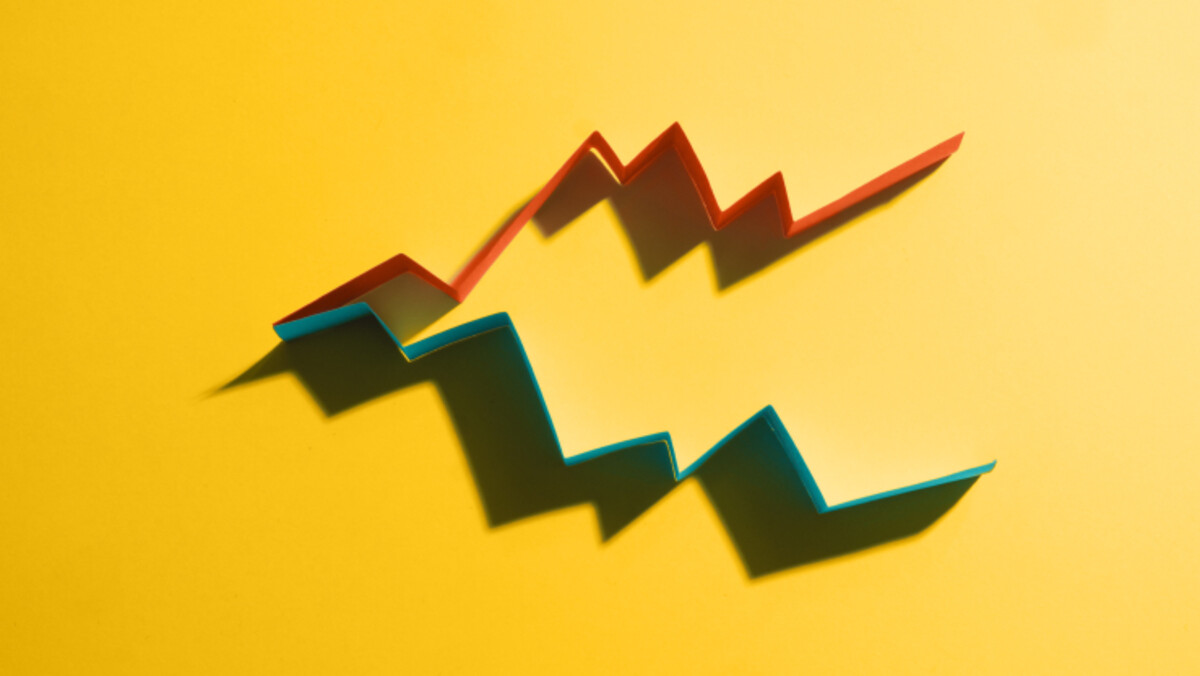
The actual K-shape results from plotting outcomes on a chart. The upward arm reflects the groups that are doing relatively well, or even very well. This typically includes higher-income households who often own assets such as homes, stocks, and substantial retirement savings. It also includes workers who have higher income in sectors like technology, finance, and professional services.2
These groups may be benefiting from rising asset values, especially homes, stocks, and other investments, which in turn has fueled robust spending despite higher prices and other headwinds.3
The downward arm represents groups experiencing slower progress or setbacks amid the same headwinds. This can include lower- and middle-income households, younger workers, renters, and people employed in more cyclical or customer-facing industries.4 Wage growth can be more modest, with lingering inflation and prices increases more keenly felt.5
A key thing to know is that both arms exist at the same time. The economy may be expanding overall, but the gains are unevenly distributed, creating two trajectories that are diverging rather than converging.6
Read more: Why grocery bills still feel heavier than inflation
Inconsistencies take shape
The term gained prominence among some economists during the pandemic to describe an uneven recovery. Wealthier Americans and remote workers rebounded more quickly than other households that were more susceptible to work and income disruptions and higher prices.7
An updated version of the term took hold in 2025 to describe factors below the surface of a resilient U.S. economy: Solid GDP growth combined with subdued hiring and worried workers; rising consumer spending, but mostly from higher-income households; and a stock market near record highs, but fueled by AI-related companies and their spending.8,9
As the term continues to grab headlines in 2026, here are a few things to know when K-shaped is mentioned.
Where is the K-shaped economy turning up?
Economists who use the term often point to consumer spending. According to Moody’s Analytics, the top 20% of incomes accounted for 59% of total spending in the third quarter of 2025. The 41% of consumer spending from the bottom 80% of income earners is a record low.10
Overall consumer prices have risen by about 25% since 2020, federal data shows, with higher-income households better equipped to cover the steep increases.11 Food prices are up 29% over that same period, according to the Bureau of Labor Statistics.12
Overall household debt hit a record high of $18.59 trillion the third quarter of 2025, according to data from the Federal Reserve Bank of New York, but the load isn’t always balanced.13 A 2025 study by the Federal Reserve Bank of Boston found credit card balances among lower-income households to be well above pre-pandemic levels — a notable divergence from higher-income households that carry less debt since that period.14
Housing tells a similar story. Equity in U.S. homes is near an all-time high of $35 trillion thanks to surging property values, with many Americans enjoying ultra-low mortgage rates below 4% or owning properties outright.15 Meanwhile, new and aspiring homeowners are grappling with elevated listing prices and mortgage rates. Many remain on the sidelines: The share of first-time buyers hit an all-time low of just 21% in 2025.16
The S&P 500® is up more than 130% since the onset of the pandemic in March 2020, another boost for higher-income households more likely to own stocks or retirement funds.17 Soaring AI-related stock valuations in particular have created a “wealth effect,” accounting for about $180 billion in consumer spending over the past year, according to one estimate.18
Read more: Earnings update: AI spending stays strong but will business demand keep pace?
K-shaped business outcomes
Many consumer-facing companies are seeing a divergence in spending among income groups. Delta Air Lines reported that revenue from premium seating was up 9% in the fourth quarter of 2025, while revenue for basic economy seating was down 7%. Premium seat sales are expected to exceed coach sales for 2026.19
Coca-Cola has seen higher-income earners drive sales growth among premium brands like Fairlife dairy, Topo Chico sparkling water, and protein beverages like Core Power. The company points to middle- and lower-income consumers being under pressure and seeking value.20
McDonald’s cited a “two-tier economy” and declining traffic among lower-income customers for a recent move to revive its “Extra Value Meal” combos.21 At the same time, there’s been a double-digit increase in higher-income customers, which McDonald’s says are also seeking value.22
A bifurcated trend has also developed among big-ticket purchases like autos, where the average price of new car has risen to $51,000. The share of new-car buyers with incomes of less than $100,000 has dropped to 37% from 50% in 2020. In contrast, car buyers with incomes of more than $200,000 has grown to 29% from 18% during that same period.23
Read more: Buyers stretch car loans to seven years. Here’s how to offset costs
Beyond the K-shaped label
Not all economists embrace the K-shaped label. Some think the term overstates the divide, pointing out that wage growth for lower-income workers, while slower at times, still outpaces inflation. Others say a K-shaped economy is nothing new, first emerging several decades ago and only widened by the pandemic.24
Some dynamics cut across income lines. The most recent U.S. consumer sentiment survey shows Americans of all income levels are uneasy about the economy, even as spending and economic growth continues and markets are at near highs.25
But as some economic data continue to point to uneven financial gains and spending habits, the K-shaped description could persist in 2026 discussions about the U.S. economy.
The S&P 500 Index is a registered trademark of Standard & Poor’s Financial Services LLC. It is an unmanaged index considered indicative of the domestic large-cap equity market and is used as a proxy for the stock market in general.
How well are your investments performing?
Analyze your portfolio in minutes and receive a target allocation for your goals.
1 The New York Times, “When Did Everything Become ‘K-Shaped?’”, December 2025.
2 NPR, “What is a K-shaped economy? December 2025.
3 USA Today, “Rich people are spending. Everyone else is cutting corners, November 2025.
4 NPR, “What is a K-shaped economy? December 2025.
5 Bloomberg, “How the K-Shaped Economy Is Hurting Everyone But the Rich,” November 2025.
6 The New York Times, “When Did Everything Become ‘K-Shaped?’”, December 2025.
7 Bloomberg, “How the K-Shaped Economy Is Hurting Everyone But the Rich,” November 2025.
8 CNN, “The K-shaped economy reigned in 2025. It’s not going away in 2026,” January 2026.
9 The Wall Street Journal, “How the U.S. Economy Became Hooked on AI Spending,” November 2025.
10 Axios, “The rich are powering spending, with the U.S. economy in a danger zone,” January 2026.
11 USA Today, “Rich people are spending. Everyone else is cutting corners, November 2025.
12 NPR, “Grocery prices have jumped up, and there's no relief in sight,” September 2025.
13 Federal Reserve Bank of New York, “Household Debt Balances Grow Steadily; Mortgage Originations Tick Up in Third Quarter,” November 2025.
14 Federal Reserve Bank of Boston, “Why Has Consumer Spending Remained So Resilient? Evidence from Credit Card Data,” August 2025.
15 Federal Reserve Bank of St. Louis, “Households; Owners' Equity in Real Estate, Level,” accessed February 2026.
16 National Association of Realtors, “Top 10 Takeaways from NAR's 2025 Profile of Home Buyers and Sellers,” November 2025.
17 CNBC, “Wealth inequality and the ‘K-shaped’ economy are more striking than ever, data shows,” January 2026.
18 The Wall Street Journal, “How the U.S. Economy Became Hooked on AI Spending,” November 2025.
19 Forbes, “Delta's The Rare Airline Doing Well—Because It's Catering To The Rich,” January 2026.
20 Yahoo! Finance, “Coca-Cola stock pops as earnings top estimates amid 'challenging' environment,” October 2025.
21 NBC News, “From fast food to beverage giants, brands see rising income inequality among customers,” November 2025.
22 CNBC,” McDonald’s U.S. boss puts focus on ‘value and affordability’ as consumer spending splits,” November 2025.
23 CNBC, “New cars are increasingly becoming a luxury amid K-shaped economy concerns,” January 2026.
24 NPR, “It's the year's biggest economic buzzword, but what exactly is a 'K-shaped' economy? January 2026.
25 Reuters, “US consumer confidence dives to a more than 11-1/2-year low,” January 2026.
RO5187366-0226
 Get The Currency newsletter



The Currency editors
Staff contributors
The CurrencyTM writers and editors cover the latest financial news and insights shaping how we live, work, and play. The team provides accurate, data-driven, and timely content aimed at empowering financial freedom for all.
The content contained in this blog post is intended for general informational purposes only and is not meant to constitute legal, tax, accounting or investment advice. You should consult a qualified legal or tax professional regarding your specific situation. No part of this blog, nor the links contained therein is a solicitation or offer to sell securities. Compensation for freelance contributions not to exceed $1,250. Third-party data is obtained from sources believed to be reliable; however, Empower cannot guarantee the accuracy, timeliness, completeness or fitness of this data for any particular purpose. Third-party links are provided solely as a convenience and do not imply an affiliation, endorsement or approval by Empower of the contents on such third-party websites. This article is based on current events, research, and developments at the time of publication, which may change over time.
Certain sections of this blog may contain forward-looking statements that are based on our reasonable expectations, estimates, projections and assumptions. Past performance is not a guarantee of future return, nor is it indicative of future performance. Investing involves risk. The value of your investment will fluctuate and you may lose money.
Certified Financial Planner Board of Standards Inc. (CFP Board) owns the certification marks CFP®, CERTIFIED FINANCIAL PLANNER™, CFP® (with plaque design), and CFP® (with flame design) in the U.S., which it authorizes use of by individuals who successfully complete CFP Board's initial and ongoing certification requirements.