

Roth 401(k) catch up: New rule for age 50 and up
Roth 401(k) catch up: New rule for age 50 and up
Changes made under the Secure 2.0 Act of 2022 require some higher earners to make 401(k) catch-up contributions with post-tax money, affecting older workers
Roth 401(k) catch up: New rule for age 50 and up
Changes made under the Secure 2.0 Act of 2022 require some higher earners to make 401(k) catch-up contributions with post-tax money, affecting older workers

02.05.2026
Key takeaways
In 2026, workers age 50 and older who earned $150,000 or more in FICA wages in 2025 must make 401(k) catch-up contributions on a Roth basis.
The rule stems from the SECURE 2.0 Act and applies only to people who made at or above the income threshold in the prior year; others may still choose pre-tax catch-up contributions.
Catch-up contribution limits for 2026 rise to $8,000 for those ages 50-59 and 64+ — and $11,250 for ages 60-63.
The catch-up contribution rules have been revised for older retirement savers and affects how some workers will approach their retirement savings strategies and tax plans.
The Internal Revenue Code allows catch-up contributions within 401(k) accounts beyond the typical limit for people who are 50 and older — an extra way to try and boost savings as people get closer to retirement. In 2026, people who made $150,000 or more in Federal Insurance Contributions Act (FICA) wages in 2025 are required to make their catch-up contributions to their workplace retirement plans on a Roth basis — not with pre-tax dollars.1
Higher earners may want to revisit how this rule will affect their retirement savings approach, accounting for updates to tax brackets, wages, and contribution limits.
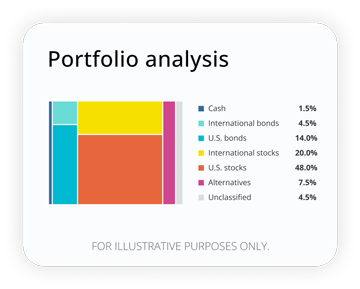
How well are your investments performing?
Analyze your portfolio in minutes and receive a target allocation for your goals.
Who does this 401(k) rule apply to?
This requirement is a change stemming from the Secure 2.0 Act, which made significant changes to the U.S. retirement system. Each year, the IRS will issue adjustments to the threshold for how much a person can make before triggering this rule requiring Roth catch-up contributions. The IRS can adjust the limit based on cost of living, and the figure in question is a worker’s prior-year FICA wages.
For example, if a person made $155,000 in FICA wages in 2025, it’s mandatory that their 2026 catch-up contributions are made on an after-tax Roth basis because they exceeded the $150,000 threshold.
With the median household income standing at $83,730 in 2024, many workers may not fall under this rule and can continue making catch-up contributions on a pre-tax basis.2
Expanded catch-up contribution amounts for 2026
The standard 401(k) deferral limit for 2026 has been raised to $24,500, and the amount of allowable catch-up contributions in addition to that cap depends on a person’s age. People ages 50-59 and 64 and older can set aside an additional $8,000 per year as catch-up contributions, while the cap rises to $11,250 per year for those ages 60-63.
Read more: New catch-up contribution: Retirement limit boosted for 401(k) savers in their early 60s
Remember that catch-up contributions don’t take effect unless a person meets the regular 401(k) deferral limit.
Comparing traditional and Roth contributions
Contributing to a 401(k) can drive potential growth for retirement savers; here’s how tax rules differ between pre-tax and Roth 401(k) accounts:
401(k) characteristic | Pre-tax 401(k) | Roth 401(k) |
Eligibility to participate | Employer must offer a 401(k) plan. | Employer’s 401(k) plan must offer Roth contributions. There are no income restrictions to participate, unlike a Roth IRA . |
Taxes on withdrawals | All withdrawals are taxed at federal and state income tax rates. | No taxes on qualified distributions.* |
Required minimum distributions | In general, RMDs must be taken by April 1 following the later of the calendar year in which a person reaches age 73 or retire. After the first year, RMDs must be satisfied by December 31. If someone is still working, generally they don't have to take RMDs. | For 2024 and beyond, RMDs are not required from designated Roth accounts. |
Retirement plan participants meeting or exceeding the new income threshold will need to use after-tax dollars for their catch-up contributions. That means what may have been a pre-tax contribution in earlier tax years — which had lowered their overall tax liability — now it is part of a person’s taxable income, possibly pushing them into a higher tax bracket.
Read more: 2025 and 2026 tax brackets: New thresholds, same rates, paycheck impact
A benefit of having some money saved as Roth contributions is a simpler setup once people reach retirement: They won’t be required to take distributions of the Roth funds, and they won’t owe taxes when eligible withdrawals do happen.*
Catching up to save up
Americans think they need $1,058,547, on average, saved up for retirement, and workplace 401(k) plans are a key way people are building that wealth.
As of December 2025, people had an average 401(k) balance of $339,032, with Gen X having $549,173 and Baby Boomers holding $565,754, based on Empower Personal DashboardTM data. More than half (63%) of both these generations wish they had saved more for retirement accounts when they were younger, according to Empower research.
401(k) catch-up contributions are one way to add to a retirement nest egg. People looking to further maximize their 401(k) holdings should consider the percentage they’re contributing, if they qualify for employer matching funds, and what investments they’re picking for their contributions.
*A withdrawal from a Roth account is not subject to federal taxation as long as it is qualified as defined under IRS regulations. Any earnings on Roth contributions will be taxed unless a withdrawal is a qualified distribution as defined by the IRS. For a withdrawal to be considered a qualified distribution, Roth contributions must have been in the account for at least five years, and the money withdrawn after age 59½, death, or disability. Current rules are subject to change and state and local taxes may still apply.
1 IRS, “2026 Amounts Relating to Retirement Plans and IRAs, as Adjusted for Changes in Cost-of-Living,” accessed January 2026.
2 U.S. Census Bureau, “Income in the United States: 2024,” September 2025.
RO5182596-0126
 Be current.



The Currency editors
Staff contributors
The CurrencyTM writers and editors cover the latest financial news and insights shaping how we live, work, and play. The team provides accurate, data-driven, and timely content aimed at empowering financial freedom for all.
The content contained in this blog post is intended for general informational purposes only and is not meant to constitute legal, tax, accounting or investment advice. You should consult a qualified legal or tax professional regarding your specific situation. No part of this blog, nor the links contained therein is a solicitation or offer to sell securities. Compensation for freelance contributions not to exceed $1,250. Third-party data is obtained from sources believed to be reliable; however, Empower cannot guarantee the accuracy, timeliness, completeness or fitness of this data for any particular purpose. Third-party links are provided solely as a convenience and do not imply an affiliation, endorsement or approval by Empower of the contents on such third-party websites. This article is based on current events, research, and developments at the time of publication, which may change over time.
Certain sections of this blog may contain forward-looking statements that are based on our reasonable expectations, estimates, projections and assumptions. Past performance is not a guarantee of future return, nor is it indicative of future performance. Investing involves risk. The value of your investment will fluctuate and you may lose money.
Certified Financial Planner Board of Standards Inc. (CFP Board) owns the certification marks CFP®, CERTIFIED FINANCIAL PLANNER™, CFP® (with plaque design), and CFP® (with flame design) in the U.S., which it authorizes use of by individuals who successfully complete CFP Board's initial and ongoing certification requirements.