

Executive shift: Why some companies pick co-CEOS for the top job
Executive shift: Why some companies pick co-CEOs for the top job
Some large companies are naming co-CEOs — a move aimed at balancing expertise and managing growing business complexity
Executive shift: Why some companies pick co-CEOs for the top job
Some large companies are naming co-CEOs — a move aimed at balancing expertise and managing growing business complexity

11.07.2025

Listen
·Executive shift: Why some companies pick co-CEOS for the top job
Key takeaways
- Oracle, Comcast, and Spotify are the latest big names to announce co-CEOs
- Such executive structures remain rare; about 1.2% of Russell 3000 firms use them
- Shared leadership often appears during founder transitions
Some notable major companies — including Oracle, Comcast, and Spotify — have chosen co-CEOs to balance leadership skills as operations expand. Shared leadership can boost strategic capacity and ease succession planning, depending on how it’s executed.
Executive leadership isn’t always a solo act. Some big-name companies are turning to co-CEO structures as business operations grow more complex and fast-moving.1
Oracle, Comcast, and Spotify all announced dual-CEO arrangements in September, the latest companies looking to bring complementary skills and expertise to the demanding and often high-profile role.2
To be certain, such dual leadership models remain unconventional and rare — only about 1.2% of the companies in the Russell 3000 index had co-CEOS or something similar this year.3
Some corporate governance watchers see more companies experimenting with the arrangements, especially in tech-heavy industries where leaders with product or engineering backgrounds might be paired with those more focused on business strategy.4
But analysts also say that dual structures themselves aren’t necessarily better than traditional CEO roles. Success can often depend on factors like company culture, personal chemistry, and clear lines of responsibility.5
Leadership transitions spark co-CEO structures
Shared leadership structures tend to be more pronounced in instances when company founders or their peers are passing the baton. Of the 33 companies with co-CEOs this year, about two-thirds replaced founders or others instrumental in starting a company.6
Spotify founder and CEO Daniel Elk will be replaced by two successors — the music streaming company’s current co-presidents Gustav Söderström and Alex Norström — when Elk steps down in January and moves to a board chairman role.7
Oracle, seeing record valuations from the AI spending boom, just promoted its cloud infrastructure president, Clay Magouyrk, and industries president, Mike Sicilia, to co-CEOs starting next year. Co-founder Larry Ellison will remain board chairman and chief technology officer.8
Comcast, the media and telecommunications company that owns NBCUniversal and Xfinity, is also making room for co-CEOs. Its current chairman and chief executive, Brian Roberts — whose father founded the company — will be joined by Mike Cavanagh, who will be elevated from president to co-CEO starting in January.9
A similar arrangement has worked for streaming giant Netflix since 2020, when co-founder and longtime CEO Reed Hastings was joined by Ted Sarandos, previously chief content officer.10 The company kept the co-CEO structure when Hastings stepped back in 2023 — promoting chief operating officer Greg Peters to take his place as co-CEO. Sarandos has overseen content at Netflix, among other functions, while Peters’ portfolio has included products and technology.11
The scope of companies choosing shared executive leadership isn’t limited to the technology or entertainment sectors. Leading homebuilding company Lennar, energy drinks maker Monster Beverage, biotechnology company Seres Therapeutics, and architecture and design firm Gensler are just some of the firms that have opted for co-CEO structures in recent years.12
Read more: Executive decisions: CEO moves so far in 2025
Why companies choose co-CEO models
Millennials are the most motivated generation to take on a C-suite role (39%), according to Empower research. Pathways to the top spot don’t always follow traditional routes.
Companies often choose co-CEO models to have a more diverse set of work experiences and perspectives at the helm.13 Some companies use the arrangements to divide strategic and day-to-day duties. In others, one co-CEO might manage public-facing aspects such as vision, strategy, and communications, while the other might handle in-house operations, legal, and compliance.
Some companies see the arrangements as less about sharing and more about increasing capacity at the top executive level. Co-CEOs allow for divided workloads so each leader can focus on specific areas — but allow the company to pursue multiple initiatives at once.14
Appointing two chiefs is seen as a way to manage growing leadership responsibilities that require knowledge about a broad range of topics, including AI and other technologies, emerging markets, geopolitics, supply chains, customer preferences, and shareholder demands.15
Succession planning is also a key feature in shared leadership. The co-CEO model can smooth a transition when one executive departs; the other can provide continuity at the top spot while the company board searches for a replacement.16
Read more: C-suites make room for specialists to meet technology, workplace demands
The challenges of shared executive leadership
But the co-CEO model isn’t without potential pitfalls, with some companies abandoning the approach after short experiments. The arrangements can lead to internal confusion or even friction if responsibilities overlap or decision-making authority isn’t clearly defined.17
Corporate governance experts say shared leadership can feel like an arranged marriage if there’s no personal chemistry or the arrangements lacks a clear mandate, detailed and delineated responsibilities, and rules for resolving disagreements.18
Dual CEOs can also potentially confuse investors, employees, and the public — who might prefer a single responsible leader, especially during economic downturns or other crises.19 Multinational software company SAP jettisoned it’s co-CEO structure during the pandemic, citing the need for clearer accountability and faster decision-making.20
Corporate governance experts say the co-CEO model itself doesn’t inherently generate success. It can enhance leadership capacity and bring complementary strengths to light, but much depends on the company and how the arrangement is defined and executed.21
Read more: Investing in Yourself: Think like a CEO
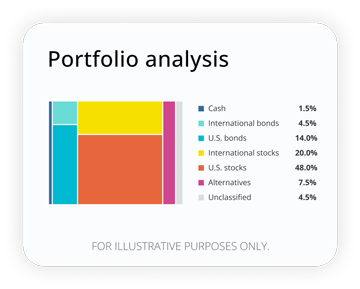
How well are your investments performing?
Analyze your portfolio in minutes and receive a target allocation for your goals.
1 The Wall Street Journal, “The Company Founders Who Think They Need Not One but Two Successors,” September 2025.
2 The New York Times, “Take Two: Why Big Companies Are Naming Co-C.E.O.s,” October 2025.
3 Barron’s “Why the World Is Suddenly Awash With a Wave of Co-CEOs,” September 2025.
4 Harvard Business Review, “When Two Leaders Are Better Than One,” September 2025.5 Harvard Business Review, “When Two Leaders Are Better Than One,” September 2025.
6 The Wall Street Journal, “The Company Founders Who Think They Need Not One but Two Successors,” September 2025.
7 CNBC, “Spotify founder Daniel Ek stepping down as CEO, company names co-CEOs to replace him,” September 2025
8 CNBC, “Oracle names Clay Magouyrk and Mike Sicilia as co-CEOs,” September 2025.
9 CNBC, “Comcast names Mike Cavanagh as co-CEO alongside Brian Roberts,” September 2025.
10 Reuters, “More companies adopt co-CEO structure,” September 2025.
11 Fast Company, “Inside Netflix unusual co-CEO arrangement—and why it works,” September 2024.
12 Reuters, “More companies adopt co-CEO structure,” September 2025.
13 Entrepreneur “Are 2 CEOs Better Than 1? Here Are The Benefits and Drawbacks You Must Consider,” August 2024.
14 The Wall Street Journal, “The Company Founders Who Think They Need Not One but Two Successors,” September 2025
15 The New York Times, “Take Two: Why Big Companies Are Naming Co-C.E.O.s,” October 2025.
16 The New York Times, “Take Two: Why Big Companies Are Naming Co-C.E.O.s,” October 2025.
17 CEO Today, “Companies with Co-CEOs: Bold Leadership or Risky Gamble?” November 2024.
18 Quartz, “Let's talk about all these co-CEOs,” October 2025.
19 Harvard Business Review, “When Two Leaders Are Better Than One,” September 2025.
20 SAP Investors Relations, “SAP Co-Chief Executive Officer Christian Klein Continues as CEO, Jennifer Morgan Departs,” April 2020.
21 Harvard Business Review, “When Two Leaders Are Better Than One,” September 2025.
RO4972596-1125
 Get The Currency newsletter



The Currency editors
Staff contributors
The CurrencyTM writers and editors cover the latest financial news and insights shaping how we live, work, and play. The team provides accurate, data-driven, and timely content aimed at empowering financial freedom for all.
The content contained in this blog post is intended for general informational purposes only and is not meant to constitute legal, tax, accounting or investment advice. You should consult a qualified legal or tax professional regarding your specific situation. No part of this blog, nor the links contained therein is a solicitation or offer to sell securities. Compensation for freelance contributions not to exceed $1,250. Third-party data is obtained from sources believed to be reliable; however, Empower cannot guarantee the accuracy, timeliness, completeness or fitness of this data for any particular purpose. Third-party links are provided solely as a convenience and do not imply an affiliation, endorsement or approval by Empower of the contents on such third-party websites. This article is based on current events, research, and developments at the time of publication, which may change over time.
Certain sections of this blog may contain forward-looking statements that are based on our reasonable expectations, estimates, projections and assumptions. Past performance is not a guarantee of future return, nor is it indicative of future performance. Investing involves risk. The value of your investment will fluctuate and you may lose money.
Certified Financial Planner Board of Standards Inc. (CFP Board) owns the certification marks CFP®, CERTIFIED FINANCIAL PLANNER™, CFP® (with plaque design), and CFP® (with flame design) in the U.S., which it authorizes use of by individuals who successfully complete CFP Board's initial and ongoing certification requirements.