

The cost of cheer: Tracking America’s holiday spending surge
The cost of cheer: Tracking America’s holiday spending surge
The cost of cheer: Tracking America’s holiday spending surge

Every December, Americans’ wallets tell a story. Holiday shopping isn’t just about gifts and decorations—it’s a reflection of consumer confidence and household budgeting strategies. Looking at data from the Empower Personal Dashboard™ on holiday season spending (primarily December) from 2020 through 2024, we see steady growth: overall holiday season spending rose 41%, rising from $374 in December 2020 to $529 in December 2024.
Key findings:
- Overall holiday spending grew 41%, rising from $374 in December 2020 to $529 in December 2024.
- Beauty and cosmetics nearly tripled (up 194%), climbing from an average of $237 in December 2020 to $697 in 2024.
- Footwear surged 28%, rising from an average of $136 in 2020 to $174 in 2024, while toys and games declined, slipping from an average of $150 in 2020 to $142 in 2024.
- Electronics spending increased 20%, climbing from $810 in December 2020 to $975 in December 2024.
- Home and décor spending has become a holiday tradition, rising from an average of $684 in 2020 to $914 in 2024.
Beauty and cosmetics: From steady to splurge
In December 2020, average spending was $237. By December 2024, it had climbed to $697, nearly a threefold jump. The growth wasn’t linear—spending rose 47% in 2021 to $358, dipped 4% in 2022 to $344, then rebounded with a 53% surge in 2023 to $525 and a further 23% gain in 2024, reaching $647. This trend reflects both inflation and a cultural shift toward self-care and luxury beauty gifting. Beauty spending also consistently spikes every November and December, making it one of the most reliable holiday categories year after year.
Apparel and footwear: The seasonal essentials
Clothing and shoes remain classic holiday staples. In December 2020, spending on apparel averaged $226, while footwear averaged $136. By December 2024, apparel had grown 21% to $273, and footwear had climbed 28% to $174. Apparel spending has risen gradually, with December consistently outpacing fall months. Footwear, however—especially sneakers and premium brands—has clearly emerged as a statement gift.
Electronics: The big-ticket holiday darling
In December 2020, average spending was $810, already well ahead of most categories. By December 2024, it had risen to $975. While the 20% growth rate is relatively modest compared to other categories, electronics still hold the crown as the biggest-ticket holiday purchases. Black Friday and Cyber Monday remain anchors of the shopping calendar, keeping electronics in a league of their own.
Toys and games: A fading but seasonal tradition
Toys and games show a fading seasonal boost. In December 2020, average spending was $150, but by December 2024 it declined 5% to $142. While there are occasional spikes, the long-term trend suggests traditional toys are losing ground to electronic and digital alternatives.
Home and furnishings: A holiday oddity
Home and furnishings aren’t usually seen as holiday categories, but the data shows steady December bumps year after year. In December 2020, average spending was $684, rising 34% to $914 by December 2024.
Balancing joy and budgets
According to Empower’s Going Rate study, 75% of Americans say gifts are more expensive due to inflation and tariffs, and nearly 60% feel that gifting culture has gotten out of hand. Almost half (48%) even report experiencing “gift fatigue.” To cope, many households are getting more strategic: 58% set aside a dedicated budget for gift-giving, while 63% say they shop primarily based on price.
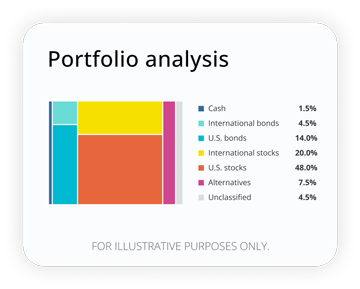
How well are your investments performing?
Analyze your portfolio in minutes and receive a target allocation for your goals.
RO4827347-0925
 Be current.


The content contained in this blog post is intended for general informational purposes only and is not meant to constitute legal, tax, accounting or investment advice. You should consult a qualified legal or tax professional regarding your specific situation. No part of this blog, nor the links contained therein is a solicitation or offer to sell securities. Compensation for freelance contributions not to exceed $1,250. Third-party data is obtained from sources believed to be reliable; however, Empower cannot guarantee the accuracy, timeliness, completeness or fitness of this data for any particular purpose. Third-party links are provided solely as a convenience and do not imply an affiliation, endorsement or approval by Empower of the contents on such third-party websites. This article is based on current events, research, and developments at the time of publication, which may change over time.
Certain sections of this blog may contain forward-looking statements that are based on our reasonable expectations, estimates, projections and assumptions. Past performance is not a guarantee of future return, nor is it indicative of future performance. Investing involves risk. The value of your investment will fluctuate and you may lose money.
Certified Financial Planner Board of Standards Inc. (CFP Board) owns the certification marks CFP®, CERTIFIED FINANCIAL PLANNER™, CFP® (with plaque design), and CFP® (with flame design) in the U.S., which it authorizes use of by individuals who successfully complete CFP Board's initial and ongoing certification requirements.