

🛟Safety net

08.28.2025
Americans’ rainy-day fund, in Silicon Valley terms: The median U.S. emergency fund stands at $500, according to new Empower research — the equivalent of about 42 shares of AI chipmaker Nvidia, at its January 22, 1999 IPO price of $12* each.
Boomers lead with a median of $2,000 set aside, while Gen Z holds $400 and Millennials have $300 in their safety net.
Still, momentum is building: 64% of Americans say emergency savings is a top financial priority this year, 17% add to it monthly, and 31% have contributed in the past month.
— The Editors

🍔 Burger backup: Americans bite into an average of 2.4 burgers a day and they can enjoy them with a side of nostalgia: McDonald’s is reviving Grimace, Hamburglar, and other 1970s mascots with a limited-release adult Happy Meal* and themed merchandise through collabs with retailers Pacsun and Away. A previous Grimace reboot helped boost sales over 11%.*
🏛️ Tax shelter: New reforms under the One Big Beautiful Bill Act passed in July may encourage charitable giving among smaller donors: Beginning in 2026, U.S. taxpayers who take the standard deduction will be eligible for an above-the-line tax break of up to $1,000 for individuals and $2,000 for couples who donate to charity. At the same time, large-scale donors will face tighter deduction rules, with new income thresholds and caps.
📦 Import shift: A new executive order ends the tariff exemption for imports at or under $800,* starting August 29. Private carrier shipments face full duties; postal packages get flat fees. The update supports U.S. makers but may affect affordability and access to goods from other countries.
🌶️ Resilient returns: Casual dining chain Chili’s is boosting margins. Same-store sales jumped almost 24%* last quarter, with traffic up over 16%. According to Empower Personal DashboardTM data, Americans spent an average of $897 a month dining out during the 12-month period ending in July.

Accelerating access
A new executive order directs the Department of Labor to reevaluate guidance around alternative asset investments in retirement plans and work with the Securities and Exchange Commission and Treasury Department to explore expanded access to a broader range of asset classes — including private investments, cryptocurrency, lifetime income, and other investment types — within 401(k) and other defined contribution plans.
New Empower research shows 79% of retirement plan participants believe all investors should have access to the same investment products as institutional investors, and uncovers how American workers are thinking about being able to invest in new ways, outside of public markets. More than 7 in 10 plan participants agree that having professionally managed private investments in retirement plans helps level the playing field.
In an op-ed, Empower President and CEO Edmund F. Murphy III shares his perspective.*

Welcome home
There’s no place like home — or like the Las Vegas Sphere, where 120,000* tickets have already sold for an immersive AI-powered reboot of “The Wizard of Oz.” Tickets start at over $100 each and promise a full-sensory experience: 167,000 speakers, moving seats, wind effects, and custom scents.
Spending on experiences is projected to reach $2.1 trillion by 2032. The trend is gaining momentum — admission prices rose 1.5%* in July and are up 4.4% from a year ago, per the Consumer Price Index.

AOL retires dial-up
After 34 years, the familiar “You’ve got mail” greeting will officially sunset as AOL disconnects its dial-up internet service later this year. During the dot-com boom, AOL’s market value reached nearly $164 billion.*
Those sitting behind the computer screen may have some time horizons in common with the web provider: Americans say you should start saving for retirement at 27 and retire by 58 — a more than 30-year span similar to AOL’s legacy.
Good money habits can pay off over time: Empower research shows about half of Americans (44%) say it's important to save earlier than you think for big financial milestones like retirement.

In case you missed it — read on.
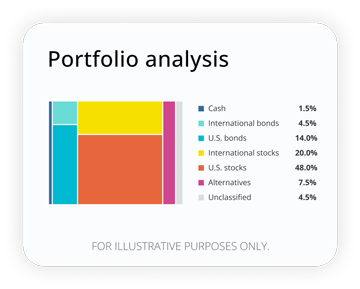
How well are your investments performing?
Analyze your portfolio in minutes and receive a target allocation for your goals.
*Third-party data is obtained from sources believed to be reliable; however, Empower cannot guarantee the accuracy, timeliness, completeness, or fitness of this data for any particular purpose. Third-party links are provided solely as a convenience and do not imply an affiliation, endorsement, responsibility, or approval by Empower of the contents on such third-party websites.
RO4751139-0825 WF4773200-0825






The Currency editors
Staff contributors
The CurrencyTM writers and editors cover the latest financial news and insights shaping how we live, work, and play. The team provides accurate, data-driven, and timely content aimed at empowering financial freedom for all.
The content contained in this blog post is intended for general informational purposes only and is not meant to constitute legal, tax, accounting or investment advice. You should consult a qualified legal or tax professional regarding your specific situation. No part of this blog, nor the links contained therein is a solicitation or offer to sell securities. Compensation for freelance contributions not to exceed $1,250. Third-party data is obtained from sources believed to be reliable; however, Empower cannot guarantee the accuracy, timeliness, completeness or fitness of this data for any particular purpose. Third-party links are provided solely as a convenience and do not imply an affiliation, endorsement or approval by Empower of the contents on such third-party websites. This article is based on current events, research, and developments at the time of publication, which may change over time.
Certain sections of this blog may contain forward-looking statements that are based on our reasonable expectations, estimates, projections and assumptions. Past performance is not a guarantee of future return, nor is it indicative of future performance. Investing involves risk. The value of your investment will fluctuate and you may lose money.
Certified Financial Planner Board of Standards Inc. (CFP Board) owns the certification marks CFP®, CERTIFIED FINANCIAL PLANNER™, CFP® (with plaque design), and CFP® (with flame design) in the U.S., which it authorizes use of by individuals who successfully complete CFP Board's initial and ongoing certification requirements.