

Rent vs. buy in 2026: Which is cheaper in today’s housing market?
Rent vs. buy in 2026: Which is cheaper in today’s housing market?
Is it better to rent or buy in 2026? Comparing mortgage rates, home prices, rent costs, and the total cost of homeownership can help determine the right move
Rent vs. buy in 2026: Which is cheaper in today’s housing market?
Is it better to rent or buy in 2026? Comparing mortgage rates, home prices, rent costs, and the total cost of homeownership can help determine the right move

03.06.2026
Key takeaways
- Mortgage rates fell to 6%, reshaping affordability and rent vs. buy decisions in the 2026 housing market.
- Buying is cheaper in 23 of the 50 largest metros, while renting costs less in 27, showing how location drives affordability.
- The true cost of homeownership includes taxes, insurance, and maintenance — not just the monthly mortgage payment.
Is it better to rent or buy in 2026? With mortgage rates back to 6% but home prices still elevated, many households are weighing whether it’s cheaper to rent or buy — and how long they would need to stay for buying to make financial sense.1 The rent vs. buy decision now depends on location, total housing costs, and the opportunity cost of tying up cash in a down payment. With 40% of Americans planning on moving in 2026, many are reassessing whether homeownership or renting better fits their financial goals.2
Is it cheaper to rent or buy?
The answer depends largely on where you live. National averages can mask significant differences in local housing costs and monthly payments, making location one of the most important factors in deciding whether it’s better to rent or buy.
Analyzing Zillow rental and home prices in the 50 largest metro areas shows that buying is cheaper than renting in 23 cities, while renting costs less in 27 metros.3
Top 10 metros where buying is cheaper than renting
Rank | Metro | Monthly mortgage (principal and interest) | Median rent | Monthly savings (rent minus mortgage) |
1 | Chicago, IL | $1,613 | $2,091 | $478 |
2 | Miami, FL | $2,244 | $2,645 | $401 |
3 | Pittsburgh, PA | $1,049 | $1,449 | $400 |
4 | New Orleans, LA | $1,218 | $1,568 | $350 |
5 | Tampa, FL | $1,693 | $1,986 | $293 |
6 | Memphis, TN | $1,146 | $1,415 | $269 |
7 | Cleveland, OH | $1,141 | $1,390 | $249 |
8 | Detroit, MI | $1,227 | $1,455 | $228 |
9 | Oklahoma City, OK | $1,153 | $1,347 | $194 |
10 | Birmingham, AL | $1,212 | $1,385 | $173 |
Top 10 metros where renting is cheaper than buying
Rank | Metro | Monthly mortgage (principal and interest) | Median rent | Monthly savings (mortgage minus rent) |
1 | San Jose, CA | $7,500 | $3,406 | $4,094 |
2 | San Francisco, CA | $5,242 | $3,064 | $2,178 |
3 | Los Angeles, CA | $4,538 | $2,885 | $1,653 |
4 | San Diego, CA | $4,345 | $2,871 | $1,474 |
5 | Seattle, WA | $3,511 | $2,183 | $1,328 |
6 | Salt Lake City, UT | $2,672 | $1,581 | $1,091 |
7 | Denver, CO | $2,678 | $1,838 | $840 |
8 | Portland, OR | $2,577 | $1,778 | $799 |
9 | Sacramento, CA | $2,717 | $2,197 | $520 |
10 | Austin, TX | $2,005 | $1,561 | $444 |
Additional costs to consider
There’s more to owning a home than just paying the mortgage. The total cost of homeownership includes property taxes, homeowners insurance, maintenance, and potential HOA fees, all of which affect the true cost of renting vs. buying. Tenants’ and household insurance costs are also rising, up 6.9% in January compared to a year earlier, according to the Consumer Price Index.4 Understanding the full picture — principal, interest, taxes, and insurance (PITI) — is crucial, with financial analysts recommending housing costs not exceed 28% of gross income.
Mortgage rates fall to 6%, reshaping the affordability gap
Whether it’s cheaper to buy than rent often comes down to mortgage rates. A decline in borrowing costs can narrow — or widen — the affordability gap. The average 30-year fixed mortgage rate sat at 6% as of March 5.5
While lower than a year ago, current rates remain far above the sub-4% mortgages that 48% of U.S. homeowners hold. Nearly three-fourths (74%) say they are unwilling to give up their existing rate, according to Empower research. Mortgage rates above 5.5% represent a psychological tipping point for more than half (54%) of homeowners, significantly influencing decisions to delay purchases.
Read more: Homeowners are doing mortgage math — this is their tipping point
Home prices remain elevated
With the median U.S. existing-home price at $396,800 in January 2026, affordability continues to shape the rent-versus-buy decision.6 New construction single family homes are even higher at $414,400 in December 2025.7
The housing market is expected to gradually rebalance this year, according to Zillow’s latest forecast, as mortgage rates moderately ease. Home values are projected to end the year roughly unchanged (+0.9%), while existing-home sales are expected to increase modestly after a flat 2025.8
Buying still requires a significant upfront investment, including a down payment and closing costs. Even small changes in home values can affect the overall cost of buying a house — particularly in higher-priced markets. Home buyer downpayments have been shrinking in recent months; the typical homebuyer put down 15.2% of the purchase price in December 2025, compared with 16.7% a year earlier.9
Read more: All things equal? Why new home prices are nearly the same as existing homes
Rent costs narrow the gap
Rents have climbed, with Zillow data placing the national average at $2,000 monthly, as of March. In many areas, the difference between renting and buying — at least on a monthly basis — has narrowed to the point where mortgage payments and rents are comparable.10
For example, a median-priced home of $396,800 with a 20% down payment at a 6% mortgage rate carries a principal and interest payment of approximately $1,904 per month.
Read more: How empty-nest homes fit into the housing equation
Opportunity cost: What else could the money do?
Buying a home typically requires a substantial down payment. For a $396,800 home, a 20% down payment equals $79,360. If that amount were invested in a diversified portfolio returning 6% annually, and just $100 a month were added, it could grow to roughly $159,000 over 10 years. This is the essence of opportunity cost: Money tied up in home equity may grow more slowly than investments, and it is less liquid. Renters maintain greater flexibility to access and redeploy capital, while owners benefit from potential appreciation and the “forced savings” of mortgage principal repayment.11
Read more: Tapping in: Home equity lending starts to flow again
Capital gains and taxes on a sale
The tax implications of selling a home are another important factor. Homeowners can exclude up to $250,000 in capital gains from the sale of a primary residence if single, or $500,000 if married filing jointly, provided the home was owned and used as a primary residence for at least two of the past five years. Gains above these thresholds are taxable.
This exclusion can be a powerful wealth-preservation tool, but it doesn’t apply to rental properties. For those considering downsizing, the timing of the sale — and reinvestment of proceeds — can significantly affect net returns.
Read more: Why buyers are slowly gaining an edge in a challenging housing market
Wealth-building through home equity
Homeownership remains a primary source of wealth for Americans. Federal Reserve data show total U.S. home equity was over $34 trillion in Q3 2025.12 The average homeowner is 43 times as wealthy as the typical renter, with homeowners’ median net worth at $430,000, compared to just $10,000 for renters.13 This wealth gap underscores the long-term potential of equity growth, even in a higher-rate environment.
Read more: Forget buying a first home — buy a first property instead
Lifestyle and flexibility considerations
The financial math is only part of the decision. Lifestyle needs matter:
- Early career professionals may prioritize mobility between cities, making renting more practical.
- Families with school-age children may value the stability of ownership.
- Remote workers may view buying in lower-cost areas as a path to long-term savings.
- Retirees or empty nesters may find renting a strategic way to unlock equity and reduce maintenance burdens.
Renting trends for adults 55 and older
While homeownership tends to climb with age, the fastest-growing group of renters is those 55 and older, according to 2023 Census Bureau data compiled by the National Investment Center for Seniors Housing & Care.14,15 The share of renters 65 and older has risen 30% over the last decade.16
This shift reflects both lifestyle preferences and financial strategy — many older adults are selling homes to unlock equity, reduce maintenance responsibilities, and gain flexibility in retirement.17 They are exploring a range of options: downsizing to apartments in walkable neighborhoods, moving into age-restricted communities, or choosing luxury rentals that offer amenities without the long-term commitment of ownership.
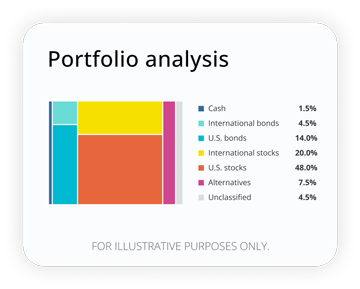
How well are your investments performing?
Analyze your portfolio in minutes and receive a target allocation for your goals.
Methodology
This analysis uses January 2026 Zillow Home Value Index (ZHVI) mid-tier home values for the 50 largest U.S. metro areas, based on Zillow’s non-seasonally adjusted monthly dataset. Monthly mortgage payments were estimated assuming a 20% down payment, a 30-year fixed-rate loan, and a 6.00% interest rate. Payments reflect principal and interest only and exclude taxes, insurance, and other ownership costs. Mortgage estimates were compared to January 2026 Zillow Observed Rent Index (ZORI) “Smoothed” metro-level rent data to determine whether renting or buying is cheaper in each market.
1 Freddie Mac, “Mortgage Rates,” March 2026.
2 American Home Shield, “2026 State of Moving Forecast Survey: Where and How are Americans Moving?” February, 2026.
3 Zillow, “Housing Data,” March 2026.
4 Bureau of Labor Statistics, “Consumer Price Index – January 2026,” February 2026.
5 Freddie Mac, “Mortgage Rates,” March 2026.
6 Federal Reserve Bank of St. Louis, “Median Sales Price of Existing Homes,” January 2026.
7 U.S. Census Bureau, “Monthly new residential sales, December 2025,” February 2026.
8 Zillow, “Zillow Home Value and Home Sales Forecast (February 2026),” February 2026.
9 Redfin, “Redfin Reports Homebuyer Down Payments Shrink for First Time in 5 Months,” February 2026.
10 Zillow, “US rental market,” March 2026.
11 Knowledge at Wharton, “Should I Pay Off My Mortgage Early in This Economy?” May 2023.
12 Federal Reserve Bank of St. Lous, “Households; Owners' Equity in Real Estate,” January 2026.
13 National Association of Realtors, “Homeowners Are 43 Times Wealthier Than Renters,” June 2025.
14 The Wall Street Journal, “The Keys to Aging at Home? Frank Conversations and Financial Planning,” September 2024.
15 The Wall Street Journal, “Do You Need to Own a House? Many Older Americans Decide They Don’t,” August 2025.
16 The Wall Street Journal, “The Keys to Aging at Home? Frank Conversations and Financial Planning,” September 2024.
17 The Wall Street Journal, “Do You Need to Own a House? Many Older Americans Decide They Don’t,” August 2025.
RO5279495-0326
 Get The Currency newsletter



The Currency editors
Staff contributors
The CurrencyTM writers and editors cover the latest financial news and insights shaping how we live, work, and play. The team provides accurate, data-driven, and timely content aimed at empowering financial freedom for all.
The content contained in this blog post is intended for general informational purposes only and is not meant to constitute legal, tax, accounting or investment advice. You should consult a qualified legal or tax professional regarding your specific situation. No part of this blog, nor the links contained therein is a solicitation or offer to sell securities. Compensation for freelance contributions not to exceed $1,250. Third-party data is obtained from sources believed to be reliable; however, Empower cannot guarantee the accuracy, timeliness, completeness or fitness of this data for any particular purpose. Third-party links are provided solely as a convenience and do not imply an affiliation, endorsement or approval by Empower of the contents on such third-party websites. This article is based on current events, research, and developments at the time of publication, which may change over time.
Certain sections of this blog may contain forward-looking statements that are based on our reasonable expectations, estimates, projections and assumptions. Past performance is not a guarantee of future return, nor is it indicative of future performance. Investing involves risk. The value of your investment will fluctuate and you may lose money.
Certified Financial Planner Board of Standards Inc. (CFP Board) owns the certification marks CFP®, CERTIFIED FINANCIAL PLANNER™, CFP® (with plaque design), and CFP® (with flame design) in the U.S., which it authorizes use of by individuals who successfully complete CFP Board's initial and ongoing certification requirements.