

Ring in: Saying yes to engagement season
Ring in: Saying yes to engagement season
A marriage proposal can take nearly as much financial planning as tying the knot
Ring in: Saying yes to engagement season
A marriage proposal can take nearly as much financial planning as tying the knot
11.18.2025

Listen
·Ring in: Saying yes to engagement season
Key takeaways
47% of couples get engaged between November and February
An engagement ring costs $5,200 on average
People expect to spend over $31,000 on a wedding
A wedding proposal sparks excitement, and planning ahead can keep finances happy, too. Recent tariffs and changes in metals prices could change how engagement rings are priced.
Americans have been getting married later in life, with the average age for a first marriage at 30.2 for men and 28.6 for women as of 2024.1 Younger adults may be putting off the move, though it’s still very much in the picture: Nearly 70% of adults ages 18-34 (who haven’t been married) say they want to get married one day.2
The sky’s the limit when it comes to wedding planning, though Empower findings show that Americans expect to spend an average of $31,281 for a wedding — with Millennials willing to top $51,000.
The end-of-year holidays are a popular time for couples to get engaged, and 2025 in particular has set a financially minded stage.
When is engagement season?
Popping the question pops in the winter: Close to half of couples (47%) get engaged between November and February.3 This stretch of the calendar also lends itself to gatherings with family and loved ones, including Thanksgiving, Christmas, New Year’s, and Valentine’s Day.
Proposal season could also be a welcome occasion for vendors. A fifth (20%) of people proposing also hire a professional photographer to document the moment.4
How much does an engagement ring cost?
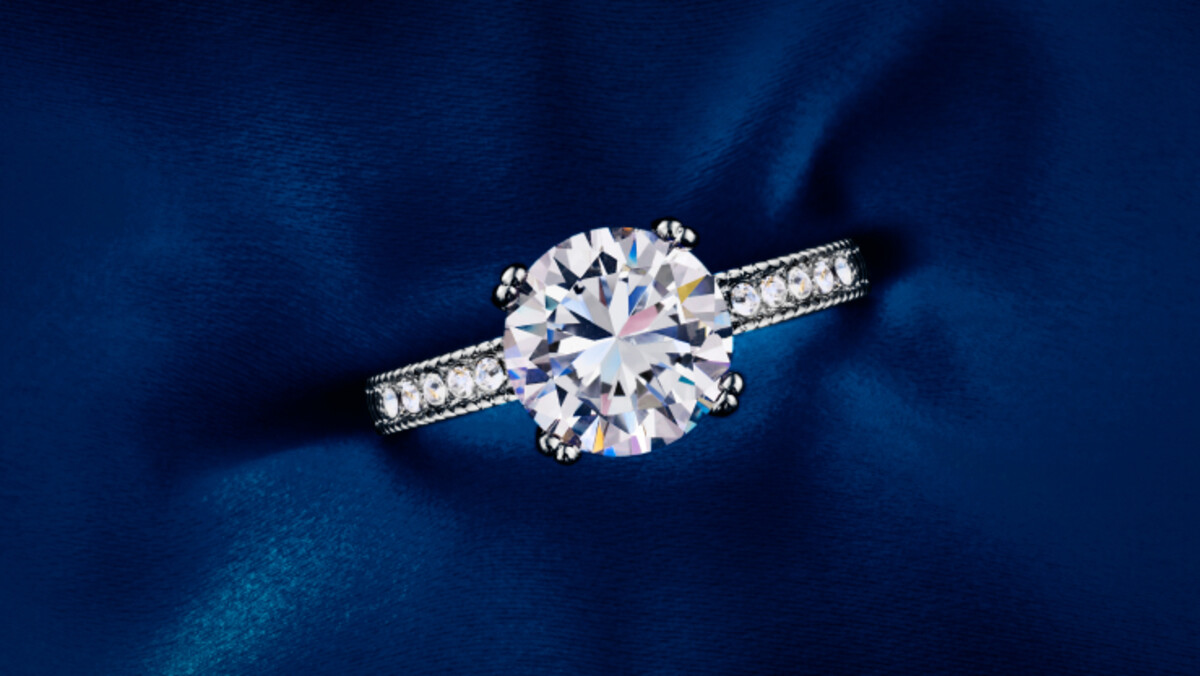
The average cost of an engagement ring is $5,200, a drop of over 15% from 2021.5 However, recent macroeconomic pricing pressures could be changing the game for consumers.
Read more: As diamond prices drop, colored gems capture consumer attention
At the start of 2025, diamond prices had fallen 26% over the past two years due to inflation and a drop in demand for luxury goods.6 Though as tariffs entered the scene, the cost of natural diamonds has fluctuated: Prices for polished stones in the U.S. rose around 6-10% between January and the end of August.7
People are also rethinking how to get an engagement ring. Traditional jewelers aren’t the only place to buy into the $13 billion engagement ring business; warehouse chain Costco sells more than 200 pounds of diamonds annually. Online engagement-ring retailers Blue Nile and James Allen are both divisions of Signet Jewelers and drove 7% of the parent company’s $7.8 billion in sales in fiscal 2023.8
Synthetic diamonds — which are manmade, though nearly identical in chemical composition to natural stones — have seen their popularity grow over the past few years. Over half of couples have now bought a lab-grown diamond for their engagement ring, and value is part of the equation: People may spend 1.5 times more money on a ring with a natural diamond compared to a lab-grown one.9
The pieces are also becoming more accessible to couples, as Walmart saw a 175% jump in year-over-year sales of lab-grown diamond jewelry in 2024.10
The influence of metals prices can also impact fine jewelry. Platinum and gold are among the popular metals used in engagement rings, with platinum typically commanding a 40-50% premium over the latter due to its density.11 Both experienced record-breaking run-ups in futures prices in 2025, though recent cooling in prices starting in October could mean relief for shoppers.12
Engagement rings may be one of the most visible symbols of a new commitment, and the proposal moment itself can add costs, too. Big cultural moments can influence what people search for and buy; recent high‑profile engagements in 2025 lifted interest in certain ring cuts and designers, which can affect availability and pricing.13,14
Read more: Wedded bliss, with a price twist
Sharing a proposal story or post in person or online can be a happy part of the wedding process, and it could also spark joy for others considering the life change. The fear of missing out is real: More than half of Americans (57%) have made a financial decision after seeing others' lifestyles online, according to Empower research.
Keeping budget in mind
Money moves like planning to get engaged or pay for a wedding shouldn’t be made without a discussion. An Empower study found that 42% of people don’t have savings set aside for big life milestones, including weddings. Preparation is key to keep joyful celebrations from weighing down finances, especially as the average engagement length is only around 15 months.15
Keeping open lines of communication with a future spouse and in-laws could help everyone set expectations on who’s paying for what and the different payment options available.
Be aware that generous deposits from parents or other donors can trigger gift tax for the givers. Buy Now Pay Later has also stood out as a way for nearly half (49%) of Americans to more easily manage large expenses.
Jumping in with joy
Getting engaged can be a memorable moment on the path of life, and being aware of how finances play into marriage makes a lasting impression. Down the line, couples can also see the payoffs of the tax benefits of getting married.
How well are your investments performing?
Analyze your portfolio in minutes and receive a target allocation for your goals.
1 USAFacts, “How has marriage in the US changed over time?” February 2025.
2 Pew Research Center, “Among young adults without children, men are more likely than women to say they want to be parents someday,” February 2024.
3 The Knot, “Engagement Season Is Upon Us—Here's When It Is & How to Prepare,” October 2025.
4 The Knot, “Engagement Season Is Upon Us—Here's When It Is & How to Prepare,” October 2025.
5 Fortune, “More than half of millennial and Gen Z couples pick engagement rings with a lab-grown diamond—and it means larger stones aren’t the status symbol they used to be,” March 2025.
6 Fortune, “Diamond prices are tumbling as both natural and lab-grown varieties lose their sparkle with customers worldwide,” January 2025.
7 Newsweek, “Getting Engaged Is Becoming More Expensive Under Trump,” August 2025.
8 ModernRetail, “Why online jeweler James Allen is leveraging ChatGPT to assist shoppers,” August 2023.
9 Fortune, “More than half of millennial and Gen Z couples pick engagement rings with a lab-grown diamond—and it means larger stones aren’t the status symbol they used to be,” March 2025.
10 The New York Times, “Would You Buy Your Diamond Engagement Ring at Walmart?” May 2025.
11 Brides, “Platinum Versus White Gold: What's the Difference and Which Is Right for Your Engagement Ring and Wedding Band?” November 2025.
12 Forbes, “Gold Prices Fall Most Since 2013—Here’s Why Metals Are Plunging,” October 2025.
13 Vogue, “The Biggest Celebrity Engagements of 2025—So Far,” November 2025.
14 Today.com, “3 Rings From Taylor Swift's Engagement Ring Designer up for Auction. See the Prices,” November 2025.
15 The Knot, “Engagement Season Is Upon Us—Here's When It Is & How to Prepare,” October 2025.
RO5005989-1125
 Be current.


The Currency editors
Staff contributors
The CurrencyTM writers and editors cover the latest financial news and insights shaping how we live, work, and play. The team provides accurate, data-driven, and timely content aimed at empowering financial freedom for all.
The content contained in this blog post is intended for general informational purposes only and is not meant to constitute legal, tax, accounting or investment advice. You should consult a qualified legal or tax professional regarding your specific situation. No part of this blog, nor the links contained therein is a solicitation or offer to sell securities. Compensation for freelance contributions not to exceed $1,250. Third-party data is obtained from sources believed to be reliable; however, Empower cannot guarantee the accuracy, timeliness, completeness or fitness of this data for any particular purpose. Third-party links are provided solely as a convenience and do not imply an affiliation, endorsement or approval by Empower of the contents on such third-party websites. This article is based on current events, research, and developments at the time of publication, which may change over time.
Certain sections of this blog may contain forward-looking statements that are based on our reasonable expectations, estimates, projections and assumptions. Past performance is not a guarantee of future return, nor is it indicative of future performance. Investing involves risk. The value of your investment will fluctuate and you may lose money.
Certified Financial Planner Board of Standards Inc. (CFP Board) owns the certification marks CFP®, CERTIFIED FINANCIAL PLANNER™, CFP® (with plaque design), and CFP® (with flame design) in the U.S., which it authorizes use of by individuals who successfully complete CFP Board's initial and ongoing certification requirements.