

The Edge presents: A conversation with Tom Garfinkel
The Edge presents: A conversation with Tom Garfinkel
Bold Vision, Conviction and the Making of a Global Destination
The Edge presents: A conversation with Tom Garfinkel
Bold Vision, Conviction and the Making of a Global Destination

04.29.2026
For our first episode of The Edge, Ed sits down with Tom Garfinkel, Vice Chairman, President and CEO of the Miami Dolphins and Hard Rock Stadium and Managing Partner of the Formula 1 Crypto.com Miami Grand Prix. Tom looked at a 30-year-old stadium with orange seats and a sea of parking lots and saw something very different. Today, that same campus is home to a Formula 1 race, world-class tennis, international soccer, and NFL football.
In this conversation, Tom takes viewers inside the growth of Hard Rock Stadium over the past decade and discusses how the vision and investment of owner Stephen Ross changed everything. He also shares how the organization landed a Formula 1 race at the stadium in Miami Gardens when many assumed it belonged downtown — an event that has since grown into one of the most culturally significant sporting events on the calendar as it celebrates its fifth edition this weekend.
But this episode goes well beyond sports. Tom reflects on the moments he got wrong, what he looks for in people, how he built the right team and culture around a bold vision, and why the painting in his office that reads Always Be Learning is more than a motto.
It’s a conversation about vision, judgment, resilience, and what it takes to keep growing long after most people call it a win.
Explore key moments
00:00 – 02:50 From checking IDs in Chicago to Hard Rock Stadium
02:51 – 06:20 Steve Ross — vision, energy, and the long game
06:21 – 11:00 The $1 billion private bet and the Jerry Maguire memo
11:01 – 14:15 Bringing Formula 1 to Miami
14:16 – 18:50 The 2041 F1 deal and thinking in decades
18:51 – 23:30 Customer first and the $17,000 decision
23:31 – 29:50 Hiring for character, judgment, and continuous improvement
29:51 – 36:20 The NFL goes global
36:21 – 40:00 Always Be Learning — Tom’s edge
Read the transcript
00;00;00;16 - 00;00;10;17
ED
Tom, great to be with you here in Miami. And welcome to The Edge.
TOM
It's great to be here. Thank you for having me.
ED
Yeah. So you grew up in Walnut Creek, California. You were the high school quarterback.
00;00;10;19 - 00;00;30;01
You almost walked on to the football team at Colorado. Tell me that story.
TOM
Oh, I was a I was a pretty average quarterback in high school. And loved the game of football and, was going to go to Saint Mary's College, California. A small place. But I got to Boulder that summer and there was a guy in my dorm named Oakland Salavea.
00;00;30;04 - 00;00;52;01
And Oakland was 6’6”, 240, and it was faster than me in the 40. Well, I realized that if I got hit by and got hit by him, I'd probably break in half. And I was going to be either... had I tried to walk on… I would have been either a small tight end or a slow wide receiver at Colorado at the time, they were running the option quarterback.
So I decided I didn't want to be Rudy. I'd be better off just going to school. So I ended up not walking on.
ED
Yeah. And then, you found your way to the University of Michigan, to the Ross school, and you got your MBA. Was it shortly after graduating from Colorado?
TOM
No, it was actually several years later, in fact, when I went back to, to get my MBA, I was 29 years old.
00;01;17;28 - 00;01;50;01
So, it was several years later, I was working for Texaco at the time, and I was, running some corporate branding sponsorships. The sponsorship side of things started with motorsports, and, and I was in a room with my boss at the time was like the senior VP of communications and, brand and she reported directly to the CEO, and I was in a meeting with the CEO and the CFO and my boss and some others, and they're talking about market capitalization and what the company was worth.
00;01;50;01 - 00;02;11;27
And I didn't know what market capitalization was. So, afterwards I had to go look everything up. I thought we were a $40 billion company because I was thinking the company in terms of revenue, not market cap. And, I realized I need to go back to school and, and learn more about business if I'm going to be a CEO someday, and really be able to run a business.
00;02;11;29 - 00;02;31;11
I had previously applied and got into Wake Forrest to get my MBA when I was at a really boring company, and I was going to work part time. And when I gave up that opportunity and decided to go to Texaco, to leave Miller and go to Texaco and move to New York, I was determined that, I wanted to go back and get my MBA at either Michigan or Kellogg at Northwestern.
00;02;31;13 - 00;02;49;25
So, thankfully, I got into Michigan, and ended up going there.
ED
What's interesting is this this theme of sports is sort of pervasive throughout your life, right? I mean, it started in high school and into college and then even in business. It sounds like you really wanted to go down that path. And right now, we're outside the office.
00;02;49;28 - 00;03;20;25
Setting up for Formula One race week, one of the biggest sporting events in the world. And it's hard to believe this is the same place you walked into in 2013. What was it like back then and what made you believe it could become what it is today?
TOM
Well, yeah, I mean, it definitely was a different place. I mean, we had a stadium that was at the time, you know, 27-28 years old, with orange seats and, you know, bunch of parking lots, basically.
00;03;20;25 - 00;03;54;26
And, you know, Steve had had a vision for before I got here, and then I got here and, and we revised that vision or talked about a lot about what we wanted it to be and what made me believe it could be this was really because of Steve, you know, Steve Ross's sort of, you know, to have someone like Steve who has both, you know, the willingness and the capacity to invest in big ideas and who had big ideas himself, to be fair, gave me the opportunity to sort of be me and, and share in those big ideas and add to them and, and and have some of my own.
00;03;54;26 - 00;04;16;14
And knowing that he was, willing to invest in those things is what gave me the confidence to go do it.
ED
Yeah. And Steve Ross, the owner of this franchise, is one of the most successful real estate developers in the world. What's it like to work for him day to day? His energy is just boundless.
TOM
His energy is boundless.
00;04;16;14 - 00;04;32;14
And, you know, working for him, I think it starts with, he's just a good person, you know, as a good human being cares about people. He cares about, you know, this community. He cares about building and growing things that make the world a better place. And he's just a lot of fun to be around. He's funny.
00;04;32;14 - 00;04;51;23
And he's full of energy. I think probably more than anything, what I've learned from Steve is just, you know, Steve's always looking forward. He never looks back. It's almost like he's never accomplished anything in his life. So, like a lot of people, Steve is not nostalgic. He is not, he is always thinking about learning and growing and what's next and what we're going to do next.
00;04;51;23 - 00;05;07;21
And, you know, I think that helps give him that energy and that positivity and helps keep him young. And he's, he's incredible.
ED
Yeah, I hope I hope I have that energy when I'm 84/85. But I mean, he just every day he shows up and he's taking on the world. And I look at what he's doing in West Palm. Completely transforming West Palm beach.
00;05;07;21 - 00;05;34;04
TOM
It's incredible. I remember being at the, the opening of Hudson Yards with him in 2019, and at that time, he didn't have the vision for West Palm yet. He he was actually, we went from the opening of Hudson Yards and came here to the opening of the first tennis tournament, and he was more excited about what we had done here on campus for the tennis tournament than the opening of Hudson Yards.
ED
This is Miami Tennis.
00;05;34;04 - 00;05;59;20
TOM
Yeah, because Hudson Yards was kind of the opening signal that it was done. You know, it's not that that makes him happy. It's the journey of doing it, you know. So and then, you know, he spent a lot of time in Palm Beach during Covid. And I think it was that time that he developed his vision of the future, of how West Palm Beach, that whole area could become sort of the best place to work, live, and play in the country.
00;05;59;20 - 00;06;20;00
And he's certainly, you know, all-in, invested a lot, not just in real estate, but in bringing schools and hospitals and parks and festivals and trying to really create this great place. And it's not about him. It's about creating this great place to live, work, and play for future generations. So he's yeah, he's definitely a special, special person.
00;06;20;02 - 00;06;50;00
ED
And he's willing to make big bets. You know, a lot of these facilities across the country and sports facilities rely on public financing. And he's invested $1 billion or probably more than a billion dollars of his own money on this campus. What do you think this place means to him beyond the business?
TOM
Well, I think it's, First of all, I think, you know, it is quite a testament to him that, you know, over $1 billion of private money in a world where there's so much public money taken for these types of initiatives.
00;06;50;00 - 00;07;11;16
But, and I think we've proven you can do it with private money and make it profitable and still and still thrive and, and be very additive to the community. Like this Formula One race, economically speaking, is like this, like bringing a Super Bowl every year. And, and what it means to him I mean, again, like, I don't I don't want to answer questions for him necessarily or speak on his behalf.
00;07;11;16 - 00;07;29;03
But, you know, in our conversations, it's a symbol of of what can be done when you have big ideas and you invest in them and you have a great team of people, and you believe in those people, and you build a great team to build something together, that's sustainable for the future. That impacts people's lives positively, like he's doing in West Palm Beach.
00;07;29;06 - 00;07;48;13
What this does is this is a global entertainment destination where people come and share life experiences together. And it's certainly had a huge impact on, on South Florida, economically speaking and otherwise.
ED
Absolutely. And, you know, as I think about it Tom, you made some of the boldest moves in sports business, but I want to go back to where it started.
00;07;48;13 - 00;08;07;25
After college, you were checking IDs outside of bar in Chicago. What did those early jobs teach you about people that still shows up in how you lead today?
TOM
Well, you know, it's a great question. And I had a I had a boss when I was I started out checking IDs a couple of years later, I was running three bars.
00;08;07;25 - 00;08;33;26
One of them I opened, and my boss at the time, we owned the bars. I kind of skipped over some levels to do that. And at one time I had some some challenges with the people that were working for me because I had kind of skipped over them. And he said, he explained to me, he said, Tom, you know, you're not wrong in what you're telling them and what your expectations, your standards or your ideas or how you what you expected, he said.
00;08;33;26 - 00;08;58;12
But you need those people that want to see you succeed, not want to see you fail. And, you know, I was 24 years old at the time, and, you know, it was a great lesson. It was a great lesson in sort of managing people that it wasn't about being right or about, you know, it just forcing the will on to the way things were going to be.
00;08;58;12 - 00;09;22;27
It was about leading people and getting them on board and getting them, to understand why and to be a part of that and, and to feel empowered to do the right things.
ED
I like when you use empower by the way. But yeah. So, when you arrived here in 2013, the team tried and failed to get public money to renovate the stadium.
00;09;23;00 - 00;09;45;29
And you wrote a memo to Steve arguing to do it privately, and you said you handed it to him thinking, "I hope this isn't my Jerry Maguire moment." What was in that memo?
TOM
There were a lot of things in that memo, about what I believed needed to be done to build up, you know, the best organization in sports was the vision and the goal, a lot of different things.
00;09;45;29 - 00;10;05;16
But, you know, part of it was about if there had been an attempt prior to my arrival to, to get public money when I first arrived, it was like, okay, let's get in the room and figure out how we can get this public money. And after about a month or two of that, I wrote the memo and it said, I need you to read this, and then sat down with Steve and explained it.
00;10;05;16 - 00;10;26;12
And I did say, look, this isn't my Jerry Maguire moment, because if you're going to fire me, I haven't bought a house yet, so I might as well get it over with. And, yeah, there was a lot of things, and I think, you know, the private money, it was it was sort of, okay. If we get public money, you know, here's how long it's going to take to get that money.
00;10;26;12 - 00;10;46;05
Here's, you know, here's why it's a pure victory. If we do get it right, here's, you know, if we finance it privately, here's the time frame we can get this done in. And here's the business plan on how we're going to increase, you know, the business and grow the business in that time frame. And, they were all very logical, rational, reasonable arguments that resonated with him.
00;10;46;05 - 00;11;02;16
And I think it was just taking it up the problem, kind of turning it into opportunity, looking at it differently than it had been looked at, and then putting forth like all the reasons why it made sense.
And to his credit, he got it.
ED
Well, I'm sure you put forward a compelling business case given the result here.
00;11;02;19 - 00;11;33;12
And I'm sure he also respected the fact that you were taking the initiative. Bringing Formula One here was another bold move. Most people assume the race belonged downtown, not in the stadium parking lot, Miami Gardens. Walk us through how you got that across the finish line and what almost stopped it.
TOM
Well, initially Formula One really wanted it downtown because, they, they saw the broadcast and they saw the blimp shots, overhead shots of the yachts.
00;11;33;14 - 00;11;57;11
And they wanted it to be sort of the American version of Monaco from that standpoint. You've got yachts in downtown Miami and what that would look like on television, which was a, you know, a noble and bold vision to have. The challenge was from an event operations standpoint. Here's the 20 reasons that doesn't work downtown. You've got the port and the Heat, who you're going to disrupt their business significantly.
00;11;57;11 - 00;12;16;04
You've got the residents who the street they live on is being disrupted significantly. The businesses and small businesses that are going to be disrupted. And I had been on the board of the Texaco Grand Prix back in 1998, in Houston, and had learned about the disruption of what a street race in the downtown Street area in the United States can be.
00;12;16;06 - 00;12;39;05
It's a little bit different when you know it's the sovereign wealth, or the government owns the race and they can they can deal with those issues in other, other places around the world. But in the United States, it's very difficult to conduct a street race. So I had kind of laid out here's the, the reasons and here's why we can do it at the stadium, why I think it makes more sense.
00;12;39;08 - 00;12;55;14
Because we're disrupting ourselves on this, this parcel of land that we have. We're not out in the city streets.
ED
That’s right.
TOM
And, they had fear. They had had it a race in a parking lot in the 80s in Las Vegas, ironically, that got a lot of criticism because it was a race in the park.
00;12;55;17 - 00;13;16;15
And so I think once I brought, you know, first of all, we had a kind of I learned a long time ago, you can sometimes the only way to convince people of things is to take things to their natural conclusion. So we went through a year of diligence with them, open minded to doing it downtown. But everything I had identified in the beginning was kind of where the conclusion came in the end about why it might not work downtown.
00;13;16;17 - 00;13;37;25
You try to get 100,000 people in and out of that downtown area. There's a lot of traffic. When you have a Heat game with 20,000 people. How are we going to get a hundred thousand people in and out of there in addition to the disruption? The racetrack itself wasn't going to be a compelling race. Because you're constrained by the streets as opposed to having a blank sheet of paper to create the race with overtaking.
00;13;37;27 - 00;13;54;16
And so, we kind of brought them to that conclusion and then came out here and I put cones around where our racetrack could go, to show them how our race track could be. And we had done the tennis tournament by then and shown how it's not going to be it's not going to look and feel like a parking lot. Right. And and then they got on board and the pandemic hit.
00;13;54;16 - 00;14;16;01
That took some time. It took four and a half years really from beginning to end of the conversations, starting conversations about having a Formula One race here with Formula One until we actually signed an agreement.
ED
And this is year five.
TOM
And this will be year five, amazingly yeah.
ED
For a second third, coming up with the race in F1, the F1 deal was just extended to 2041.
00;14;16;03 - 00;14;40;21
That's the longest contract in Formula One history. How did that come together and what does it say about what you and the team have built here?
TOM
Well I give a lot of credit to to Liberty Media and to Formula One for understanding the importance of that. For us as well as, you know, for the sport, Formula One is Stefano Domenicali, the CEO is committed to, to the United States, and Liberty Media is committed to growing the sport in the United States.
00;14;40;24 - 00;15;01;29
Our race is a big part of that for them. But as you know, we're one of the few sort of privately owned events in Formula One, a lot of them are again owned by municipalities or governments and, and so we, you know, we made a significant, you know, private investment into the capital for the building we're sitting in, the racetrack itself, and everything else.
00;15;02;02 - 00;15;28;00
And so, you know, it's it takes a long time to pay that kind of money back and, to make those investments, you know, Formula One recognized what that meant, that we were committed to trying to put on a world class event and invest into things to make the race better every year, and they appreciated that. And so, saw the value in that and saw that if, you know, if we had a longer agreement, we could continue to do those things.
00;15;28;02 - 00;15;47;02
ED
And there's a clearly in this culture here, there's a commitment to continuous improvement, you know, the race has gotten better every year We're excited because we're we're now a major supporter here for the race coming up, so looking forward to that. Just shifting for a second to the non-Dolphin events.
00;15;47;05 - 00;16;09;15
Now drive roughly half of the stadium’s annual revenues. A lot of leaders would have protected the core business and called it a win. What what made you and Mr. Ross push past what was already working and extend the way that you have, not just F1, but Miami tennis and the concert venues? The way you really leverage this asset here at Hard Rock.
00;16;09;17 - 00;16;33;28
TOM
Well, it is a mindset of continued growth. I mean, I don't, you know, I think in 2018/19, we kind of had the business had kind of gotten flat year over year. And, I remember pulling the senior leadership team and, you know, saying, you know, this isn't acceptable. And, at the time, you know, we were selling out every ticket in the stadium.
00;16;33;28 - 00;16;58;08
We had grown sponsorship revenue by 50% or something. And the team was kind of you know, what else can we do? We're doing everything we can with the business. And since that time, you know, we've we doubled that, doubled the business. So I think, you know, it's it's just looking at things differently and say, well yeah. What else can we do? That hasn't been done before, that others haven't thought of, that are ways to grow the business.
00;16;58;08 - 00;17;20;23
And and, you know, obviously we've we've been able to do that thankfully. But it is a, it is a mindset. It starts with Steve. And having an owner who, who has that mindset of growth and learning and, and again, it takes investment. You can't get the pencil out and look at every penny and say where can we cut cost to be more profitable if you want to grow.
00;17;20;26 - 00;17;40;26
You have to say: Where are the opportunities? Where are the strategically? Where, where are what are we really good at and what can we do differently? And how can we think differently and creatively? And how can we grow the business in a way that you know no one's thought of before? And getting smart people through the company to come up with those ideas and then go execute them.
00;17;40;26 - 00;18;02;26
But it also takes, again, an owner who's willing to invest in those things.
ED
And having that long term view. Right. You know, I think about what you built here with Mr. Ross. You're not looking at this three, five years out when we're ten years out. It's an interesting corollary to Empower too, We’re owned principally by the Desmarais family.
00;18;02;26 - 00;18;24;15
And they think 10, 15, 20 years. And, not everybody thinks that way.
TOM
Yeah. No, I agree it was, you know, in investing in renovating the stadium, that's a, you know, 30 year window. We did the tennis tournament again. It's a 30 year contract. We did the race to 2041. So you're making big investments for the future.
00;18;24;15 - 00;18;50;29
And if you want to make those big investments, you have to have a long term view, you know, before they become profitable. And so, that long term view and the patience is important part of it.
ED
One of the things you've said, Tom, is that the live experience, think about this in terms of the NFL in particular, but in general has to beat the couch at home, and you've made some counterintuitive choices to get there: fewer seats, more space, more comfort.
00;18;51;01 - 00;19;12;15
What do fans actually want the most that you still haven't figured out?
TOM
That's a great question. You know, I've always looked at it. I remember I go back 10, 15 years, you know, the death of the season ticket. People forget. I remember in 2003 or 4, I bought a 42 inch television that was like $3,000.
00;19;12;17 - 00;19;38;19
And five, seven years later, a 42 inch television was 3 or $400. And that was the time when everyone said, people are going to stop going to sporting events. At the end of the day, it still means more, especially in the advent of the, the isolation of social media and cell phones. And then post-pandemic world. And people still want to go out and experience life together, more so than ever.
00;19;38;21 - 00;19;59;24
And it's still better to be at the game when you know the winning touchdown pass happens in the fourth quarter than to watch it on television with two people. It's better to be at the game of 65,000 other people, and those experiences are go back throughout human history, sharing life together, experiencing great things together. And so I don't think that's going to go away.
00;19;59;27 - 00;20;21;16
We try to be very customer centric here in how we look at things. I think when you operate a big venue like this, okay, how do we how are we going to get 17,000 cars parked? How are we going to get 65,000 people fed? How are we going to…. And so the mindset in our industry becomes, how do we make it easier to execute that for our employees so that we can get people in and out of there?
00;20;21;19 - 00;20;38;05
My mindset and our mindset here is, how do we make it easier for the fan to get in and out of here to get their food, to go to the bathroom and have it be clean, not wait in line. What would I want if I was if I was a guest coming here? You know, I bought a ticket, came here, what would I want?
00;20;38;07 - 00;20;56;20
And so it starts with getting people in a room and saying, okay, well, it took, it takes 45 minutes to get that last mile from the from the highway into the parking lot. You can see the stadium, but the traffic is so bad that takes 45 minutes to get in and out. And people were saying, well, you know, how do we fix that?
00;20;56;20 - 00;21;29;02
And I would ask the question, people said, well, that's going to be really hard. I don't care if it's going to be really hard. How do we do it? And let's get a room and address the issues and, and make it hard on us so we can make it easier on the fan.
ED
Yeah. Well, so it's clear you guys take a very customer first approach, as, as someone who attends a lot of Dolphins games, the fan experience here, from getting in, to parking to food, the whole experience is really well done.
00;21;29;09 - 00;21;59;24
TOM
Thank you. And it can always improve. So it's, you know, we try to, you know, it's not going to be perfect, but we're always trying to improve it. We had a situation, for example once where on Monday Night Football the traffic's much worse getting in, than it is on a Sunday morning, for example. And so we had a situation one game where the traffic was backed up and a lot of people didn't get into the game until halfway to the first quarter or something, and I got the team together and said, how do we fix this?
00;21;59;24 - 00;22;18;01
And this was back when, you know, one of the with biggest loss was still was still taking cash at that time for parking. And, they said, well, it just is what it is. Everybody understand it's always been that way for 30 years here. It just is what it is. And fans understand that, just that we just need to communicate to them to get here earlier.
00;22;18;01 - 00;22;40;16
I said, that doesn't work. We need to fix this. We got a room for 4 or 5 hours, and the conclusion was after 30 different ideas on how to fix it, I finally just said, well, wait, I want you to station someone here with where they take the cash, and then people, you know, down the road every 30 yards with radios, and when the cars, when the line backs up to more than six cars.
00;22;40;18 - 00;22;58;13
This is arbitrary. I made it up. I want you to just start letting the cars in for free without taking the cash. Just let them in because what was the holdup was to stop the cars, take the cash back the traffic, and then when the line gets, you know, starts to build back up to 6 or 7 cars, you can start taking cash again.
00;22;58;13 - 00;23;06;23
And then as soon as the line starts to get too long, just let them through for free. So well, that's going to cost us a lot of parking revenue.
00;23;06;25 - 00;23;11;27
So we did the math and it was maybe $17,000.
00;23;12;00 - 00;23;26;24
You know, and so I said, I'll give up the $17,000 so people have a better experience because the ticket, you know, if that's the experience and not coming back to the game, I'm not wait an hour in line to park my car. I'm just not going to come back to the game if it's me.
ED
Yeah, So what's the actual cost?
00;23;26;24 - 00;23;50;23
TOM
Yeah. So, you know, thinking differently, those kinds of solutions and try to solve those problems for fans so it's easier for them.
ED
So at Empower our goal is to help people feel a sense of financial freedom every day, not just in retirement, but the choices they make along the way. If you look at your own career, what's one thing you do consistently that's been a real advantage for you?
00;23;50;28 - 00;23;55;04
TOM
00;23;55;06 - 00;24;15;01
Well, the most important thing I think I do is actually, you know, who we hire, the team that we go to, people we can't do anything alone. So it's having, you know, good judgment in hiring the right people, putting our team together and building the right culture and setting the right vision, and then letting people do their jobs.
00;24;15;03 - 00;24;35;15
I think that's the most important thing.
I think for me personally, as a leader, I've always tried to to look at look at challenges differently. Like, here's the way everybody looks at it, here's the way it's always been done. Probably the worst thing you can say to me is if, you work with me on the team is, you know, that's just the way we've always done it.
00;24;35;17 - 00;25;00;28
Why do we do it that way? That's just the way we've always done, and that's why we do it that way. Okay, well, that's not a good reason to keep doing it that way. And a lot of times there's also a lot of activities being done and maybe they're being done really well, but they don't focus on the business objectives. So let's let's get honed in on what the business objective, what we're trying to accomplish and make sure we're deploying resources that are at the on activities that are that are working on those objectives.
00;25;00;28 - 00;25;21;23
And when you get that kind of focus, that kind of team together. And, and you can approach problem solving differently, good things happen.
ED
Yeah. I want to stay on this theme a little bit because it is all about the people, the talent, and you hire for attributes over resume, some of your best people. And I've had the chance to work with some of them.
00;25;21;25 - 00;25;49;29
Have come from outside sports. What are you looking for when you hire? And how do you know when you found it?
TOM
Continuous improvement. That mindset of learning that we've talked about. It's not something, you know, if someone doesn't have that, it's really hard to just kind of talk them into it. Acceptance of responsibility. So people who who don't go to the water cooler and complain about everything, but who go to the mirror and say, how can I make it better?
00;25;50;01 - 00;26;12;29
You know, people who are looking for solutions not excuses and things. I'd say those are probably to me, you know, integrity is an obvious one. People who act in the best interests. We really look for teamwork is one of our core values. So we hire a lot of people that worked in team sports, because you learned, you know, if you, not worked in teams sports but play team sports in high school and college or whatever.
00;26;12;29 - 00;26;31;02
Because when you're on a team, you learn how to, you know, make sacrifices for others towards a common goal. So if you're the kind of person that is a individualistic sort of resume builder, you kind of get chewed up and spit out of our culture. It doesn't really work. Everybody, you know, you're like, this is my job.
00;26;31;02 - 00;27;00;03
I don't worry about that. I'm in my silo. Our group works really well together again.
ED
I think it's, It's a root for culture here. Yeah, it rooting for each other.
TOM
Yeah, it definitely is. And, so, you know, those are probably the really and then, you know, obviously intelligence looking at things differently. Judgment. You know, we, we and especially as, as we look into leadership positions, it's not who's been here the longest. We're looking for those communication skills and continuous improvement. And the things that make you a great leader.
ED
Yeah. And then you're willing to take some rest too. You hired some.
00;27;17;16 - 00;27;35;20
You've heard some young people and given them big jobs. Big responsibility. You know some of that they've had a track record. But you know, in some instances we're talking about people who are in mid to late 20s that have taken on major roles here. And it's a testament to the vision that you have on the talent side of things.
00;27;25;23 - 00;27;49;19
TOM
Yeah. It's we definitely have a young workforce here. I think it's, it's not to say that people that are older can't be great, too, because we have a lot of people here that have long established careers or do great things here. But there's an energy level to what we do here. Yeah, we have an entrepreneurial spirit and there's an energy level to getting things done.
00;27;49;22 - 00;28;20;16
It's not a bureaucratic corporate environment that takes a long, and we may take time to make a decision, but once we make it, we go on, we go fast. And so that energy level is important.
I think also, again, there's there's a willingness with young people to, be open minded for growth and change. And as opposed to this is the way we've always done it.
00;28;20;16 - 00;28;43;29
And so they're more open to looking at things like, how do we solve this problem and look at this differently. And then, you know, just this idea that, this generation of people is just, incredibly talented. And, you know, I joke that, you know, we grew up with a rule book and encyclopedia. Aardvark. Start at A. They, you know, they've had, Google.
00;28;44;03 - 00;29;09;05
And so their ability to have access to information and learn and grow and become more, have more perspective at a younger age of things. You know, we would have to read a book or, you know, today they just had access to so much, that there is young people today, incredibly talented, motivated, and yeah, so again, it goes back to those attributes.
00;29;09;05 - 00;29;36;26
And professional maturity is one of them as well. We've got a young woman who's now 29, who's was 28, when I promoted her to president of the grand prix, she's it's professional maturity, acceptance of responsibility, continuous improvement, the energy, the intelligence. Was just talking to her before I came here, and there was an issue with a partner, and she's asking me, here's how I responded to it.
00;29;37;03 - 00;29;48;16
And and I said, well, that's exactly what you should be doing in the judgment and decision making is incredible.
00;29;48;19 - 00;30;09;11
ED
Looking back Tom, what what's a decision you might have gotten wrong or a mistake you made that changed how you lead. What it what to teach you that you still use today?
TOM
That's a long list. You know, I have a big painting in my office that I commissioned that says “Always be learning”.
00;30;09;14 - 00;30;48;15
And, I think I think you learn more from your failures than your successes. So, you know, I'm still trying to learn every day. And you have to you have to adjust too. Because as you get older, things you were good at ten years ago, you may not be as good at anymore because of. I think one of the things as a leader, certainly at this stage of leadership in my life, I try to proactively do a lot, that I maybe wasn't doing as much ten years ago, was just learn more from young people, the people that are working with me as opposed to teaching.
00;30;48;18 - 00;31;09;18
But, I'm still trying to teach and mentor in different ways, and I really enjoy that. But, I remember when I was with with Miller Brewing Company, I was 25, 26 years old, and I had a mentor who was in his 40s, and he asked me once, you know, what are young people looking at today? And, you know, it's 25.
00;31;09;18 - 00;31;27;14
We're trying to sell beer to young 21 to 25 year olds. You're 25. What what's what's what's happening to them? I said, well, there's this thing called the internet. At that time it was, you know, Yahoo! And you've got mail, that was it. And he said, yeah, we've looked at that. We think that's just a fad that's going to go away.
00;31;27;15 - 00;31;45;06
So he, he, he was smart enough to ask the question of the young person and, but somehow missed the part of like actually listening to the answer. And I remember that and look back on that, and I think to myself, you know, to make sure to do that and actually listen to the answer, try to learn from it.
00;31;45;08 - 00;32;13;26
I made a lot of mistakes. I made a lot of hiring mistakes. You said that we've you know, we sometimes, take some bold, bold moves. And, usually when I make hiring mistakes, I make them too soon. My gut tells me it doesn't feel quite right. And I make them anyway and try and be expedient and, have learned, you know, a year later when you've got to have a hard conversation with somebody and say, this isn't really working for either of us.
00;32;13;29 - 00;32;39;09
It takes a lot of energy, a lot of time, a lot of resources, you know, to be more patient in the hiring process, that's one for sure.
ED
Good insights. I want to shift back to the NFL for a second, because what a story the NFL is. And, I had the good fortune of, to be over in Madrid with you this year for the game, but it's become global now.
00;32;39;11 - 00;33;08;17
And in the interest internationally is incredible, between Munich, Frankfurt and Dublin. But where do you see that going? Obviously you're already operating at that level with F1 and FIFA, but where do you see the Dolphins, this campus getting into the big picture? And just your thoughts on the NFL and how it's going to continue to evolve internationally?
TOM
Well, I think to start, you know, we've we've we had this vision to make this a global entertainment destination, if you will, and to be global.
00;33;08;17 - 00;33;34;09
And, you know, certainly Steve has got the soccer business relevant that David Sullivan runs and does a fantastic job. But so we've got this international soccer business already existing, bringing the Classico here in 2017, Real Madrid, Barcelona, now having Miami Open tennis and having Formula One. So you've got international soccer, you've got Formula One racing.
00;33;34;09 - 00;34;01;19
You've got international tennis. It truly is an international sort of platform. And what is a I would argue, the most international city in the country. And so that was that was a deliberate sort of thing. And now if you take what the NFL is doing, with, you know, it's always had a global presence. But I think, you know, the commissioner has definitely made this a priority moving forward, a strategic priority to become more global.
00;34;01;21 - 00;34;21;18
It's an opportunity for us with the global markets program to say we want to become the team of the Spanish and Portuguese speaking world and play in Madrid. You know, we're focused on, Mexico and Brazil as well, and some other markets like Colombia and Argentina, where we want to become the favorite NFL team of all of these markets moving forward.
00;34;21;18 - 00;34;48;16
So, when you take, you know, when you've got Carlos Alcaraz playing tennis here and Carlos Sainz racing a car here and you can go to Madrid, it's more relevant, right? All the sudden, so there are cross opportunities across all our businesses, both from a, consumer standpoint, a data standpoint, if you will. A marketing standpoint. But also just how we use those assets to promote each other and create awareness across the platform.
00;34;48;16 - 00;35;12;18
ED
It's interesting when you go to those games intuitively, you think it's going to be all, expats, right? Americans that are over in Madrid, Americans that are over in Munich. But the reality is it's it's the Spanish nationals. I mean, they love it. And, you know, same thing with the Germans. I think there's something 17 or 18, you know, NFL clubs over there just for one NFL team.
00;35;12;23 - 00;35;33;12
TOM
We we played the Chiefs in Frankfurt a couple years ago. And and they played Take Me Home country road from John Denver. And the whole audience was singing the song and, everyone was wearing Chiefs and Dolphins jerseys. The person sitting next to me said, I can't believe that, you know, all these people came here from Kansas City in Miami to watch this game.
00;35;33;15 - 00;35;53;21
I said, those are Germans. You know, person said they're not German. They're singing John Denver. I said, go walk down. They're all speaking German. So yeah. Yeah, it's it's, the NFL is, look, I think, you know, in spite of some of our best efforts for the last 10 or 12 years, American culture is still very aspirational.
00;35;53;21 - 00;36;19;10
and relevant globally. And there's nothing more relevant in American culture than the National Football League.
ED
Well said. So before we close, I want to ask about something bigger than sports. The Dolphins Cancer Challenge has raised more than $100 million for cancer research, the largest fundraiser in the NFL, and you fulfilled the $75 million pledge two years ahead of schedule. What does that mean to you personally, Tom?
00;36;19;10 - 00;36;44;09
And why does it matter that a sports organization leads on something like that?
TOM
Well, again, yeah, it starts with ownership and understanding that, and Steve certainly understands this, that the team is really, you know, you're a steward of a public trust. The team was here before Steve owned the team and will be here for a long, long time, that the team belongs to the fans and the community in a lot of ways.
00;36;44;09 - 00;37;03;22
And so I think we have an obligation to use it as a platform to impact people's lives in a positive way. When the pandemic hit and Steve actually called me and said, there's a lot of people are going to be food insecure, we need to figure out a way to feed people, and we put together a program and put $1 million.
00;37;03;24 - 00;37;23;08
Steve personally put $1 million down. And so if you can raise another million, I'll put the second million down to match it. So we had $3 million to to put together our food program. We did over a thousand meals a day for a year during the pandemic here at the stadium, and employed local restaurants to keep them in business and feed people that were food insecure.
00;37;23;10 - 00;37;47;13
The Dolphins Cancer Challenge has really grown into something that, you know, cancer impacts everybody's life. I don't think there's a person you meet who hasn't been impacted by cancer in your life in some way, through a loved one or a friend or themselves. And it's really about this community coming together. University of Miami, Sylvester Health, Lennar Homes has been the biggest benefactor of that program.
00;37;47;15 - 00;38;11;24
Stuart Miller. And so you know, raising that kind of money. What we're most proud of is 100% of the money raised, goes directly to cancer research. And Sylvester Cancer Center is now one of, I think, about 40 National Cancer Institute designated cancer centers in the country. And when we started this, you know, years ago, there wasn't an NCI designated cancer center here in South Florida.
00;38;11;24 - 00;38;33;19
So people who would be, have cancer might leave town or try to do treatment somewhere. Now they stay here in town. So we're proud of that. There's a lot of people on that weekend that come up to me and others and just say, you know, this, this program saved my life or this program extended my loved one's life because of the care that we got. And that's very meaningful.
ED
00;38;39;21 - 00;39;03;22
Okay, so our last question, we ask every guest, what's your edge, Tom, and what sets you apart?
TOM
My edge is, I think it's this notion that always be learning and always trying to get better. I, I don't want to be someone who's sitting around in my 70s talking about what I used to do and and what I did 20 years ago.
00;39;03;22 - 00;39;28;01
And, you know, it's this idea to always be there's so much to learn, so much to to know. The world is changing so fast, faster paced than ever before. So if you're not growing, you're going backwards, you're not standing still. And, the older you get, you know, there was a time when I was, I was the youngest person in the room, and then I wasn’t, and now i another find myself often being the oldest person in the room.
00;39;28;04 - 00;39;47;23
So, you know, the older you get, the more stuck you get in ways or you think you know, things. And and so I work really, really hard, trying to keep an open mind, trying to learn new things, trying to ask questions, trying to always be curious and I think that’s really important.
ED
Great insights. Tom, this was great.
00;39;47;23 - 00;40;04;20
And what you built here, it goes well beyond sports. It's a master class in bold decisions, playing the long game and raising the standard for what a venue can be. So thank you Tom.
TOM
Thank you very much. Really enjoyed it.
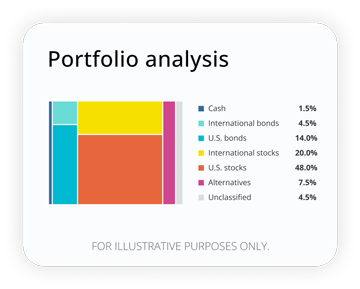
How well are your investments performing?
Analyze your portfolio in minutes and receive a target allocation for your goals.
RO5421424-0426
 Get The Currency newsletter



Edmund F. Murphy III
President and Chief Executive Officer
Edmund F. Murphy III is President and Chief Executive Officer of Empower, a leading provider of financial services for consumers including retirement services, wealth management, advice, and asset management. He also serves as a board member of Empower Life & Annuity Insurance Company and as a strategic advisor to Diagram Ventures.
Ed speaks and writes on financial topics ranging from retirement issues and public policy to investment advice and lifetime income strategies. He has been interviewed by CNBC, Bloomberg News, MarketWatch, The Wall Street Journal, Barron’s, The Financial Times, and many other media outlets.
The content contained in this blog post is intended for general informational purposes only and is not meant to constitute legal, tax, accounting or investment advice. You should consult a qualified legal or tax professional regarding your specific situation. No part of this blog, nor the links contained therein is a solicitation or offer to sell securities. Compensation for freelance contributions not to exceed $1,250. Third-party data is obtained from sources believed to be reliable; however, Empower cannot guarantee the accuracy, timeliness, completeness or fitness of this data for any particular purpose. Third-party links are provided solely as a convenience and do not imply an affiliation, endorsement or approval by Empower of the contents on such third-party websites. This article is based on current events, research, and developments at the time of publication, which may change over time.
Certain sections of this blog may contain forward-looking statements that are based on our reasonable expectations, estimates, projections and assumptions. Past performance is not a guarantee of future return, nor is it indicative of future performance. Investing involves risk. The value of your investment will fluctuate and you may lose money.
Certified Financial Planner Board of Standards Inc. (CFP Board) owns the certification marks CFP®, CERTIFIED FINANCIAL PLANNER™, CFP® (with plaque design), and CFP® (with flame design) in the U.S., which it authorizes use of by individuals who successfully complete CFP Board's initial and ongoing certification requirements.