

SPACs have seen increased activity in 2025. Here’s how they work
SPACs have seen increased activity in 2025. Here’s how they work
Also called “blank-check” companies, the investment vehicles have seen renewed interest in 2025 as private firms seek faster paths to public markets
SPACs have seen increased activity in 2025. Here’s how they work
Also called “blank-check” companies, the investment vehicles have seen renewed interest in 2025 as private firms seek faster paths to public markets
12.10.2025

Listen
·SPACs have seen increased activity in 2025. Here’s how they work
Key takeaways
- SPACs are shell companies that raise capital first and acquire a private firm later.
- Investors can redeem shares for cash if they oppose a proposed merger, offering downside protection before a deal closes.
- SPAC activity rebounded in 2025, with tech-focused mergers leading the way.
SPACs resurfaced in 2025 as an active route for private companies to reach public markets, driven by faster timelines and negotiated deal structures. Learn how they operate and differ from traditional initial public offerings (IPOs).
Anyone following financial news this year may have noticed the term “special purpose acquisition companies,” or SPACs, popping up in the headlines. The investment vehicles — also known as blank-check companies — were back in force in 2025 after a few quiet years.1
SPACs are publicly traded shell corporations — with no underlying business — that raise money first and then search for a still-unnamed private company to acquire. When they find a target, the acquired private company assumes the SPAC’s stock listing, creating a faster route to going public than a traditional IPO.2
After a period of dormancy after the pandemic, SPAC activity has increased in the first nine months of 2025, with more than 100 offerings raising more than $18.7 billion. Over the same period in 2024, about 34 SPACs raised a total of $5.3 billion.3
Here’s a closer look at the mechanics of SPACs.
How do SPACs work?
A SPAC begins as a shell entity formed by sponsors — typically investment firms, former executives, or industry specialists — who provide seed capital and file to take the SPAC public.4
During the IPO, investors buy into the SPAC without knowing the company it will acquire, which is why they’re frequently called “blank-check” companies. The money raised during the sale goes into a trust account and is untouched while the SPAC searches for a suitable private company to merge with.5
The SPAC generally has 18 to 24 months to identify and complete a merger. Once a potential acquisition is found, the two sides negotiate terms, publish detailed financial disclosures, and seek shareholder approval. If approved, the private company effectively “steps into” the listing and becomes a public company — a process called a de-SPAC, which typically takes 3 to 6 months.6
If shareholders dislike the proposed deal and don’t want to be part of the combined company, they can redeem their shares for cash plus interest earned from the trust account. And if no merger is completed before the established merger deadline, the SPAC must return funds to investors and dissolve.7
Read more: Momentum behind large-scale M&A deals is growing
How do SPACs differ from traditional IPOs?
A traditional IPO is when a private company goes public on its own by issuing shares and selling them on a public stock exchange.
SPACs can be a much faster way for private firms to go public than IPOs. In a traditional IPO, the private company prepares financial statements with audits, update disclosures, meets SEC requirements, works with underwriters, and often conducts a roadshow to pitch investors. That process could take one year or longer.8
The SPAC is already a public entity with a stock listing, so the private company becomes public simply by merging into it. The company being acquired negotiates directly with the SPAC on valuation and deal terms, then files merger-related statements and disclosures different than IPO documentation. The process of going public after a deal is announced often takes a few months.9
Read more: Understanding IPOs: What is an IPO and its benefits?
What investors need to know
SPAC investors are buying into a shell company before it has chosen a merger partner, which means the risk profile can change substantially once an acquisition is announced.10
Before the merger, the structure offers downside protection because investors can redeem their shares for cash. After the merger, investors take on the performance and risk of the underlying business that was acquired.11
Here are some key points to keep in mind:
- Sponsor quality matters. Sponsor quality is crucial in SPAC deals because the sponsor is responsible for sourcing and vetting the target company. Since there isn’t a lot of advance information, investors put a lot of faith in sponsors.12
- Investor money sits in a trust. Investors can redeem shares for cash (usually the IPO price plus interest) if they dislike the deal.13
- Sponsors take a large equity stake. With only a small amount of invested capital, sponsors can often receive a block of shares equal to roughly 20% of the SPAC’s equity — known as the “founder shares,” or “sponsor shares,” or the “promote.”14
- Redemptions can alter SPAC deals. High redemptions from investors can leave a SPAC without enough cash to complete a merger.15 In those cases, the sponsors can raise capital from private institutional investors who typically buy discounted shares.16
- Warrants add complexity. SPAC units may include stock warrants — rights to purchase additional shares at a predetermined price in the future — that can dilute the stock further.17
Many SPAC deals have focused on technology sectors in 2025
SPAC deals can be highly risky. Since 2019, only about 11% of companies that went public through a SPAC merger are trading above their original offering price, according to one analysis.18
More recently, the SEC has enhanced guidance for SPAC and de-SPAC transactions aimed at better transparency and investor safeguards.19
Many SPAC deals in 2025 have centered on technology innovations, including quantum computing, nuclear technology, AI software, biotechnology, financial technology, and cryptocurrencies.20
One example is electric and self-driving freight company Einride, which announced a merger with Legato Merger Corp. III, valuing the firm at about $1.8 billion. Transportation technology has been a focus of several SPAC mergers, especially autonomous freight haulers.21
Xanadu Quantum Technologies, a Canadian photonic quantum-computing company, also agreed to merge with Crane Harbor Acquisition Corp. in a deal valuing the combined company at roughly $3.6 billion.22
Three companies developing small nuclear reactors are also moving to go public via SPACs — among several others. Terra Innovatum, Terrestrial Energy, and Eagle Energy Metals have all filed to go public through blank-check mergers and plan to begin operating as public companies by the end of the year.23
Final thoughts as SPACs reemerge
SPACs are seeing renewed momentum in 2025 as companies look for quicker, more flexible ways to reach the public markets. The structure offers speed and negotiated terms to mint new public companies, but it also comes with unique features and risks that differ from traditional IPOs.
Investing involves risk, including possible loss of principal.
This material is for informational purposes only and is not intended to provide investment, legal, or tax advice.
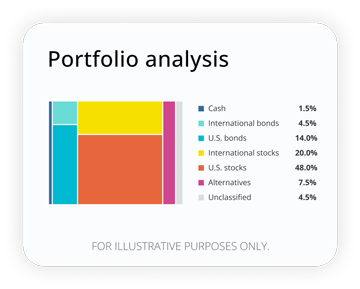
How well are your investments performing?
Analyze your portfolio in minutes and receive a target allocation for your goals.
1 Bloomberg, “SPACs Are Booming Again. Here’s How They Work,” October 2025.
2 Business Insider, “What is a SPAC,” May 2025.
3 Pwc, “IPO recovery enters a breakout phase as market roars back,” October 2025.
4 KPMG, “Why so many companies are choosing SPACs over IPOs,” accessed December 2025.
5 Bloomberg, “SPACs Are Booming Again. Here’s How They Work,” October 2025.
6 Pwc, “How special purpose acquisition companies (SPACs) work,” November 2025.
7 Bloomberg, “SPACs Are Booming Again. Here’s How They Work,” October 2025.
8 KPMG, “Why so many companies are choosing SPACs over IPOs,” accessed December 2025.
9 KPMG, “Why so many companies are choosing SPACs over IPOs,” accessed December 2025.
10 Business Insider, “What is a SPAC,” May 2025.
12 Harvard Law School Forum, “SPAC IPOs and Sponsor Network Centrality,” July 2021
13 Bloomberg, “SPACs Are Booming Again. Here’s How They Work,” October 2025.
14 Pwc, “How special purpose acquisition companies (SPACs) work,” November 2025.
15 SEC, “What You Need to Know About SPACs – Updated Investor Bulletin,” August 2024.
16 Perkins Coie, “PIPE Transactions: Key Considerations for Issuers and Investors,” August 2020.
17 KPMG, “Why so many companies are choosing SPACs over IPOs,” accessed December 2025.
18 Bloomberg, “SPACs Are Booming Again. Here’s How They Work,” October 2025.
19 Pwc, “How special purpose acquisition companies (SPACs) work,” November 2025.
20 Bloomberg, “SPACs Are Booming Again. Here’s How They Work,” October 2025.
21 CNBC, “Autonomous EV trucking company Einride going public in SPAC deal valuing it at $1.8 billion,” November 2025.
22 CNBC, “Canadian quantum computing firm Xanadu to list on Nasdaq via $3.6 billion SPAC deal,” November 2025.
23 Barron’s “Nuclear Stocks Are Soaring. We Size Up the Prospects for 3 New Ones,” November 2025.
RO5045049-1225
 Get The Currency newsletter

The Currency editors
Staff contributors
The CurrencyTM writers and editors cover the latest financial news and insights shaping how we live, work, and play. The team provides accurate, data-driven, and timely content aimed at empowering financial freedom for all.
The content contained in this blog post is intended for general informational purposes only and is not meant to constitute legal, tax, accounting or investment advice. You should consult a qualified legal or tax professional regarding your specific situation. No part of this blog, nor the links contained therein is a solicitation or offer to sell securities. Compensation for freelance contributions not to exceed $1,250. Third-party data is obtained from sources believed to be reliable; however, Empower cannot guarantee the accuracy, timeliness, completeness or fitness of this data for any particular purpose. Third-party links are provided solely as a convenience and do not imply an affiliation, endorsement or approval by Empower of the contents on such third-party websites. This article is based on current events, research, and developments at the time of publication, which may change over time.
Certain sections of this blog may contain forward-looking statements that are based on our reasonable expectations, estimates, projections and assumptions. Past performance is not a guarantee of future return, nor is it indicative of future performance. Investing involves risk. The value of your investment will fluctuate and you may lose money.
Certified Financial Planner Board of Standards Inc. (CFP Board) owns the certification marks CFP®, CERTIFIED FINANCIAL PLANNER™, CFP® (with plaque design), and CFP® (with flame design) in the U.S., which it authorizes use of by individuals who successfully complete CFP Board's initial and ongoing certification requirements.