

Americans are keeping money top of mind — and it’s paying off
Americans are keeping money top of mind — and it’s paying off
Americans are keeping money top of mind — and it’s paying off

09.02.2025
In this video, Vanessa Welch, Empower vice president for financial insights, and Rebecca Rickert, Empower’s head of communications and consumer insights, reflect on new research on how often Americans are thinking about money — and the action they’re taking. Here is a transcript:
Vanessa Welch: With everything happening in the markets and the economy right now, it feels like money is on everyone's mind — and it turns out we spend almost four hours a day thinking about it. Becca Rickert, Empower’s head of marketing communications and consumer insights, just led new research into how much space our finances take up in our daily lives and what that means for the choices we make. Becca, great to see you.
Rebecca Rickert: Great to see you, Vanessa.
Welch: I'm curious what made you and your team want to dive into this topic.
Rickert: Well, for many of us, the first thing we do in the morning is scan the news on inflation, housing prices, the cost of groceries. So the economy isn't just in the headlines — it's in our heads. And we pay close attention to those trends.
Welch: So once you started looking into the research, what really stood out to you?
Rickert: People are devoting serious mental real estate to their finances every single day, nearly four hours a day. That's a part-time job, or what we're calling “money minding.” And it's not just rumination, it's motivation. People are using that energy to build budgets, pay off debt, and improve credit scores.
Welch: Four hours! That is a lot of time spent thinking about money. And it makes me wonder, is that kind of focus a good thing or a sign of financial stress, do you think?
Rickert: Well, Vanessa, people are checking their accounts like they check the weather. For many, it's multiple times a day, and the rates go up for Gen Z and Millennials. So if you ask people what would ease their financial stress, it's the basics: higher income, lower expenses, and a plan that doesn't change with every news cycle. They're seeking out insights to make better decisions.
Welch: It sounds like, at the core, people just want stability and a plan they can trust. So, Becca, when money is on their minds, what tends to be front and center?
Rickert: It's keeping up in this climate, covering today's bills, quality of life — and retirement really stands out. More than half of Americans think about it weekly or even daily. So what we're seeing is a cautious optimism. Half feel confident that they'll hit their financial goals, while about 30% are more neutral, taking a wait-and-see approach to what the economy does next.
Welch: Yeah, there's optimism there, but still a little bit of caution as well. Becca, I'm curious, was there anything in these findings that really surprised you?
Rickert: There's a 50-year age gap between the oldest Boomers and the youngest Millennials, and you can almost chart financial thoughts like clockwork. For Gen Z, mindshare peaks between 2 and 5 p.m., right in the middle of juggling school and work. And for Millennials and Gen X, it's 8 to 11 at night, after the kids are asleep or the day is finally slowed down, prime time for overthinking. But across all ages, we see people wired for action, and that momentum really shines through.
Welch: I love that, ending on that — people ready to take action and feeling optimistic. Becca, thanks so much for sharing these insights with us. You know, I think it's been really great to see your research spark conversations all across the country and highlight how Empower understands what people are facing and how we can help them move forward.
Rickert: Thank you, Vanessa. Great to see you.
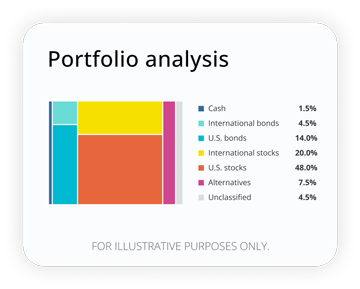
How well are your investments performing?
Analyze your portfolio in minutes and receive a target allocation for your goals.
RO4742884-0925
 Get The Currency newsletter



The Currency editors
Staff contributors
The CurrencyTM writers and editors cover the latest financial news and insights shaping how we live, work, and play. The team provides accurate, data-driven, and timely content aimed at empowering financial freedom for all.
The content contained in this blog post is intended for general informational purposes only and is not meant to constitute legal, tax, accounting or investment advice. You should consult a qualified legal or tax professional regarding your specific situation. No part of this blog, nor the links contained therein is a solicitation or offer to sell securities. Compensation for freelance contributions not to exceed $1,250. Third-party data is obtained from sources believed to be reliable; however, Empower cannot guarantee the accuracy, timeliness, completeness or fitness of this data for any particular purpose. Third-party links are provided solely as a convenience and do not imply an affiliation, endorsement or approval by Empower of the contents on such third-party websites. This article is based on current events, research, and developments at the time of publication, which may change over time.
Certain sections of this blog may contain forward-looking statements that are based on our reasonable expectations, estimates, projections and assumptions. Past performance is not a guarantee of future return, nor is it indicative of future performance. Investing involves risk. The value of your investment will fluctuate and you may lose money.
Certified Financial Planner Board of Standards Inc. (CFP Board) owns the certification marks CFP®, CERTIFIED FINANCIAL PLANNER™, CFP® (with plaque design), and CFP® (with flame design) in the U.S., which it authorizes use of by individuals who successfully complete CFP Board's initial and ongoing certification requirements.