

July market recap: Summer in swing
July market recap: Summer in swing
July market recap: Summer in swing

08.08.2025
Concerns about tariff deadlines were largely alleviated in July as deals with some major trading partners added clarity. U.S. stocks finished up about 2% for the month. International stocks are outperforming for the year but were down 1% in July.
Tariffs continue
While there will be many different rates, a general 15% import tax has formed as the new baseline, including deals with the EU and Japan at that level. The UK secured a 10% rate while talks continue with China, Canada, and Mexico. Certain industries and products will have their own higher rates. To be clear, tariffs settling in at around 15% will be impactful, but not as much as feared in spring. According to various economic estimates, current trade duties could reduce U.S. GDP by somewhere between .5% and 1%, while also potentially increasing inflation. It will be telling how companies describe the impact of tariffs on earnings calls in the coming quarters.
Earnings update
The final week of July also featured earnings results from several important mega-tech companies. Results were mixed, but good enough overall to sustain momentum for U.S. growth stocks. Microsoft, Meta, and Alphabet exceeded expectations, while Amazon’s cloud growth did not. Apple also posted strong results, but the share price was not rewarded as investors continue to be skeptical of the company’s AI strategy. Nvidia, currently the most valuable company in the world, appears to benefit from capital investment plans by major technology companies. The company reports earnings on August 27.
Bullish breakouts
Similar to late 2021, current market conditions reflect elevated investor optimism and increased speculative behavior. This includes strong demand for growth-oriented equities, high levels of options trading and margin usage, renewed enthusiasm for digital assets, and heightened interest in speculative, retail-driven stocks — such as Opendoor and Kohl’s — echoing prior market attention on companies like GameStop and AMC. In 2021, extreme valuations across many growth stocks preceded broad declines that also impacted high-profile leaders, including the so-called Magnificent Seven. While past performance does not guarantee future results, reduced speculation may improve conditions for long-term investors.
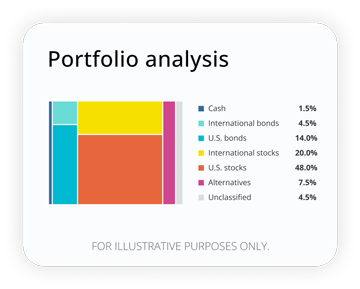
How well are your investments performing?
Analyze your portfolio in minutes and receive a target allocation for your goals.
RO4728590-0825
 Get The Currency newsletter



Craig Birk, CFP®
Contributor
Craig Birk is the Chief Investment Officer for Empower Personal Wealth. A CERTIFIED FINANCIAL PLANNER™ professional, he is responsible for Empower’s retail investment portfolio, providing strategic and executive direction to drive the optimal management of client assets.
The content contained in this blog post is intended for general informational purposes only and is not meant to constitute legal, tax, accounting or investment advice. You should consult a qualified legal or tax professional regarding your specific situation. No part of this blog, nor the links contained therein is a solicitation or offer to sell securities. Compensation for freelance contributions not to exceed $1,250. Third-party data is obtained from sources believed to be reliable; however, Empower cannot guarantee the accuracy, timeliness, completeness or fitness of this data for any particular purpose. Third-party links are provided solely as a convenience and do not imply an affiliation, endorsement or approval by Empower of the contents on such third-party websites. This article is based on current events, research, and developments at the time of publication, which may change over time.
Certain sections of this blog may contain forward-looking statements that are based on our reasonable expectations, estimates, projections and assumptions. Past performance is not a guarantee of future return, nor is it indicative of future performance. Investing involves risk. The value of your investment will fluctuate and you may lose money.
Certified Financial Planner Board of Standards Inc. (CFP Board) owns the certification marks CFP®, CERTIFIED FINANCIAL PLANNER™, CFP® (with plaque design), and CFP® (with flame design) in the U.S., which it authorizes use of by individuals who successfully complete CFP Board's initial and ongoing certification requirements.