

August market recap: Rate-cut hopes lift
August market recap: Rate-cut hopes lift
August market recap: Rate-cut hopes lift

09.11.2025
With relative calm on the tariff front, investors in August returned focus to interest rates and potential Fed activity. Like early and mid-2024, equity markets were somewhat confused in trying to decipher if good news for the economy was a cause for celebration or heightened concern about inflation and higher rates.
Stocks up, bonds follow
Fed Chair Jerome Powell signaled he would be open to a rate cut in September by acknowledging downside risks to employment. Inflation numbers reported during the month offered additional context for potential rate adjustments. The Total U.S. Stock Market rose 2.4% in August, with interest-rate-sensitive small caps leading the way. The U.S. Aggregate Bond market gained 1.2%.
Earnings results provided another tailwind. The Q2 S&P 500® earnings growth is tracking toward 11.9%, according to FactSet, up dramatically from estimates below 5% at the start of the quarter. Nvidia’s results have a significant impact on the market. The company posted sales growth of greater than 50%. Shares showed little initial reaction to the results but retreated in the following days and finished lower for the month.
The fear index
One potential concern following four consecutive months of gains for U.S. stocks is investor complacency. The VIX, sometimes referred to as the “fear index,” generally declined throughout the month, reaching levels not seen since before Liberation Day tariff announcements. Also, debit balances in margin accounts have spiked to an all-time high as retail investors grow more confident.
New stakes
During the month, President Trump announced that the U.S. government had converted a roughly $9 billion grant issued under the previously approved CHIPS Act into a 10% stake in Intel. While the government provided loans during Covid, this marks the first time it has taken a significant stake in a meaningful public company since the financial crisis. Though this has been described as a national security safeguard, the move has raised concerns for some about creating a slippery slope which undermines free markets.
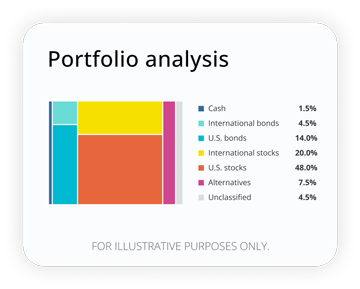
How well are your investments performing?
Analyze your portfolio in minutes and receive a target allocation for your goals.
Market stats and data mentioned in the text are sourced from Empower’s internal YCharts, as of September 3, 2025
The information contained herein is being provided for informational purposes only and does not constitute an offer to sell, or a solicitation of an offer to buy or sell securities. This material is neither an endorsement of any security, index or sector. Past performance is not indicative of future returns. You may lose money.
The S&P 500 Index is a registered trademark of Standard & Poor’s Financial Services LLC. It is an unmanaged index considered indicative of the domestic large-cap equity market and is used as a proxy for the stock market in general.
Investing involves risk, including possible loss of principal.
This material is for informational purposes only and is not intended to provide investment, legal, or tax recommendations or advice.
RO4809684-0925
 Get The Currency newsletter


Craig Birk, CFP®
Contributor
Craig Birk is the Chief Investment Officer for Empower Personal Wealth. A CERTIFIED FINANCIAL PLANNER™ professional, he is responsible for Empower’s retail investment portfolio, providing strategic and executive direction to drive the optimal management of client assets.
The content contained in this blog post is intended for general informational purposes only and is not meant to constitute legal, tax, accounting or investment advice. You should consult a qualified legal or tax professional regarding your specific situation. No part of this blog, nor the links contained therein is a solicitation or offer to sell securities. Compensation for freelance contributions not to exceed $1,250. Third-party data is obtained from sources believed to be reliable; however, Empower cannot guarantee the accuracy, timeliness, completeness or fitness of this data for any particular purpose. Third-party links are provided solely as a convenience and do not imply an affiliation, endorsement or approval by Empower of the contents on such third-party websites. This article is based on current events, research, and developments at the time of publication, which may change over time.
Certain sections of this blog may contain forward-looking statements that are based on our reasonable expectations, estimates, projections and assumptions. Past performance is not a guarantee of future return, nor is it indicative of future performance. Investing involves risk. The value of your investment will fluctuate and you may lose money.
Certified Financial Planner Board of Standards Inc. (CFP Board) owns the certification marks CFP®, CERTIFIED FINANCIAL PLANNER™, CFP® (with plaque design), and CFP® (with flame design) in the U.S., which it authorizes use of by individuals who successfully complete CFP Board's initial and ongoing certification requirements.