

Reality check: Americans are rethinking money milestones
Reality check: Americans are rethinking money milestones
From homeownership to retirement, Americans are finding new ways to move forward in today’s challenging economic environment
Reality check: Americans are rethinking money milestones
From homeownership to retirement, Americans are finding new ways to move forward in today’s challenging economic environment

11.18.2026
Key takeaways
- Traditional financial milestones still matter, but Americans are finding new paths and timelines to reach them.
- 75% of Americans say financial goals are taking longer to achieve today than they did for previous generations.
- 82% believe financial freedom matters more than retiring at a specific age.
The typical first-time homebuyer in the U.S. is 40 years old, a record high that underscores how the timeline for reaching major financial milestones is changing.1
In fact, three-quarters of Americans (75%) say financial goals like homeownership are taking longer to achieve today than they did for previous generations, according to new Empower research, America's Financial Reality Check.*
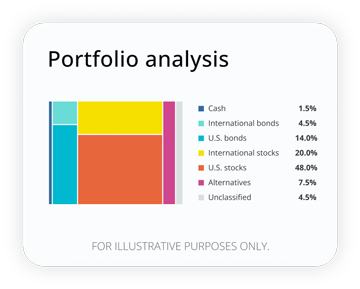
How well are your investments performing?
Analyze your portfolio in minutes and receive a target allocation for your goals.
More than half (56%) of those surveyed have postponed major financial or life decisions because of economic uncertainty or financial concerns, a figure that rises to 67% for Gen Z and 63% for Millennials.
Traditional milestones aren't going away. But they might be shifting as Americans rethink how to balance longer-term financial goals with everyday costs — while also using their money to enjoy life today.
The cost of getting ahead
More than a third of Americans (37%) say they need at least $1 million in net worth to feel financially successful, according to the new Empower study. And getting there comes against a challenging economic backdrop; 45% cited rising prices as having the most significant impact on their finances this year.
Affordability has been a major theme in 2026 headlines, including higher healthcare costs for insurance, prescription drugs, and hospital care.2 Gas prices are up about 37% from a year ago, according to the latest Consumer Price Index data.3 And while grocery price increases have slowed this year, prices remain about 32% higher than in early 2020.4
When extra money arrives, it can put a spotlight on financial priorities. Some 29% of Americans would put a $5,000 windfall toward emergency savings, according to America's Financial Reality Check, while 24% would pay down debt and 22% would use the money for everyday expenses. Some 17% of those surveyed would use a windfall to boost retirement savings.

Read more: Learn how to balance saving, debt payoff and investing goals
Homeownership is taking longer
The traditional markers of financial success still matter, even if it might be taking longer to get there.
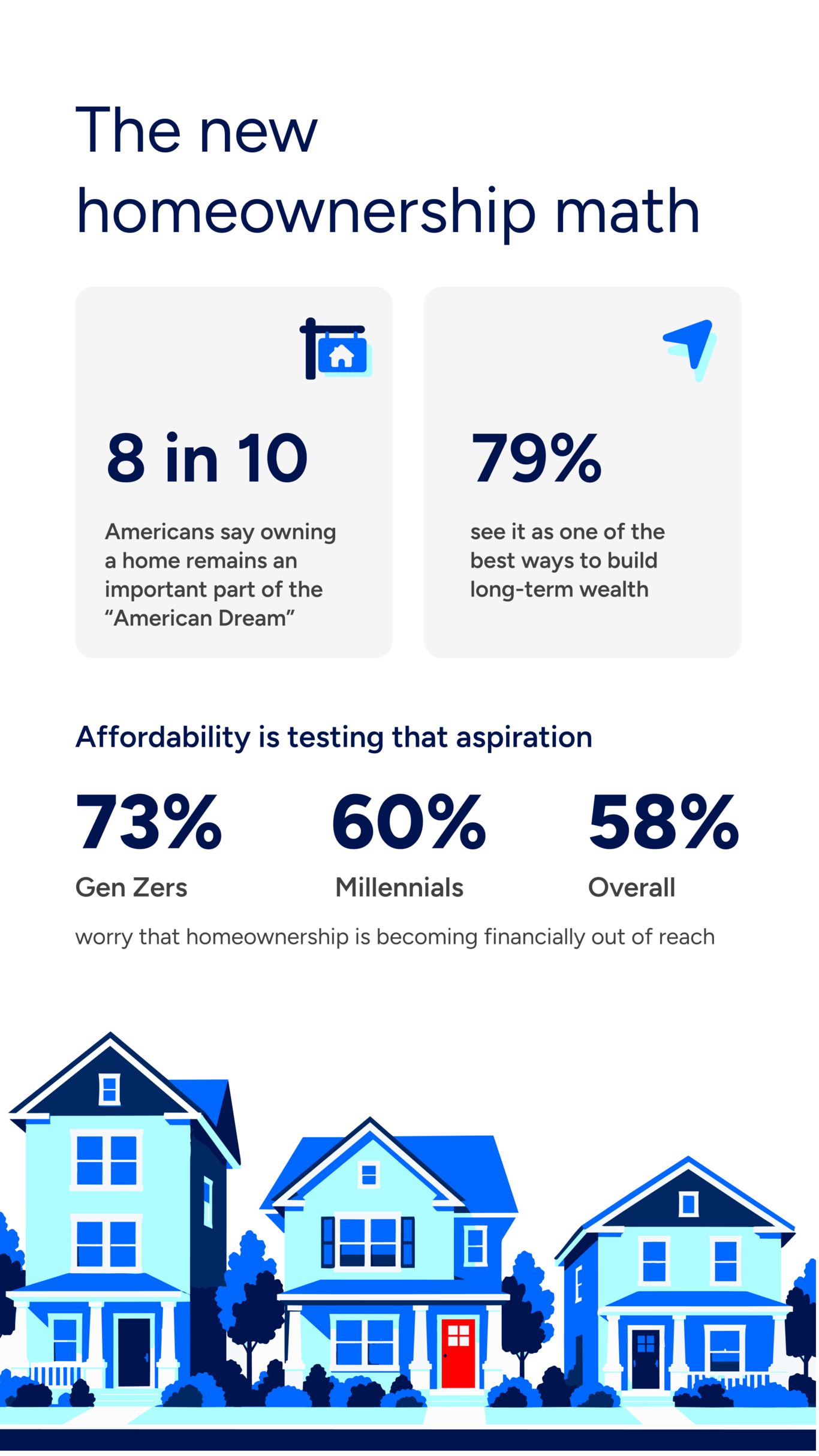
Nearly 8 in 10 Americans (79%) still believe owning a home is one of the best ways to build long-term wealth, according to Empower research. Yet nearly half (48%) of those surveyed say renting is financially smarter than buying in today's market, rising to 67% for Gen Z.
Elevated home prices and mortgage rates currently above 7% have created a challenging housing market, especially for younger Americans.5 Empower's study found that 73% of Gen Z and 60% of Millennials worry homeownership is becoming financially out of reach.
First-time buyers accounted for just 22% of home purchases over the past year, roughly half the historical norm of 40% before 2008, according to the National Association of Realtors. A record 10% of first-time buyers paid all cash, as inheritances and other generational wealth transfers increasingly play a role in the path to homeownership.6
Empower's research found that 58% of Gen Z and 44% of Millennials rely on family for help with mortgage payments, buying a home or related costs, versus 33% overall. And many are open to sharing more than the costs: 68% of Gen Z and 63% of Millennials would consider moving in with family for financial reasons, compared to 52% overall.
Despite the challenges, Americans aren't giving up on homeownership — even if the methods and timeline to getting there looks different.
Comparing the full costs of renting and owning, building a dedicated down payment fund and knowing about first-time buyer programs are just some of the steps they're using to help determine when buying makes the most financial sense.
Read more: 10 things to know about saving for a first home
Financial freedom is becoming the bigger goal
The changing timeline for financial success also can extend to retirement. Empower's study found that 82% of Americans believe financial freedom is more important than retiring at a specific age.
At the same time, 64% expect to work longer than previous generations, and 73% say their retirement plans will depend partly on factors outside their control, such as housing costs or healthcare expenses.
Nearly one-quarter (24%) also predict retirement will look very different for their generation than it did for those before them, while 23% expect Social Security to play a smaller role.
As with homeownership, family finances are becoming part of the retirement equation. Half of those surveyed by Empower (50%) said that inheritances and family wealth will become increasingly important to retirement planning for future generations, rising to 61% among both Gen Z and Millennials.
Read more: Essential steps for retirement planning
Financial FOMO remains real
As Americans rethink traditional financial milestones, the pressure to enjoy life today is also shaping spending decisions. More than half (52%) worry their finances are causing them to miss out on life experiences, while 43% say social media amplifies that fear, according to Empower research.
The tradeoff is especially apparent among younger generations: 75% of both Gen Z and Millennials say they sometimes spend on experiences even when they believe they should be saving. Americans are also adjusting their priorities, with 30% seeking more affordable ways to travel and 21% delaying trips to focus on saving, investing, or paying down debt.
Final thoughts
The traditional milestones of financial success still matter, but the path to reaching them is changing. Whether it's buying a home, planning for retirement, or making room for experiences today, financial progress doesn't have to follow a set timeline.
As Americans navigate competing priorities, revisiting financial goals and adjusting plans as circumstances change can help keep both short-term needs and long-term ambitions in focus.
Read more: How to set financial goals and stick to them in 5 steps
* Empower's study, “America’s Financial Reality Check,” is based on online survey responses from 2,004 Americans ages 18+ fielded by an independent third-party panel provider from July 28-29, 2026. The survey is weighted to be nationally representative of U.S. adults.
1 National Association of Realtors, " Median First-Time Buyer Age Is Still 40: The Costs of Delaying Are Adding Up," November 2026.
2 Wall Street Journal, "Higher Deductibles, Bigger Premiums: Rising Healthcare Costs Hit Employees," October 2026.
3 AP News, "Inflation Runs Hotter Than Expected As Higher Prices Extend Beyond the Gas Station," November 2026.
4 Federal Reserve Bank of St. Louis, "Consumer Price Index for All Urban Consumers: Food at Home in U.S. City Average," November 2026.
5 ABC News, Americans are struggling to buy homes amid rising costs," November 2026.
6 National Association of Realtors, " Median First-Time Buyer Age Is Still 40: The Costs of Delaying Are Adding Up," November 2026.
RO6116778-1126
 Get The Currency newsletter



The content contained in this blog post is intended for general informational purposes only and is not meant to constitute legal, tax, accounting or investment advice. You should consult a qualified legal or tax professional regarding your specific situation. No part of this blog, nor the links contained therein is a solicitation or offer to sell securities. Compensation for freelance contributions not to exceed $1,250. Third-party data is obtained from sources believed to be reliable; however, Empower cannot guarantee the accuracy, timeliness, completeness or fitness of this data for any particular purpose. Third-party links are provided solely as a convenience and do not imply an affiliation, endorsement or approval by Empower of the contents on such third-party websites. This article is based on current events, research, and developments at the time of publication, which may change over time.
Certain sections of this blog may contain forward-looking statements that are based on our reasonable expectations, estimates, projections and assumptions. Past performance is not a guarantee of future return, nor is it indicative of future performance. Investing involves risk. The value of your investment will fluctuate and you may lose money.
Certified Financial Planner Board of Standards Inc. (CFP Board) owns the certification marks CFP®, CERTIFIED FINANCIAL PLANNER™, CFP® (with plaque design), and CFP® (with flame design) in the U.S., which it authorizes use of by individuals who successfully complete CFP Board's initial and ongoing certification requirements.