

What is a 457(b) plan?
What is a 457(b) plan?
A 457(b) plan can help public-sector workers and select employees at tax-exempt organizations save for retirement, but key rules vary by plan type and design
What is a 457(b) plan?
A 457(b) plan can help public-sector workers and select employees at tax-exempt organizations save for retirement, but key rules vary by plan type and design

09.14.2026
Key takeaways
- A 457(b) is a tax-advantaged workplace retirement plan mainly offered by state and local governments and certain tax-exempt employers.
- Governmental and non-governmental 457(b)s differ in who can participate, who owns the assets, creditor exposure, and rollover options.
- 457(b)s have a separate contribution limit from other workplace plans, potentially allowing more retirement savings to be put in tax-advantaged accounts
A 457(b) plan can be a valuable tool for building retirement savings, allowing you to invest your money with potential tax advantages. The average retirement savings for Americans in their 60s is $1,239,932, including money held in employer-sponsored plans like 401(k)s and 457(b)s, IRAs, pensions, and other tax-advantaged plans.
If you’ve been offered a 457(b) through your employer, here are a few things you should know.
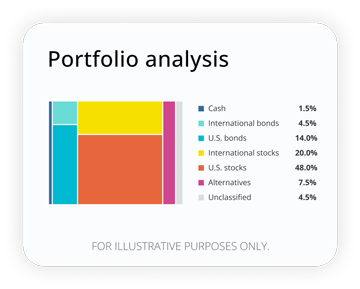
How well are your investments performing?
Analyze your portfolio in minutes and receive a target allocation for your goals.
What is a 457(b)?
A 457(b) is a tax-advantaged savings plan offered by state and local governments or certain tax-exempt employers. Similar to other employer-sponsored plans, such as 401(k)s and 403(b)s, 457(b)s help employees build the savings they’ll need in retirement. Employees typically make contributions by deducting a certain amount from each paycheck — called a salary deferral. Contributions are generally made pre-tax, lowering an employee’s taxable income, though some government plans may allow for Roth (after-tax) contributions as well.
Employers may match employee contributions up to a certain percentage or amount, depending on the plan. Once the employee retires, changes jobs, or reaches age 59½, they can begin withdrawing these funds to use for living expenses.1
There are two types of 457(b) plans, governmental and non-governmental:
- Governmental 457(b)s are typically offered by state and local government agencies, with assets held in trust for employees.
- Non-governmental 457(b)s are generally offered to managers or highly compensated employees of certain non-governmental, tax-exempt entities. Non-governmental 457(b) assets are not held in a trust for the employee and instead remain the property of the employer until distributed.2
Both types of 457(b)s help employees build their retirement savings, yet they differ in tax treatment and available catch-up contributions. If you’re offered a 457(b) through your employer, it’s important to understand whether it’s a governmental or non-governmental plan so that you can plan accordingly.
457(b) plan eligibility
Employers offer 457(b) plans as a benefit to help employees save for retirement. Governmental 457(b)s are typically offered by state and local government agencies, while non-governmental plans are available on a case-by-case basis to employees of non-governmental tax-exempt entities such as charities and social welfare organizations.3
457(b) contribution limits in 2026
Up to $24,500 can be contributed to an employee’s 457(b)s in 2026, including employee salary deferrals and employer contributions. Additional catch-up contributions can be made to governmental 457(b)s, bringing the annual limit up to $32,500 for employees ages 50 or older. Some governmental 457(b) plans also allow employees ages 60 to 63 to contribute up to $35,750 in 2026.4 Beginning in 2026, those whose prior-year wages from the plan sponsor exceed the indexed threshold—$150,000 for 2026—must generally make age-based catch-up contributions as Roth contributions. If a plan does not offer a Roth option, then the employee cannot make the age-based catch-up.5
One highlight of 457(b)s is that they have their own salary deferral limit. Typically, the elective-deferral limit is shared across 403(b)s and other non-457(b) retirement accounts, meaning contributions across all accounts must stay under this amount.6 For example, individuals can contribute up to $24,500 across their 457(b)s, plus another $24,500 across other eligible retirement accounts, not including catch-ups. An additional $7,500 — plus a $1,100 catch-up contribution for individuals age 50 or older—can also be contributed to their individual retirement accounts (IRAs) in 2026. For those already contributing to a retirement plan, governmental 457(b)s can offer a way to put more money into tax-advantaged accounts.
When contributing to a new 457(b), it can be beneficial to review the details of your plan. Some plans include rules that affect contribution limits, and being aware of these can help prevent excess salary deferrals. Employers may distribute excess deferrals back to you before the tax filing deadline — typically April 15.7 However, it’s important to verify such details since they often vary depending on the plan.
Employer contributions
Employer contributions to a 457(b) are included within an employee’s annual deferral limit of $24,500 (or more with catch-ups).8 These contributions may also follow a vesting schedule. Vesting is the process by which employees gain ownership of employer-sponsored benefits, such as contributions to a 457(b), over time. While employees always retain ownership of their own 457(b) contributions, employer matches may not always be immediately accessible to employees.
Special catch-up contributions
Special catch-up contributions are offered by certain 457(b) plans, giving employees the opportunity to put more away in tax-advantaged accounts. Some governmental and non-governmental 457(b)s allow an additional catch-up for employees within 3 years of normal retirement age (as specified in the plan). This catch-up typically permits the lesser of:
- Twice the regular annual limit, which would be $49,000 in 2026; or
- The regular annual limit plus unused contribution capacity from eligible prior years.
However, employees generally cannot use the 457(b) final three-year catch-up and an age-based catch-up in the same year. 9
457(b) plan withdrawals and early retirement access
Withdrawals from a pre-tax 457(b) are taxed as ordinary income, though qualified Roth contributions can be withdrawn tax-free.10 For both governmental and non-governmental 457(b)s, required minimum distributions (RMDs) generally must be taken starting at age 73, though sometimes can be delayed until retirement.
Individuals can generally begin taking distributions from their 457(b)s at any point after they change jobs or retire. Otherwise, distributions from governmental 457(b)s can be taken starting at age 59½, and from non-governmental 457(b)s starting at age 70½.11 Amounts rolled into a governmental 457(b)s from another type of plan do not have the same withdrawal flexibility. Instead, individuals must wait until age 59½ to begin withdrawing rollover funds.12
Distributions from a governmental 457(b) generally are not subject to the 10% additional tax on early distributions. However, the 10% additional tax may apply to amounts attributable to rollovers from another type of qualified retirement plan or IRA.13 Distribution rules for non-governmental 457(b) plans differ and should be reviewed under the terms of the plan.14
457(b) vs. 403(b) vs. 401(k)
457(b), 401(k), and 403(b) plans are all tax-advantaged retirement plans offered to employees of participating organizations. They all help individuals financially prepare for retirement, yet each plan has unique benefits and rules. Understanding these may help when deciding on a savings strategy.
| 457(b) Plan (governmental/non-governmental) | 401(k) Plan | 403(b) Plan |
Who can participate | Employees of state and local government agencies and certain tax-exempt employers. | Generally, employees of private-sector companies | Employees of public schools, colleges, universities, churches, and nonprofit organizations |
Taxes | Pre-tax contributions lower taxable income and any investment growth is tax-deferred; Roth (after-tax) contributions allowed by certain governmental plans; qualified withdrawals in retirement are generally tax-free Contributions to non-governmental plans are generally tax-deferred until the money is received or becomes available; Roth contributions aren't permitted. | Same as governmental 457(b) | Same tax structure as governmental 457(b) |
Contribution limits in 2026 | $24,500; $32,500 if age 50 or older; $35,750 if age 60 to 63; subject to cost-of-living adjustments; Non-governmental 457(b)s aren't eligible for age-based catch-up contributions | Same as governmental 457(b) | Same as governmental 457(b) |
Special catch-up contributions | For employees within 3 years of normal retirement age (as specified in the plan) | For certain highly compensated employees | For employees with 15 years of service (if allowed by plan) |
Employer contributions | Count toward employee’s annual limit | Do not count toward employee’s annual contribution limit; Instead, have a higher combined employee-plus-employer limit | Do not count toward employee’s annual contribution limit; Instead, have a higher combined employee-plus-employer limit |
Withdrawals | Governmental 457(b) distributions generally can begin after employment ends, regardless of age, or at age 59½; A 10% early withdrawal penalty may apply to non-governmental plans or to amounts in a governmental 457(b) attributable to certain rollover contributions. | Distributions generally start at age 59½, otherwise there may be a 10% early withdrawal penalty | Distributions generally start at age 59½, otherwise there may be a 10% early withdrawal penalty |
Investment options
| Flexibility to choose annuities, mutual funds, or other investments as offered by the plan | Same as 457(b) | Same as 457(b) |
Required minimum distributions (RMDs) | Generally, beginning at age 73, though sometimes can be delayed until retirement; Only apply to pre-tax accounts | Same as 457(b) | Same as 457(b) |
Read more: 403(b) vs. 457(b): What's the difference?
FAQs
What happens to my 457(b) when I retire or leave my job?
When you retire or leave your job, you won’t lose access to any contributions you’ve made to your 457(b). If you’re not 100% vested in your plan, you may forfeit a portion of your employer’s contributions, depending on your plan’s vesting schedule.
You can choose to keep your money in your 457(b), if the plan permits it. This way, the money remains invested until you’re ready to begin taking distributions. You can also roll over funds in a governmental 457(b) to an individual retirement account (IRA), which may have greater investment options. If changing jobs, you may also be able to roll over these funds to your new employer’s workplace retirement plan. Rollovers are another option for those looking to keep their funds invested in a tax-advantaged account until they reach age 59½ and begin taking distributions.
Instead, you may choose to immediately withdraw your money from your 457(b) plan. Though this is allowed, distributions are generally subject to applicable income taxes. Governmental 457(b) distributions generally are not subject to the 10% additional tax on early distributions, except that the additional tax may apply to amounts attributable to certain rollovers.
Can you roll over a 457(b) to an IRA?
An eligible distribution from a governmental 457(b) plan may be rolled over to an IRA. Required minimum distributions typically cannot be rolled over. A non-governmental 457(b) is different: Distributions from these plans generally cannot be rolled over to an IRA or another eligible retirement plan.15
Can I roll over my governmental 457(b) account while still employed?
Rollovers while still employed are only possible if your plan permits an in-service distribution. The plan must first allow the distribution, and the distribution must also be eligible for rollover treatment.16
At what age must you withdraw from a 457(b)?
Required minimum distribution (RMD) rules require that you begin taking 457(b) distributions each year starting at a certain age — currently age 73. RMDs are based on your account balance at the end of the previous year and an age-based life expectancy factor provided by the IRS. You can choose to begin taking distributions prior to age 73 and can withdraw more than the minimum required amount depending on your needs and expenses.
How much should I have in my 457(b) when I retire?
There is no set amount that you should have in your 457(b) when you retire. It can be beneficial to estimate your yearly expenses to develop a better understanding of how much you’ll need across your retirement accounts. One rule of thumb is to plan on needing between 70% and 80% of your pre-retirement income after you retire.
Read more: Essential steps for retirement planning
1 IRS, "IRC 457(b) deferred compensation plans," April 2026.
2 IRS, "Non-governmental 457(b) deferred compensation plans," August 2026.
3 Ibid.
4 IRS, "401(k) limit increases to $24,500 for 2026, IRA limit increases to $7,500," November 2025.
5 IRS, “Retirement topics - Catch-up contributions,” May 2026.
6 IRS, "Tax-Sheltered Annuity Plans (403(b) Plans)," January 2026.
7 IRS, "Issue Snapshot - 457(b) plans - Correction of excess deferrals," June 2026.
8 IRS, "Retirement Topics 457b Contribution Limits," February 2026.
9 Ibid.
10 IRS, "Retirement topics - Exceptions to tax on early distributions," December 2025.
11 IRS, "Non-governmental 457(b) deferred compensation plans," August 2026.
12 IRS, "Retirement topics - Exceptions to tax on early distributions," December 2025.
13 Ibid.
14 IRS, "Employee Plans News December 17, 2010 Unforeseeable Emergency Distributions from 457b Plans," February 2026.
15 IRS, "Non-governmental 457(b) deferred compensation plans," August 2026.
16 IRS, "Rollovers of retirement plan and IRA distributions," May 2026.
RO5905816-0926
 Get The Currency newsletter


The Currency editors
Staff contributors
The CurrencyTM writers and editors cover the latest financial news and insights shaping how we live, work, and play. The team provides accurate, data-driven, and timely content aimed at empowering financial freedom for all.
The content contained in this blog post is intended for general informational purposes only and is not meant to constitute legal, tax, accounting or investment advice. You should consult a qualified legal or tax professional regarding your specific situation. No part of this blog, nor the links contained therein is a solicitation or offer to sell securities. Compensation for freelance contributions not to exceed $1,250. Third-party data is obtained from sources believed to be reliable; however, Empower cannot guarantee the accuracy, timeliness, completeness or fitness of this data for any particular purpose. Third-party links are provided solely as a convenience and do not imply an affiliation, endorsement or approval by Empower of the contents on such third-party websites. This article is based on current events, research, and developments at the time of publication, which may change over time.
Certain sections of this blog may contain forward-looking statements that are based on our reasonable expectations, estimates, projections and assumptions. Past performance is not a guarantee of future return, nor is it indicative of future performance. Investing involves risk. The value of your investment will fluctuate and you may lose money.
Certified Financial Planner Board of Standards Inc. (CFP Board) owns the certification marks CFP®, CERTIFIED FINANCIAL PLANNER™, CFP® (with plaque design), and CFP® (with flame design) in the U.S., which it authorizes use of by individuals who successfully complete CFP Board's initial and ongoing certification requirements.