

Active vs. passive investing: Key differences
Active vs. passive investing: Key differences
Learn the key differences between active and passive investing, compare fees and risk, which could help you choose the strategy that best fits your long-term goals
Active vs. passive investing: Key differences
Learn the key differences between active and passive investing, compare fees and risk, which could help you choose the strategy that best fits your long-term goals

06.12.2026
Key takeaways
- Active investing aims to outperform the market through strategic decision-making, while passive investing aims to match it with fewer trades.
- Actively managed funds may offer flexibility and outperformance potential, though active investing fees are often higher over time.
- Passively managed funds can lower costs, but they still come with market risk.
Active and passive investment strategies offer investors different approaches to portfolio management, with varying levels of investment manager involvement. Active investing typically involves a portfolio manager making investment decisions with the goal of outperforming a market benchmark. Passive investing seeks to match the performance of a market index over time and generally involves less trading.
More than 4 in 5 Americans (86%) are investing to reach their financial goals, yet less than half (44%) are confident in their ability to make good investments. Learning how to invest in a way that is sustainable for you can help build wealth and savings for later in life.
Active vs. passive investing: Key differences
A key distinction between active and passive investing is that active portfolios are managed with the goal of outperforming a benchmark, which may result in more frequent trading. Passive portfolios are designed to track a market index and typically require changes only when the index changes or when the portfolio is rebalanced to maintain its target asset allocation. Neither approach removes risk entirely, but they do manage it differently.
Active and passive investing are different in the following ways:
- Overall strategy: Active investing aims to outperform the market through strategically buying and selling securities. Passive investing seeks to match the market over time with less trading involved.
- Returns: Actively managed investments offer the potential to outperform a market benchmark, but returns vary based on investment decisions made by portfolio managers. Passive investing seeks to closely track the returns of a market index.
- Growth timeline: Active investing may involve adjusting portfolios as market conditions change, while passive investing generally emphasizes long-term participation in market performance. Investors often weigh the different features of these approaches when building retirement savings.
- Fees: Working with active portfolio managers tends to increase the cost of services and transaction fees, while passive investments typically involve lower overall cost. It is important to note, while lower fees can reduce investment costs, they do not guarantee better performance or investment outcomes.
- Common investments: Active investments generally include actively managed mutual funds, active ETFs, and hedge funds. Passive investments are typically index mutual funds, index ETFs, and other broad-market funds.
- Taxation: Higher turnover within active portfolios can create more taxable distributions in taxable accounts. Passive investing typically has a lower turnover, making it potentially more tax efficient.
Both types of investment strategies hold a level of risk. Active portfolio managers must make strategic calls and stay on top of market changes in order to be successful. Although less frequently, passive investment strategies also make similar tactical shifts, making them subject to market volatility.
Building a diverse portfolio can help mitigate some of the risks involved in investing in the stock market. Free tools, such as Empower’s Portfolio Analysis Tool, are designed to review asset allocation, investment performance, and diversification. Seeing your investments, cash, and credit all in one place can also help envision how investing fits into your broader financial strategy.
What is active investing?
Active investing is a strategy in which a portfolio manager or investor leverages market analysis to tactically buy and sell securities. The goal of these investment strategies is to outperform the market over the long term. Their success relies heavily on the overall management of each portfolio.
Types of actively managed funds
Popular types of actively managed funds include mutual funds, ETFs, and hedge funds.1 Active ETFs trade on an exchange during the day instead of being priced once daily like mutual funds. Active funds may also be focused on certain sectors, company sizes, or parts of the bond market where managers believe they have a better shot at finding opportunities.
Read more: ETFs & mutual funds: Comparing your options
Potential benefits and drawbacks of active investing
Active investing trades consistency and cost in return for flexibility and higher return potential.
Potential benefits of active investing:
- Higher returns: Actively managed funds are bought and sold on a strategic basis with the goal of outperforming the market.
- Flexibility: Portfolio managers can shift holdings, avoid parts of the market, or lean into areas where active security selection may have more room to work.
- Closely managed: When overseen by a portfolio manager, underlying investments are traded strategically according to changes in the stock market, which can help investors seize short-term opportunities.
Potential drawbacks of active investing:
- Fees: Actively managed portfolios may see higher expenses, including frequent transaction fees. There may also be increased costs associated with market research and administrative tasks.
- Investment minimums: Actively managed funds can require a minimum amount to be invested. This amount varies depending on the company and type of fund.
- Taxation: Because active strategies often trade more frequently, they can potentially create more taxable distributions.
Active management may be beneficial if the strategy adds enough value to outweigh its fees, taxes, and trading costs. Although active investing aims to outperform passive strategies, results can fall short due to manager decisions and market volatility. In fact, active investing only outperformed passive strategies about 38% of the time in 2025.2
What is passive investing?
Passive investing typically involves buying a fund designed to meet a market index rather than trying to beat it. For casual investors, passive strategies can offer a straightforward way to get market exposure with less trading, simpler maintenance, and often lower costs. Passive portfolios are generally designed to require less active management on an ongoing basis, which may appeal to individuals looking for a more hands-off approach to investing.
Types of passively managed funds
The most common passively managed funds for beginners are passively managed index funds in mutual fund or ETF form. Some track broad benchmarks like the S&P 500® Index or total-market indexes.3 Others may focus on bonds, international stocks, or narrower slices of the market.
Potential benefits and drawbacks of passive investing
Passive investments can offer lower fees. However, they can be less flexible when markets fall and offer less potential for outperforming the market.
Potential benefits of passive investing:
- Long-term growth: Passive investment strategies typically emphasize steady growth on a long-term basis, letting compound earnings build over time.
- Lower fees: Index funds generally do not require the frequent buying and selling of funds. This can help reduce overall expenses, although not every index fund is automatically cheaper.
- Lower taxes: In taxable accounts, passively managed index funds may be more tax-efficient than funds that are frequently bought and sold.
Potential drawbacks of passive investing:
- Limited returns: Passively managed index funds are less likely to outperform the market than actively managed funds.
- Inflexibility: Index funds encompass a broad selection of funds, and investors have less flexibility in terms of selecting which exact funds they want to invest in.
- Market concentration: Passive portfolios can become concentrated if the benchmark itself is concentrated.
Passive investing is often described as a lower-maintenance approach, but investors will still want to periodically review their portfolios to ensure they align with their financial goals and risk tolerance.
When researching potential investment opportunities, consider using online tools, like Empower’s Investment Calculator, to estimate how your initial investment and ongoing contributions could grow over time.
Is active or passive investing right for me?
If you're looking for a lower-cost, lower-maintenance approach to investing, passive investing may be a good fit. If you're interested in a strategy that involves ongoing investment decisions and seeks to outperform a benchmark, active investing may be appealing.
Consider speaking with a financial professional to discuss your options and decide on an approach that works best for you.
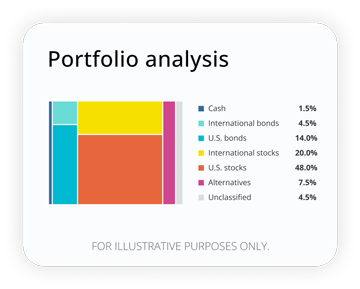
How well are your investments performing?
Analyze your portfolio in minutes and receive a target allocation for your goals.
1 Investor.gov, “Hedge Funds,” Accessed June 2026.
2 Morningstar, “US Active/Passive Barometer Report: Year-End 2025,” Accessed June 2026.
3 S&P Global, “S&P 500,” Accessed June 2026.
RO5566890-0626
 Get The Currency newsletter



The Currency editors
Staff contributors
The CurrencyTM writers and editors cover the latest financial news and insights shaping how we live, work, and play. The team provides accurate, data-driven, and timely content aimed at empowering financial freedom for all.
The content contained in this blog post is intended for general informational purposes only and is not meant to constitute legal, tax, accounting or investment advice. You should consult a qualified legal or tax professional regarding your specific situation. No part of this blog, nor the links contained therein is a solicitation or offer to sell securities. Compensation for freelance contributions not to exceed $1,250. Third-party data is obtained from sources believed to be reliable; however, Empower cannot guarantee the accuracy, timeliness, completeness or fitness of this data for any particular purpose. Third-party links are provided solely as a convenience and do not imply an affiliation, endorsement or approval by Empower of the contents on such third-party websites. This article is based on current events, research, and developments at the time of publication, which may change over time.
Certain sections of this blog may contain forward-looking statements that are based on our reasonable expectations, estimates, projections and assumptions. Past performance is not a guarantee of future return, nor is it indicative of future performance. Investing involves risk. The value of your investment will fluctuate and you may lose money.
Certified Financial Planner Board of Standards Inc. (CFP Board) owns the certification marks CFP®, CERTIFIED FINANCIAL PLANNER™, CFP® (with plaque design), and CFP® (with flame design) in the U.S., which it authorizes use of by individuals who successfully complete CFP Board's initial and ongoing certification requirements.