

What is an FSA? Uses, Rules, and 2026 Limits
What is an FSA? Uses, Rules, and 2026 Limits
FSAs allow workers to set aside pre-tax dollars for qualified medical expenses. Learn how they work, what they can be used for, and 2026 contribution limits
What is an FSA? Uses, Rules, and 2026 Limits
FSAs allow workers to set aside pre-tax dollars for qualified medical expenses. Learn how they work, what they can be used for, and 2026 contribution limits

06.26.2026
Key takeaways
- An FSA is an employer-sponsored benefit account offering immediate potential tax savings and upfront access to annual funds.
- FSAs can be useful for managing predictable healthcare expenses like prescription medications, copayments, insurance deductibles, and coinsurance.
- The 2026 FSA contribution limit increased to $3,400, with up to $680 eligible for carryover, giving workers more flexibility to use pre-tax dollars.
Flexible Spending Accounts (FSAs) are employer-sponsored accounts that let workers set aside pre-tax dollars for qualified medical expenses. They offer a way to potentially reduce taxable income while planning for healthcare needs.
Nearly half (47%) of private industry workers and almost three-quarters (72%) of state and local government workers had access to an FSA in 2025.1 According to the most recent data from the Employee Benefit Research Institute, the average FSA contribution was $1,291 — well below the contribution threshold — and about half forfeited unused funds of $441 on average to their employer at the end of the annual plan period.2 This suggests many consumers may need more clarity on how they can use FSAs effectively.
What is an FSA?
An FSA is an employer-sponsored benefit account that allows pre-tax contributions to be spent tax-free on qualified expenses. Health FSAs offer immediate potential tax savings and upfront access to annual funds, which can be useful for managing predictable healthcare expenses and out-of-pocket medical costs.
Pros of an FSA: Tax savings and budgeting
The biggest advantages of an FSA are:
- Immediate tax benefit: Contributions are deducted on a pre-tax basis, meaning they do not count toward your taxable income. This money can then be withdrawn tax-free when spent on eligible items.
- Upfront access to funds: FSAs are automatically front-loaded. This means your full FSA amount for the year is accessible immediately on day one of your plan year.3 You’ll have the ability to cover large eligible expenses early in the year — even before you’ve contributed the full amount.
- Employer contributions: Depending on your plan, employers may be eligible to contribute to your FSA. However, they are not required to do so.
Cons of an FSA: “Use it or lose it”
The primary drawbacks of FSAs are:
- Use-it-or-lose-it rule: In most cases, any unused funds at the end of the plan year are forfeited — referred to as the “use-it-or-lose-it” rule. While you can carry over $680 from 2026 into the next plan year, it doesn’t eliminate this risk entirely.
- Lack of portability: Since FSAs are employer-sponsored, you may lose access to unused funds if you leave your job. This is generally the case unless you qualify for continuation coverage such as a grace period, carryover, or COBRA, depending on your plan provisions.
Read more: Medical FSAs: Use it or lose it time is here
How does an FSA work?
Typically, FSAs work by choosing your annual contribution amount during your employer’s open enrollment period (or after a qualifying life event). That election generally remains in place for the year unless your circumstances change. Your employer may then enroll you in automatic payroll deductions and deposit this money into your FSA over the course of the year, though the full annual amount is available for use immediately.
You can use your pre-tax FSA contributions to cover eligible items, such as out-of-pocket healthcare expenses. An FSA card may be provided to you, which can be used when paying for approved items. Otherwise, you may need to pay for items on your own, keep any receipts, and submit a claim to your FSA provider to be reimbursed.
Read more: HSA, FSA & HRA reimbursement explained
What can an FSA be used for? Eligible items and expenses
Medical FSAs can be used for a wide range of qualified medical expenses that would otherwise be paid out-of-pocket. This includes prescription medications, copayments, insurance deductibles, and coinsurance.4 Other eligible items and expenses include dental and vision care, feminine products, and many other over-the-counter healthcare products.
The IRS generally regards eligible medical FSA expenses as those used to treat, diagnose, or prevent a disease, but with certain conditions. For example, a gym membership might be an eligible FSA expense if it’s part of a doctor-prescribed plan to treat a disease or injury. However, gym membership costs for general wellness wouldn’t typically be covered.5
FSAs vs. HSAs
FSAs and HSAs are both tax-advantaged health accounts that may help you manage current health care spending and future costs. The biggest difference between an FSA and an HSA is how the account is structured and how long the money can work for you. An FSA is typically an employer-sponsored tool for near-term health care spending, with full annual funds often available at the start of the plan year. An HSA, by contrast, may offer more long-term flexibility for people who qualify through an HSA-eligible health plan. You can use an HSA as a retirement savings tool since unused funds generally can roll over, stay with the account holder, and potentially be invested.
Read more: FSA vs. HSA: What’s the difference?
FSA contribution limits in 2026
The IRS has bumped up the annual contribution limit for health FSAs to $3,400 in 2026, up from $3,300 in 2025.6 This means workers can pay for more eligible out-of-pocket medical costs with pre-tax dollars.
The maximum amount of 2026 funds that can be carried over into the next plan year also increased to $680 — provided the employer’s plan allows carryovers.7 This adjustment offers a bit more flexibility for those who don’t spend every dollar within the year.
Making the most of your FSA
An FSA can be an attractive option if you have regular, predictable healthcare expenses and you can estimate your annual costs with reasonable accuracy. You may want to consider conservative contributions if you’re uncertain about your medical spending or might change jobs during the year.
There’s a few things you can do proactively to help make the most of an FSA in 2026:
- Make realistic estimates: Base your contributions on costs you know or strongly expect are coming during the year.
- Track spending: Monitor your balance throughout the year so you don’t end up with unused funds at the end of the year.
- Check eligible expenses: Review the FSA eligibility list to ensure purchases qualify.8
- Understand your plan rules: Know whether your employer offers a carryover or grace period.
Ultimately, when used strategically, FSAs can be a valuable tool to help you manage healthcare costs and potentially reduce taxable income.
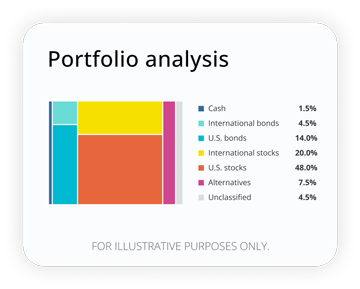
How well are your investments performing?
Analyze your portfolio in minutes and receive a target allocation for your goals.
1 Bureau of Labor Statistics, “Flexible Benefits in the Workplace,” accessed June 2026.
2 Employee Benefit Research Institute, “New Analysis of 3.2 Million Flexible Spending Accounts Finds Average Contributions Increasing While Half Forfeiting Funds to Their Employers,” May 8, 2024.
3 FSA Store, “When can I start using FSA funds?” accessed June 2026.
4 FSA Store, “The Complete FSA Eligibility List”, accessed April 2026.
5 Internal Revenue Service, “Frequently asked questions about medical expenses related to nutrition, wellness and general health,” January 15, 2026.
6 Internal Revenue Service, “IRS releases tax inflation adjustments for tax year 2026, including amendments from the One, Big, Beautiful Bill,” October 9, 2025.
7 Ibid.
8 FSA Store, “The Complete FSA Eligibility List”, accessed April 2026.
RO5655617-0626
 Get The Currency newsletter



The Currency editors
Staff contributors
The CurrencyTM writers and editors cover the latest financial news and insights shaping how we live, work, and play. The team provides accurate, data-driven, and timely content aimed at empowering financial freedom for all.
The content contained in this blog post is intended for general informational purposes only and is not meant to constitute legal, tax, accounting or investment advice. You should consult a qualified legal or tax professional regarding your specific situation. No part of this blog, nor the links contained therein is a solicitation or offer to sell securities. Compensation for freelance contributions not to exceed $1,250. Third-party data is obtained from sources believed to be reliable; however, Empower cannot guarantee the accuracy, timeliness, completeness or fitness of this data for any particular purpose. Third-party links are provided solely as a convenience and do not imply an affiliation, endorsement or approval by Empower of the contents on such third-party websites. This article is based on current events, research, and developments at the time of publication, which may change over time.
Certain sections of this blog may contain forward-looking statements that are based on our reasonable expectations, estimates, projections and assumptions. Past performance is not a guarantee of future return, nor is it indicative of future performance. Investing involves risk. The value of your investment will fluctuate and you may lose money.
Certified Financial Planner Board of Standards Inc. (CFP Board) owns the certification marks CFP®, CERTIFIED FINANCIAL PLANNER™, CFP® (with plaque design), and CFP® (with flame design) in the U.S., which it authorizes use of by individuals who successfully complete CFP Board's initial and ongoing certification requirements.