

What is a dividend? What they are, how they work
What is a dividend? What they are, how they work
A dividend is a payment companies may make to shareholders, often to share profits. Learn how dividends work and how dividend yield helps investors evaluate income potential
What is a dividend? What they are, how they work
A dividend is a payment companies may make to shareholders, often to share profits. Learn how dividends work and how dividend yield helps investors evaluate income potential

04.21.2026
Key takeaways
A dividend is a payment a company may make to shareholders, usually from profits, and is often paid as cash and may be reinvested through a dividend reinvestment plan (DRIP).
Dividend yield shows how much a company pays in dividends relative to its stock price and can be used to compare the income potential of a dividend stock.
Investing in a dividend stock has the potential to provide income for everyday investors or employees who hold company stock.
Dividends are one of the key ways investors can earn income from stocks. A dividend is a payment companies can make to shareholders, typically in cash and paid on a regular basis. U.S. households have been steadily earning more from dividends in recent decades, with dividend income climbing to 7.88% of personal income in 2024.1
Dividends may provide a source of income and can be used as part of a long-term investment strategy. They may also allow you to receive income without selling your investments.
What is a dividend?
Think of a dividend as a company sharing part of its profits with owners. A dividend is a payment a company makes to shareholders, usually in cash, though it can also be paid in stock or other property. Public companies that pay dividends usually do so on a regular schedule, but they can also make one-time special payouts.
For example, if you own 100 shares and the dividend is $1 per share, you’d receive $100.
Who receives dividends?
Shareholders are individuals or entities that own shares of the company and receive dividends. They can include everyday investors, employees who hold company stock, and even people who own fractional shares through certain brokerages or plans.2 Preferred stockholders have priority over common stockholders, usually receiving dividends before any payments are made to common shareholders.
Who pays them?
Dividends are often paid by established, profitable companies with steady cash flow. Companies may offer dividends to employees as an employment benefit or make them available to everyday investors looking to add to their investment portfolios.
Having explored who receives and pays for dividends, let’s look at how dividends work in practice.
How do dividends work?
When a company decides to pay a dividend, it announces a few important dates that determine who gets paid and when.
Declaration date: The company announces the dividend and the basic terms, including how much it plans to pay per shareholder.
Ex-dividend date: The cutoff date for new buyers. If you buy on the ex-dividend date or after, you generally will not receive the upcoming dividend.
Record date: The date that the company checks its records to determine eligible shareholders.
Payment date: Cash or shares are actually delivered to shareholders.
Under current stock exchange rules, the ex-dividend date for stocks is usually the record date, or one business day earlier if the record date falls on a non-business day.3
How are dividends paid?
Dividends are often paid to shareholders as cash and deposited directly into a brokerage account. From there, the cash can be left alone, moved to a bank account, or reinvested through a dividend reinvestment plan (DRIP).4 DRIPs let you use cash dividends to buy more shares, and fractional-share investors generally still receive dividends based on the portion of a full share they own. Some plans or firms may charge fees, so it’s worth checking the disclosures.
How often are dividends paid?
Many dividend-paying stocks pay shareholders on a regular basis — often quarterly.5 This is typically seen in income and value stocks offered by public companies. However, payout schedules can vary, and special dividends can happen outside the normal cycle.
What is a dividend yield?
Dividend yield is the annual dividend expressed as a percentage of the stock’s current share price. This percentage can be used to compare income potential across investments, and may come in handy when determining which dividend stocks to invest in.
Dividend Yield Formula
Dividend yield = annual dividend per share ÷ share price
For example, if a hypothetical stock paid $2 a year in dividends and the share price was $40, the dividend yield would be 5%.
For context, the S&P 500 Dividend Yield was 1.15% as of December 2025.6 The S&P 500 is a stock market index that tracks the performance of 500 large-cap U.S. companies and is commonly used as a benchmark for the overall U.S. stock market.
In this scenario, an investor has the potential to earn about $5 in annual dividends for every $100 invested at that price, assuming the dividend yield stays the same. If the stock price falls or the dividend rises, then the yield goes up. If the stock price rises or the dividend falls, then the yield goes down.
Yield matters because it can help investors compare dividend-paying stocks using the same percentage-based measure instead of only looking at the dollar amount of a payout. Still, a higher yield is not always better. In some cases, a very high yield can reflect a falling share price or a dividend that may be harder for a company to maintain.7
Read more: How to calculate dividends
How are dividends taxed?
In taxable accounts, such as taxable brokerage accounts, dividends usually fall into two broad categories: ordinary dividends and qualified dividends. Ordinary dividends, or unqualified dividends, are subject to federal tax at your ordinary income tax rate (between 10%–37% for 2025 and 2026), while qualified dividends are those that meet IRS rules and can be taxed at lower capital gains rates (0%, 15%, or 20%). Both qualified and unqualified dividends can come from investing in common shares, preferred shares, mutual funds, and ETFs.
To be considered a qualified dividend, the IRS outlines the following criteria:8
The dividend is paid by a U.S. corporation or qualified foreign corporation.
The dividend does not fall under the list of non-qualified dividends.
The holding period must be met. Shareholders must typically hold the stock for more than 60 days throughout the 121-day period, which begins 60 days before the ex-dividend date).
For high-income investors, opting for qualified dividends could mean the difference of paying 15% versus 30% in dividend taxes, not including any state taxes that may apply. The potential for lower capital gains rates is one reason investors may choose to invest in dividend stocks.
Why invest in a dividend-paying stock?
There are several reasons why investing in a dividend-paying stock may make sense as part of your investment strategy, depending on your goals, risk tolerance, and financial situation. Dividend stocks are typically offered by established businesses and have the potential to generate income for investors.
Dividends can offer passive income
Dividends have the potential to provide a stream of income without requiring you to sell shares. Dividends may allow you to keep your holdings while still receiving income on a regular basis. Income stocks and blue-chip stocks typically pay dividends on a quarterly basis, although some are paid annually, semi-annually, or monthly.9,10
That said, payments are not guaranteed. Dividends can change and companies may choose to reduce, pause, or skip dividend payments. This can sometimes occur when companies face financial strains.
Dividends may provide stability
Dividend-paying companies are often more mature businesses rather than early-stage growth names. The S&P 500 Dividend Yield, which reflects the dividend yield of the S&P 500 Index, has a long-term average of 1.80%.11
However, steady dividends do not completely erase market risk. Share prices can still fluctuate, and dividends or interest payments may also change as market conditions change. Dividend payments are never guaranteed.
Common types of dividends
Among the common types of dividends, you may find that some are better suited for your investment goals due to how and when they are paid.
- Cash dividends: The most common type, paid in cash to shareholders.
- Stock dividends: Additional shares paid instead of cash.
- Special dividends: One-time or extra payouts outside a company’s normal schedule.
- Asset dividends: Distributions paid as property or other assets instead of cash.
- Liquidation dividends: Distributions tied to winding down a business. For tax purposes, liquidating distributions are often treated differently from ordinary dividends.
Understanding how these common types of dividends work can help guide your decision-making as you begin investing as can seeking advice from a financial advisor.
How to invest in dividend stocks
- Consider your investment goals. Factors such as age, income, and risk tolerance can influence the type and amount of dividend stocks that shareholders invest in. This can be considered in conjunction with how much of your investment portfolio will be allocated solely to dividend stocks, and how much will go to other types of investments.
- Open a brokerage account. This account allows you to buy and hold investments. When dividends are paid, they are typically credited to your account as cash or automatically reinvested, depending on your settings. You can choose to withdraw the cash or reinvest it.
- Choose one or more dividend stocks. Dividend yield is one useful method of comparing income potential across investments, but it is not the only one. Look at dividend forecasts and research company business models, earnings, and whether these dividend stocks fit your goals and risk tolerance.12 Look out for signs of a dividend value trap, which may include dividend yields that look unusually high, companies with high payout ratios, or declining stock.
Read more: What is risk tolerance & how to determine yours
The bottom line
Dividends are payments made by companies to shareholders that are typically credited to a brokerage account as cash or reinvested in additional shares. Understanding how dividend yield works and the tax opportunities available can help investors determine if and how dividend stocks fit into their overall investment strategies.
Frequently asked questions about dividends
Are dividends guaranteed?
No, dividends are not usually guaranteed. A company can raise, lower, suspend, or skip a dividend. Unlike bond interest, companies generally do not have the same legal obligation to pay dividends to shareholders.
Can you live off dividends?
It may be possible for some investors to live off dividends, but this can require a large portfolio, careful planning, and room for taxes, inflation, and changing payouts. Federal Reserve data from 2024 suggests dividends are one source of retirement income but typically coincide with additional investment strategies.13
Do all stocks pay dividends?
No, not all stocks pay dividends. Income stocks, value stocks, and blue-chip stocks tend to pay dividends on a regular basis. Alternatively, growth stocks rarely pay dividends and instead offer the potential benefit of capital appreciation.
Why don’t all companies pay dividends?
Companies can choose not to pay dividends and instead may opt to reinvest the cash into the business. They may choose to use company capital to pay off debt, launch new products, or expand into new markets or facilities. This is often seen among younger or faster-growing companies that cannot afford to pay out dividends on a regular basis.
Investing involves risk, including the possible loss of principal. Dividend payments are not guaranteed and may be reduced or eliminated at any time. Past performance is not indicative of future results.
The S&P 500 Index is a registered trademark of Standard & Poor’s Financial Services LLC. It is an unmanaged index considered indicative of the domestic large-cap equity market and is used as a proxy for the stock market in general.
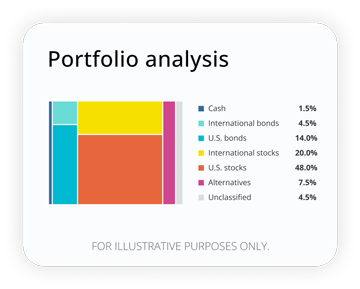
How well are your investments performing?
Analyze your portfolio in minutes and receive a target allocation for your goals.
1 S&P Global, “The Importance of Dividends”, November 2025.
2 Yahoo! Finance, “Investing in Fractional Shares,” June 2025.
3 U.S. Securities and Exchange Commission, “Ex-Dividend Dates: When Are You Entitled to Stock and Cash Dividends,” April 2026.
4 Morningstar, “When to Reinvest Dividends (or Not),” June 2025.
5 Cornell Law School, “Dividends,” September 2022.
6 YCharts, “S&P 500 Dividend Yield (I:SP500DYT),” December 2025.
7 Yahoo! Finance, “Why High Dividend Yields Aren’t Always a Good Thing,” November 2025.
8 IRS, “Publication 550 (2025), Investment Income and Expenses,” March 2026.
9 CFI Education Inc., “Income Stocks”, June 2021.
10 Cornell Law School, “Blue-chip stocks,” December 2024.
11 YCharts, “S&P 500 Dividend Yield (I:SP500DYT),” December 2025.
12 S&P Global, “Seven key dividend forecasts for 2026,” January 2026.
13 Board of Governors of the Federal Reserve System, “Report on the Economic Well-Being of U.S. Households in 2024,” May 2025.
RO5202341-0426
 Get The Currency newsletter



The Currency editors
Staff contributors
The CurrencyTM writers and editors cover the latest financial news and insights shaping how we live, work, and play. The team provides accurate, data-driven, and timely content aimed at empowering financial freedom for all.
The content contained in this blog post is intended for general informational purposes only and is not meant to constitute legal, tax, accounting or investment advice. You should consult a qualified legal or tax professional regarding your specific situation. No part of this blog, nor the links contained therein is a solicitation or offer to sell securities. Compensation for freelance contributions not to exceed $1,250. Third-party data is obtained from sources believed to be reliable; however, Empower cannot guarantee the accuracy, timeliness, completeness or fitness of this data for any particular purpose. Third-party links are provided solely as a convenience and do not imply an affiliation, endorsement or approval by Empower of the contents on such third-party websites. This article is based on current events, research, and developments at the time of publication, which may change over time.
Certain sections of this blog may contain forward-looking statements that are based on our reasonable expectations, estimates, projections and assumptions. Past performance is not a guarantee of future return, nor is it indicative of future performance. Investing involves risk. The value of your investment will fluctuate and you may lose money.
Certified Financial Planner Board of Standards Inc. (CFP Board) owns the certification marks CFP®, CERTIFIED FINANCIAL PLANNER™, CFP® (with plaque design), and CFP® (with flame design) in the U.S., which it authorizes use of by individuals who successfully complete CFP Board's initial and ongoing certification requirements.