

The Big Shrink
New Empower research looks at inflation – and shrinkflation – and how it’s squeezing household budgets and savings.
The Big Shrink
New Empower research looks at inflation – and shrinkflation – and how it’s squeezing household budgets and savings.

Pricing pressures have caused Americans to pull back, with a majority (79%) noticing shrinkflation in products like cereal, chips, and dwindling serving sizes, according to new research from Empower. Over 6 in 10 (62%) say their ‘purchasing power’ and income in relation to prices, is decreasing – and their money doesn’t go as far as it used to (82%).
The majority (87%) say they’re “fed up” with rising prices and shrinkflation. Baby Boomers are the most fed up with shrinkflation and the least willing to pay more than products’ current prices.
Price check
Some 78% are using more of their budget on essential items, and 27% have hit a pricing limit, and aren’t willing to pay anything more for many grocery staples, or will cut the item from their shopping lists. Prices are 20% more expensive than February 2020 according to CPI data1 – so consumers would need to pay $1,218 now for their dollars to have the same purchasing power as $1,000 in 2020.2
Consumers say they’ll quit buying goods including:
Coffee: Over a third of people aren’t willing to pay even $1 more for a cup of joe.
Bread: 1 in 5 Gen X will stop buying loaves of bread if the price increases by more than a buck.
Fresh produce: 1 in 5 Gen Z will chop fresh fruits and vegetables from their shopping lists if the price increases by $1.
Snacks: 20% of Millennials are not willing to pay one dollar more for snack foods like bags of chips or chocolate bars.
Quality and quantity
Almost half (45%) of people notice a change in quality of items they’ve been buying for years – 79% say there’s less chips in the bag, and 54% say that chocolate costs more, but doesn’t taste as good. Price increases can influence loyalty, too: around 75% of Americans say it turns them off from a brand, and many are switching over to generic/store-owned brands (77%). Three in four believe the higher prices go, the less they’re getting in return.
Sizes aren’t the only thing getting smaller: Americans believe their Time is Money, and 29% say their amount of free time is shrinking, feeling priced out of enjoying it (58%) as costs have risen. Nearly half of Americans feel priced out of retiring at the age they want (49%), along with financial goals like home ownership (48%), leaving an inheritance (50%) and paying for a college degree (41%). The sentiment extends to starting a business (38%) or buying a piece of one, through investing in the stock market (40%).
The long and short on goals
Near half of Americans (47%) say they have less disposable income. But inflation is taking a slice out of larger money goals, too: 35% have less in emergency savings, 24% say their net worth is shrinking and 17% worry they’ll have to work longer to retire.
Still, optimism remains: 28% of Americans think prices will keep dropping before the end of this year. A third feel they have the opportunity to grow financially by paying down debt (33%) and investing (17%).
Other findings:
Tipflation and fees: 45% say they are being asked to tip more in places where they didn’t tip 10 years ago. Nearly three-quarters (73%) say extra fees are being added where they haven’t had to pay in the past.
Stocking up: In the last year to save money, 53% switched to a generic brand, 34% downloaded a store’s app for rewards/coupons and 21% purchased a store membership to get benefits like free shipping.
Getting smaller: 68% say new houses are getting smaller, but not cheaper. More than half (57%) say streaming services have increased prices, but there is less content.
Dreaming it: Close to a third (30%) would sacrifice their vacation time in order to achieve their financial goals; 1 in 5 would give up their dream home (22%).
Up and down: 37% like the concept of dynamic pricing, even at a grocery store. Two in 5 plan to split more prices with family and friends to make ends meet.
*SURVEY METHODOLGY
The Empower “The Big Shrink” study is based on online survey responses from 2,203 Americans ages 18+ fielded by Morning Consult between March 22nd–24th, 2024. The survey is weighted to be nationally representative of U.S. adults (aged 18+).
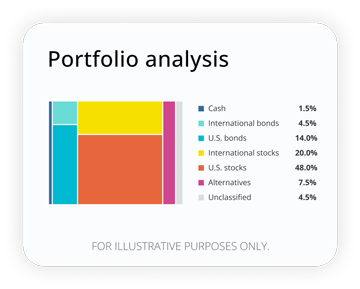
How well are your investments performing?
Analyze your portfolio in minutes and receive a target allocation for your goals.
RO3765386-0824
 Get The Currency newsletter
News and know-how for whatever money decision comes next.
*If you’re already registered with Empower, please use the same email address as your existing account.
The content contained in this blog post is intended for general informational purposes only and is not meant to constitute legal, tax, accounting or investment advice. You should consult a qualified legal or tax professional regarding your specific situation. No part of this blog, nor the links contained therein is a solicitation or offer to sell securities. Compensation for freelance contributions not to exceed $1,250. Third-party data is obtained from sources believed to be reliable; however, Empower cannot guarantee the accuracy, timeliness, completeness or fitness of this data for any particular purpose. Third-party links are provided solely as a convenience and do not imply an affiliation, endorsement or approval by Empower of the contents on such third-party websites. This article is based on current events, research, and developments at the time of publication, which may change over time.
Certain sections of this blog may contain forward-looking statements that are based on our reasonable expectations, estimates, projections and assumptions. Past performance is not a guarantee of future return, nor is it indicative of future performance. Investing involves risk. The value of your investment will fluctuate and you may lose money.
Certified Financial Planner Board of Standards Inc. (CFP Board) owns the certification marks CFP®, CERTIFIED FINANCIAL PLANNER™, CFP® (with plaque design), and CFP® (with flame design) in the U.S., which it authorizes use of by individuals who successfully complete CFP Board's initial and ongoing certification requirements.