

Valentine’s Day spending set to reach record $29.1B
Valentine’s Day spending set to reach record $29.1B
Consumers are putting their money where their hearts are this Valentine’s Day, with spending expected to hit $200 per person
Valentine’s Day spending set to reach record $29.1B
Consumers are putting their money where their hearts are this Valentine’s Day, with spending expected to hit $200 per person

02.06.2026
Key takeaways
- Valentine’s Day spending is growing at roughly twice the pace of overall U.S. retail sales, and is set to reach $29.1B in 2026.
- Spending on gifts for romantic partners could top $14.5B, with billions more spent on family members, friends, pets, teachers, and coworkers.
- Across the five largest Valentine’s Day gift categories, prices are up 5.6% on average year-over-year, according to CPI data.
Cupid’s arrow is pointing consumers toward higher spending this Valentine’s Day. A survey from the National Retail Federation (NRF) forecasts $29.1 billion in holiday gift spending, a 6% increase from last year, as Americans shop for significant others, family, friends, pets, teachers, and even coworkers.1
That growth rate is almost double the pace of overall U.S. retail sales, highlighting how consumers are prioritizing discretionary dollars toward occasion-driven spending.2
Who consumers are buying for
While romantic partners continue to account for the largest share of Valentine’s Day spending (83%), consumers are increasingly extending gift-giving to family members (58%), friends (33%), children’s classmates and teachers (27%), and coworkers (21%).3
What’s more, a record 35% of consumers plan to purchase Valentine’s Day gifts for their pets this year, totaling $2.1 billion, up from $1.7 billion in 2025.4 Whether it’s puppy love or feline affection, pet parents are celebrating by buying treats, toys, and accessories for their animals. This seasonal spike builds on a broader upward trend in pet-related spending: Empower Personal DashboardTM data shows consumers spent an average of $350 per month on pets and pet care in 2025, an 11.5% increase from 2024.
Higher prices add pressure to Valentine’s Day budgets
The National Retail Federation found that candy was the most popular Valentine’s gift.5 More than half, or 56%, of surveyed respondents plan to give candy, followed by flowers and greeting cards equally at 41%, an evening out at 39% and jewelry at 25%. Across the five largest Valentine’s Day gift categories, prices are up 5.6% on average year-over-year, according to the Consumer Price Index (CPI).6
Valentine’s Day gift categories: purchase intent vs. price changes
Gift category | % planning to purchase | CPI YoY change |
Candy | 56% | +10.0% |
Flowers | 41% | +7.2% |
Greeting cards | 41% | +1.8% |
An evening out | 39% | +4.1% |
Jewelry | 25% | +4.9% |
Note: CPI price changes reflect the latest data (December 2025 compared with December 2024). Greeting cards are captured under CPI stationery, stationery supplies, and gift wrap, while “an evening out” reflects CPI data for full-service meals and snacks.
On average, shoppers’ budgets for gifts are expected to jump to almost $200, an increase from $188.81 last year.7
A cultural shift in Valentine’s Day spending
Valentine’s Day is no longer defined solely by romantic relationships. Consumers are increasingly spreading spending across friends, family members, and themselves. Notably, nearly one-third of consumers who do not plan to celebrate Valentine’s Day still expect to mark the occasion in some way, according to the National Retail Federation — often through self-gifting, self-care, or social activities with friends and family.8
Cultural moments like Galentine’s Day continue to reinforce this shift, with Google Trends data showing searches for “Galentine’s Day” up 12% year over year as of early February, signaling growing interest in friendship-focused celebrations alongside traditional Valentine’s Day spending.9
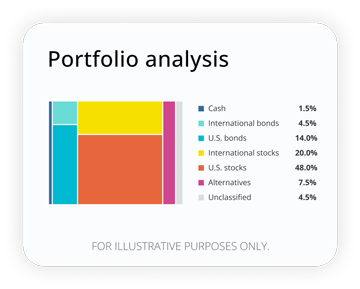
How well are your investments performing?
Analyze your portfolio in minutes and receive a target allocation for your goals.
1 National Retail Federation, “Valentine’s Day Spending Expected to Reach New Records,” January 2026.
2 U.S. Census Bureau, “Advance Monthly Sales for Retail and Food Services,” January 2026.
3 National Retail Federation, “Valentine’s Day Spending Expected to Reach New Records,” January 2026.
4 Ibid.
5 Ibid.
6 U.S. Bureau of Labor Statistics, “Consumer Price Index – December 2025,” January 2026.
7 National Retail Federation, “Valentine’s Day Spending Expected to Reach New Records,” January 2026.
8 Ibid.
9 Google Trends, “’Galentine’s Day’ search interest,” February 2026
RO5190177-0226
 Get The Currency newsletter


The Currency editors
Staff contributors
The CurrencyTM writers and editors cover the latest financial news and insights shaping how we live, work, and play. The team provides accurate, data-driven, and timely content aimed at empowering financial freedom for all.
The content contained in this blog post is intended for general informational purposes only and is not meant to constitute legal, tax, accounting or investment advice. You should consult a qualified legal or tax professional regarding your specific situation. No part of this blog, nor the links contained therein is a solicitation or offer to sell securities. Compensation for freelance contributions not to exceed $1,250. Third-party data is obtained from sources believed to be reliable; however, Empower cannot guarantee the accuracy, timeliness, completeness or fitness of this data for any particular purpose. Third-party links are provided solely as a convenience and do not imply an affiliation, endorsement or approval by Empower of the contents on such third-party websites. This article is based on current events, research, and developments at the time of publication, which may change over time.
Certain sections of this blog may contain forward-looking statements that are based on our reasonable expectations, estimates, projections and assumptions. Past performance is not a guarantee of future return, nor is it indicative of future performance. Investing involves risk. The value of your investment will fluctuate and you may lose money.
Certified Financial Planner Board of Standards Inc. (CFP Board) owns the certification marks CFP®, CERTIFIED FINANCIAL PLANNER™, CFP® (with plaque design), and CFP® (with flame design) in the U.S., which it authorizes use of by individuals who successfully complete CFP Board's initial and ongoing certification requirements.