

Private-label food brands grew in 2025. Price wasn’t the only draw
Private-label food brands grew in 2025. Price wasn’t the only draw
Higher grocery prices pushed shoppers to try store brands, but better quality and more selection are keeping them loyal
Private-label food brands grew in 2025. Price wasn’t the only draw
Higher grocery prices pushed shoppers to try store brands, but better quality and more selection are keeping them loyal
12.22.2025

Listen
·Private-label food brands grew in 2025. Price wasn’t the only draw
Key takeaways
- Private-label sales are projected to reach $277 billion for 2025, extending a multi-year run of growth.
- Younger shoppers and higher-income households are driving wider acceptance of private-label products.
- Generic brand labels have given way to modern packaging and more premium designs.
Private-label food brands continued to gain ground in 2025 as shoppers navigate higher prices and reassess how they define quality. Rising costs led many to try private-label goods a few years ago, but updated designs and a more premium feel are keeping them there.1
Sales of private-label store brands are projected to reach $277 billion for 2025, up from last year’s record of $271 billion, according to the Private Label Manufacturers Association.2 From 2021 to 2024, private-label store brand sales increased by over $51 billion, a 23.6% gain.3
Attractive pricing helped spur the rise, as food manufacturers raised prices during the pandemic and the higher inflation that followed, to keep up with supply-chain disruptions and higher labor costs.4
Grocery prices are up about 25% over the last five years.5 Americans spent an average of $589 on groceries in November, according to Empower Personal DashboardTM data.
But cost isn’t the only factor. Shoppers are also responding to how private-label products have evolved, as retailers improve ingredients, refresh packaging, and broaden assortments with younger consumers in mind.6
Read more: Price check: Find out which states spend the most on groceries
Private label gets a makeover
Decades ago, generic or private-label brands would purposely use inexpensive packaging and plain, stripped-down branding to convey the message of savings. These days, private-label packaging has shifted toward a more modern look with contemporary fonts and higher-quality imagery.7
Many of the design changes are also associated with health, sustainability, and clean ingredients. Walmart’s upscale Bettergoods brand — a big driver of the retailer’s recent earnings growth — features organic, plant-based, and gluten-free products.
Other store labels like Trader Joe’s, Costco’s Kirkland Signature and Target’s Good & Gather have also drawn loyal followings from younger shoppers. The trend isn’t limited to foodstuffs as it expands to other categories like Ulta Beauty’s private-label collection of makeup and skincare or Target’s Cat & Jack kids' apparel.8
The upgrade and expansion of private-label offerings have been particularly aimed at younger shoppers who increasingly view them as on par with premium or name-brand labels.9
Gen Z and Millennials are showing the largest year-over-year increases in private-label adoption, at roughly 5%, according to market research and consumer insights company Numerator. It projects that Gen Z’s share of private-label spending (18.4%) will surpass that (18.3%) of Baby Boomers by mid-2026.10
Private-label products have also made significant inroads with households with incomes above $100,000. Some 82% of households above that income threshold have increased their frequency of purchasing private-label products, according to an August 2025 consumer sentiment survey.11
Read more: Why value retailers are winning over higher-income shoppers
Private labels surge, but brand loyalty also holds
Three-quarters of shoppers (75%) say private-label products offer good value, and 72% view them as strong alternatives to national brands, according to an April 2025 study.12
Private-label portfolios now extend into more products, formats, sizes, and flavors, giving shoppers more choices and variety. Retailers are also moving to tiered offerings such as value-focused, mid-tier, and premium lines.13
Among categories of private-label goods, sales of refrigerated foods rose 13% between June 2024 and June 2025, according to the Private Label Manufacturers Association. Other top gains during that period include beverages (4.8%), frozen food (3.8%), general food (2.5%), pet care (2%), home care, (1.4%), and beauty (1.1%).14
The sharp rise in private-label popularity doesn’t mean national brands are out of the picture. In fact, 62% of shoppers say they still default to the branded products they know and trust.15
Food industry analysts say strong loyalty to many national brands has been reinforced by decades of familiarity, use, and trust.16 Staples like Band-Aid, Dove soap, and Clorox continue to rank high among surveys of the most trusted brands.17
Coffee is one of many other examples. Starbucks remains the top-selling brand at grocery and mass retailers like Walmart and Target, and ranks second at club and dollar stores — signaling brand loyalty. At the same time, coffee prices are up 41% year-over-year, according to the Bureau of Labor Statistics.18
Private label’s next chapter takes shape
As private-label brands become more established, the push and pull with national brands could define the next phase of grocery retail, according to industry professionals. With younger shoppers reshaping expectations around quality and design, the market is poised for more changes — and consumers could benefit from the widening array of options amid continuing cost challenges.19
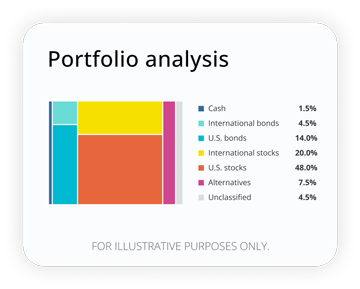
How well are your investments performing?
Analyze your portfolio in minutes and receive a target allocation for your goals.
1 NBC News, “Shoppers are trading down to store brands without even realizing it,” July 2025.
2 Private Label Manufacturers Association, “First-Half 2025 Private Label Report: Sales Rise 4.4% in All Retail Outlets,” July 2025.
3 Private Label Manufacturers Association, “Private Label Sales Rose 3.9% in 2024 to Record $271 Billion,” January 2025.
4 NBC News, “Shoppers are trading down to store brands without even realizing it,” July 2025.
5 Federal Reserve Bank of St. Louis “Consumer Price Index for All Urban Consumers: Food at Home in U.S. City Average,” October 2025.
6 USA Today, “Supermarket store brands are more popular than ever. Do they taste better?” September 2024.
7 NBC News, “Shoppers are trading down to store brands without even realizing it,” July 2025.
8 NIQ, “Private Label and Branded Products: A Changing Shelfscape,” April 2025.
9 Numerator, “Private Label’s Next Power Players: Gen Z,” June 2025
10 Numerator, “Private Label’s Next Power Players: Gen Z,” June 2025
11 Alvarez & Marsal, “Consumer Sentiment Survey Fall 2025,” August 2025.
12 NIQ, “Private Label and Branded Products: A Changing Shelfscape,” April 2025.
13 Food Dive, “Private label growth unwraps opportunities for packaging manufacturers,” November 2025.
14 Private Label Manufacturers Association, “First-Half 2025 Private Label Report: Sales Rise 4.4% in All Retail Outlets,” July 2025.
15 NIQ, “Private Label and Branded Products: A Changing Shelfscape,” April 2025
16 The Wall Street Journal, “Store Brands Are Filling Up More of Your Shopping Cart,” May 2024.
17 Morning Consult, “Most Trusted Brands 2025,” accessed December 2025.
18 Business Insider, “Cheap coffee is winning in grocery aisles — except when shoppers want Starbucks,” December 2025.
19 NIQ, “Private Label and Branded Products: A Changing Shelfscape,” April 2025.
RO5074700-1225
 Get The Currency newsletter

The Currency editors
Staff contributors
The CurrencyTM writers and editors cover the latest financial news and insights shaping how we live, work, and play. The team provides accurate, data-driven, and timely content aimed at empowering financial freedom for all.
The content contained in this blog post is intended for general informational purposes only and is not meant to constitute legal, tax, accounting or investment advice. You should consult a qualified legal or tax professional regarding your specific situation. No part of this blog, nor the links contained therein is a solicitation or offer to sell securities. Compensation for freelance contributions not to exceed $1,250. Third-party data is obtained from sources believed to be reliable; however, Empower cannot guarantee the accuracy, timeliness, completeness or fitness of this data for any particular purpose. Third-party links are provided solely as a convenience and do not imply an affiliation, endorsement or approval by Empower of the contents on such third-party websites. This article is based on current events, research, and developments at the time of publication, which may change over time.
Certain sections of this blog may contain forward-looking statements that are based on our reasonable expectations, estimates, projections and assumptions. Past performance is not a guarantee of future return, nor is it indicative of future performance. Investing involves risk. The value of your investment will fluctuate and you may lose money.
Certified Financial Planner Board of Standards Inc. (CFP Board) owns the certification marks CFP®, CERTIFIED FINANCIAL PLANNER™, CFP® (with plaque design), and CFP® (with flame design) in the U.S., which it authorizes use of by individuals who successfully complete CFP Board's initial and ongoing certification requirements.