

How to create a budget: A step-by-step guide
How to create a budget: A step-by-step guide
A structured budget can clarify income and expenses while supporting long-term goals
How to create a budget: A step-by-step guide
A structured budget can clarify income and expenses while supporting long-term goals

12.22.2025
Key takeaways
- A budget provides visibility into how income supports expenses and long-term goals
- Different budgeting methods, such as the 50/30/20 rule or zero-based budgeting, are designed to help align spending with financial priorities
- Regular budget review can help keep plans aligned with changing circumstances and priorities
A clear budget can help organize essential costs, variable spending, and long-term priorities into a single view. Having a consistent structure may help reduce financial stress and support steadier financial progress toward savings and planning goals.
A budget can offer structure when financial activity needs to be kept on track. They organize income, spending, and what's left for goals that take time. A financial plan may also reduce the need for constant money monitoring, since the structure itself guides day-to-day choices that foster long-term differences.
For some households, even a modest framework could replace uncertainty with clarity. For others, an ambitious budget may help create flexibility through optimistic goal setting. Flexible budgeting methods are designed to create a reliable financial foundation, rather than a rigid set of rules.
Why do you need a budget?
A person’s financial trajectory often changes in small increments.1 These patterns may be difficult to recognize on their own. Budgets help identify these patterns, allowing people to map their essential costs against total income and how the two interact. Budgets can also highlight how discretionary categories, which tend to grow quietly, affect long-term planning.
Read more: Money resolutions: 5 ways to jump start your financial fitness
Step 1: Calculate your net income
Net income determines day-to-day budgeting and spending.2 It is different from gross income, which does not account for taxes, retirement contributions, and other payroll deductions.
To calculate net income, take the full amount of any monthly, quarterly, or yearly earnings and subtract all taxes, deductions, and other withholdings. This figure demonstrates true take-home pay, which is the starting point for any budget.
Calculating net income can be a challenge, especially for variable earners.3 People who have irregular earnings may have to estimate their typical take-home pay. A multi-month income average can provide a more stable figure for determining net income before moving on to budgeting.
Step 2: List your monthly expenses
Creating a complete list of expenses is crucial for structuring a budget. They are typically considered either fixed or variable. Housing, childcare, installment loans, subscriptions, and insurance premiums usually change infrequently.
Variable expenses can include groceries, transportation, utilities, dining out, and entertainment. Some are essential, while others may not be. Variable costs can reveal where to cut back or how price swings affect flexibility.
Step 3: Set your budgeting goals
Goals define what the budget is set up to accomplish, whether they’re short-term or long-term. Short-term goals often address immediate necessities.
Long-term goals may include saving for a home, preparing for retirement, or saving for college.
Step 4: Choose your budgeting method
There are several approaches to budgeting. The best method is one that fits with a person’s habits and covers essential costs.4
The 50/30/20 rule assigns take-home income to needs, wants, and savings.
The zero-based budgeting method distributes every dollar of income into a category so income minus expenses equals zero.5
The envelope system sets predetermined amounts for each category and pauses spending once funds are depleted.
Step 5: Adjust budget and track spending
Budgets often evolve as circumstances change. Regular review helps ensure spending supports financial plans.
When budgeted income exceeds expenses
A surplus provides several options.6 Some may focus on paying off high-interest debt, while others build an emergency fund.
Creating a budget that sticks
With steady use, budgets adapt to new priorities, unexpected costs, and changes in earnings.
Frequently asked questions about how to create a budget
What is the 50/30/20 rule?
The 50/30/20 rule divides take-home income across needs, wants, and savings.
How is a budget created in Excel?
Spreadsheet tools can track income, expenses, and savings using categories and formulas.
How often should a budget be reviewed?
Weekly check-ins maintain awareness, while monthly reviews support broader adjustments.
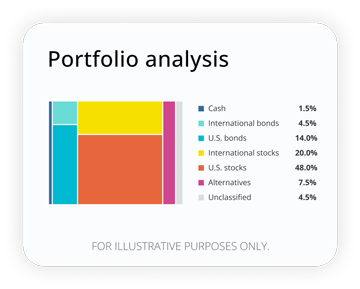
How well are your investments performing?
Analyze your portfolio in minutes and receive a target allocation for your goals.
1 FICO, "Tiny Behavioral Shifts Can Lead to Big Changes in Your Finances," September 2024
2 U.S. Chamber of Commerce, "Net Income vs. Gross Income: What Small Business Owners Need to Know," Accessed December 2025
3 Pennsylvania State University, "Net Income vs. Gross Income: What Small Business Owners Need to Know," April 2025
4 USA.gov, "Tips for budgeting to meet your financial goals," Accessed December 2025
5 State of Georgia, "Zero-Based Budgeting," Accessed December 2025
6 Northwestern University, "Budgeting," Accessed December 2025
RO5063495-1225
 Get The Currency newsletter
News and know-how for whatever money decision comes next.
*If you’re already registered with Empower, please use the same email address as your existing account.

The Currency editors
Staff contributors
The CurrencyTM writers and editors cover the latest financial news and insights shaping how we live, work, and play. The team provides accurate, data-driven, and timely content aimed at empowering financial freedom for all.
The content contained in this blog post is intended for general informational purposes only and is not meant to constitute legal, tax, accounting or investment advice. You should consult a qualified legal or tax professional regarding your specific situation. No part of this blog, nor the links contained therein is a solicitation or offer to sell securities. Compensation for freelance contributions not to exceed $1,250. Third-party data is obtained from sources believed to be reliable; however, Empower cannot guarantee the accuracy, timeliness, completeness or fitness of this data for any particular purpose. Third-party links are provided solely as a convenience and do not imply an affiliation, endorsement or approval by Empower of the contents on such third-party websites. This article is based on current events, research, and developments at the time of publication, which may change over time.
Certain sections of this blog may contain forward-looking statements that are based on our reasonable expectations, estimates, projections and assumptions. Past performance is not a guarantee of future return, nor is it indicative of future performance. Investing involves risk. The value of your investment will fluctuate and you may lose money.
Certified Financial Planner Board of Standards Inc. (CFP Board) owns the certification marks CFP®, CERTIFIED FINANCIAL PLANNER™, CFP® (with plaque design), and CFP® (with flame design) in the U.S., which it authorizes use of by individuals who successfully complete CFP Board's initial and ongoing certification requirements.