

How much should I have saved by 30? Get a Sense Check
How much should I have saved by 30? Get a Sense Check
In this edition of Sense Check, Empower’s Lindsey Shinners talks through the key financial milestones, priorities, and pitfalls at this stage of life
How much should I have saved by 30? Get a Sense Check
In this edition of Sense Check, Empower’s Lindsey Shinners talks through the key financial milestones, priorities, and pitfalls at this stage of life

12.15.2025

Listen
·How much should I have saved by 30? Get a Sense Check
Key takeaways
1x your salary is often considered a savings benchmark for age 30, but building consistent habits may be as important
Using a bucket strategy can be helpful to balance long-, mid-, and short-term goals
Prioritizing an emergency fund and capturing your employer’s retirement match can be good first steps for saving
Review your plan annually, track your net worth over time, and remember that your financial plan can balance return on investment with return on life
At age 30 it may be less about hitting a perfect savings number and more about establishing strong financial habits that support your long-term goals. Thinking in terms of savings buckets — emergency expenses, near-term needs, and long-term investing — and regularly reassessing how your money aligns with your priorities can be helpful ways to keep you moving toward achieving goals.
Turning 30 can feel like a financial crossroads. You may be juggling career growth, student loans, and life plans like getting married, buying a home, and starting a family. At the same time, you also may be trying to figure out how much you “should” have banked for a retirement nest egg and how aggressive your investments ought to be. Breaking down some of these questions and understanding guideposts can help you gauge if you’re on track.
Is there a savings benchmark for age 30?
As with most financial planning questions, the broad answer is “it depends” — on factors like individual circumstances, lifestyle goals, and vision for retirement.
At age 30 it can be challenging to know what your end goal is. That said, benchmarks can be helpful for direction. Conventional wisdom tells us to aim to save one times your annual salary by 30. However, this is a guidepost. There’s no hard and fast rule that ‘if you do X by this age, you’ll be set.’ Instead, at this stage of life it can be more important to focus on building consistent habits over hitting a perfect number — establishing behaviors that are going to move you toward long-term goals.
How aggressive should an investment portfolio be at age 30?
At this age there’s a good likelihood that you have decades before retirement, so time can potentially be one of your greatest advantages and allow you to be flexible.
There’s no one-size-fits-all portfolio mix — it’s going to depend on your goals and priorities. Rather than thinking of your assets in terms of percentages, it can make sense to think of your money in buckets. For example — you might have different savings buckets or accounts for long- (10 plus years), mid- (five plus years), and short-term (up to five years) needs. If you decide you want to be more growth-oriented and aggressive, money earmarked for the long term may be where you have the most flexibility to do so, when short-term market fluctuations may be less of an issue. By the same token, it can make sense to be the most conservative with money you’ll need in the near term, like your emergency fund.
How to prioritize savings at age 30
It really comes down to what matters most and works best for you. Generally speaking, creating an emergency fund can be very important to help ensure you have a safety net for an unexpected expense. As a rule of thumb, six months of income can be a good target for single-income households, and three months for dual-income households.
Additionally, at a minimum it makes sense to at least save enough in your workplace plan (if you have one) to qualify for any employer match. Otherwise, you may be leaving free money on the table. From there you can be flexible and build on a 401(k) or other retirement savings or maybe invest through a brokerage account. The key at 30 is to establish at least some savings buckets and continue moving forward.
Read more: 37% can’t afford an unexpected expense over $400
How does debt affect savings targets?
Having debt doesn't mean that you can't save, but it may shift the saving/spending balance. In a sense, paying down debt can be like paying yourself back at the interest rate of your debt. Think of it this way (figures are for illustrative purposes only):
You invest $1 in your retirement account and you earn 8% on that. After one year, that $1 becomes $1.08 ($1 x 8%).
or
You have a balance on your credit card and your card charges 30% interest. If you pay $1 to reduce your balance, then you avoid paying $0.30 in interest ($1 x 30%). This equates to saving $0.30 — which is essentially the same financial benefit as if you were earning a 30% return.
If you opt to address debt, the key is focusing on balances with high interest rates first — most likely credit cards. When it comes to student loans, it can make more sense to continue paying down according to schedule since these loans typically have more moderate interest rates.
Read more: How do I pay off credit card debt? Get a Sense Check
Adjusting goals when income changes
During younger years, increasing your earnings and income can be a higher priority than how much you’re saving. If you get a raise and have more money coming in, a good rule of thumb is to try to allocate roughly half of it to savings. Let’s say you earn $100,000 a year and get a 3% raise — then aim to save $1,500 of that $3,000. Of course, you may need to use the added income to cover increases in your cost of living, but if your circumstances allow, having the extra money doesn’t necessarily mean you need to spend more. This can be a helpful philosophy to avoid the lifestyle creep that can easily sneak up on people. The key is aiming to live within your means.
The flipside is if your income goes down and you can’t save, then you may need to think about ways to decrease spending. It comes down to assigning a job to every dollar that you have. If you have that in place, you can make adjustments as your top and bottom lines shift.
Read more: What is lifestyle creep, and how can you control it?
How can I balance short- and long-term goals?
Whether you're thinking about buying a home, having kids, vacations, or retirement, it’s important to be realistic about what you can afford to save each month. For example, can you contribute $600 to your IRA, or is $300 a more reasonable goal, with the rest going toward saving for more near-term things like a home, car, kids, or vacations?
Automation is your ally: If you're saving for multiple things, it can be very helpful to automate that so you're consistently making steady progress toward different goals. The way you allocate your money should reflect your life priorities, so it can be a good idea to periodically reassess goals. For example, one year it may make sense to prioritize saving for a home purchase, and the next year on socking away money for retirement.
Is it okay to dip into savings to fund near-term goals?
The question of when, if ever, it makes sense to tap into savings really depends on what bucket you’re pulling from, and why. For example, if you’re thinking of withdrawing money from retirement savings to fund a big vacation, then it may be an expense you simply can’t afford right now and you may want to put it off until you have more discretionary funds available. But if you’re considering starting a business or purchasing a rental property, those can be more of an investment, so there may be more leeway.
This doesn’t mean you can’t enjoy your money. Money is a tool to live your life, and it’s okay to use it for experiences that matter to you now and to your future self. Just remember, your retirement and long-term savings buckets are the foundation for your future. Ultimately, it comes down to finding a balance between your return on your investment and your return on life.
How often should I review my financial plan?
At age 30, retirement may feel far away, but building a financial plan still matters. The good news is that at this stage you likely do not need to monitor your finances constantly. An annual review is probably sufficient — or sooner if income, expenses, or something else changes in a significant way.
Some things to consider when reviewing:
- Is your emergency fund still accurate for your expenses?
- Are you saving around 15–20% of your income toward long-term goals?
- Has lifestyle creep inched up on you?
If you find yourself behind, you may need to make some adjustments to get back on track. Plans are meant to be flexible and evolve. Keep in mind, small course corrections can add up to meaningful changes over time.
Pitfalls to avoid
Delaying saving and assuming that you'll be able to fill a gap later in life can be a big mistake. A compound interest calculator can show you the difference between what you could accumulate by age 65 if you put aside $100 monthly starting at age 21 versus starting at age 40.
Another pitfall can be comparing yourself to your peers, since you don't know what their net worth is and how much debt they may have. Instead, one of the best ways to track your own success is to monitor your net worth — not necessarily the dollar amount, but more that it’s on an upward trajectory increasing over time.
Read more: Understanding compound interest and its power
Looking ahead: Milestones to target for age 40
With each new decade you want to accelerate what you’ve done in the previous one. Depending on the foundation you’ve built in your 20s and 30s, a good rule of thumb is to try to save 15%-20% of income, with an overall target of three times your salary in your 40s.
Frequently Asked Questions
Do I need to have exactly one times my salary saved by age 30?
The “1× salary” benchmark is a directional guide, not a hard rule. Your real focus at 30 should be on building consistent savings habits and establishing strong financial behaviors that support long-term goals.
How should I invest at this age?
It depends on your goals, rather than fixating on percentages, it can make sense to think in terms of buckets. Risk tolerance depends on personal circumstances, but generally speaking, longer-term funds can be better suited to take on more risk than shorter-term savings.
Should I pay off debt before I save?
Paying off debt with high interest can be like earning that same rate in return, so it can be a smart option. However, it should not require sacrificing saving enough in a workplace plan to qualify for an employer match.
If my income changes do I need to redo my whole plan?
It can be a good idea to make adjustments as circumstances evolve. If your income increases, allocating about half of your raise to savings can help prevent lifestyle creep. If income decreases, you may need to cut spending temporarily while still trying to maintain essential savings habits.
How often should I check my progress?
Once a year is usually enough unless your income, expenses, or goals shift significantly. Financial plans are meant to evolve and small adjustments can make a meaningful difference over time.
Investing involves risk, including possible loss of principal.
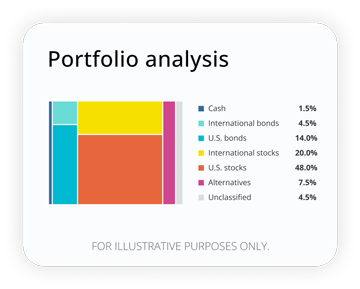
How well are your investments performing?
Analyze your portfolio in minutes and receive a target allocation for your goals.
RO5059690-1225
 Get The Currency newsletter


Lindsey Shinners, CFP®
Contributor
Lindsey Shinners is a Senior Wealth Advisor & Practice Lead at Empower. A CERTIFIED FINANCIAL PLANNER™ professional, she provides proactive, holistic financial guidance across a wide range of topics including investment management, financial planning, and more.
The content contained in this blog post is intended for general informational purposes only and is not meant to constitute legal, tax, accounting or investment advice. You should consult a qualified legal or tax professional regarding your specific situation. No part of this blog, nor the links contained therein is a solicitation or offer to sell securities. Compensation for freelance contributions not to exceed $1,250. Third-party data is obtained from sources believed to be reliable; however, Empower cannot guarantee the accuracy, timeliness, completeness or fitness of this data for any particular purpose. Third-party links are provided solely as a convenience and do not imply an affiliation, endorsement or approval by Empower of the contents on such third-party websites. This article is based on current events, research, and developments at the time of publication, which may change over time.
Certain sections of this blog may contain forward-looking statements that are based on our reasonable expectations, estimates, projections and assumptions. Past performance is not a guarantee of future return, nor is it indicative of future performance. Investing involves risk. The value of your investment will fluctuate and you may lose money.
Certified Financial Planner Board of Standards Inc. (CFP Board) owns the certification marks CFP®, CERTIFIED FINANCIAL PLANNER™, CFP® (with plaque design), and CFP® (with flame design) in the U.S., which it authorizes use of by individuals who successfully complete CFP Board's initial and ongoing certification requirements.