

The power of “ambitious budgeting”
The power of “ambitious budgeting”
Setting tighter monthly budgets may encourage more mindful spending — even when targets aren’t hit
The power of “ambitious budgeting”
Setting tighter monthly budgets may encourage more mindful spending — even when targets aren’t hit

11.10.2025

Listen
·The power of “ambitious budgeting”
Key takeaways
- Households with “ambitious” budgets could potentially reduce spending by about 22%
- The small gap between intention and outcome may encourage mindful spending and lasting habit changes
- Overly early or inflexible budgets can lose influence if they’re set before spending decisions occur
Some households are rethinking what a “realistic” budget looks like — and aiming lower on purpose.
Setting tight, even overly ambitious monthly budgets may lead to better financial outcomes. A study of 350 million transactions found that people with optimistic budgets, with targets below their usual spending habits, spent around 22% less than those with no budget.1 This reduced spending lasted several months for some participants, even when they went above their budgets.
The gap between intentions and outcomes may be what makes this strategy successful. Even when people don’t hit these targets, they often spend less than they would otherwise. Households trying to cut back without overhauling their entire lifestyle may benefit from ambitious budgets, as they can create just enough friction to change habits.
The power of budgeting optimism
Other studies may support this notion. One project tracked eye movement when people were asked to decide whether to buy small consumer items as they looked at their remaining budget on a screen.2 When the budget amount was large, eye movement was rapid and people often made faster, more frequent purchases, paying less attention to price. When the budget was smaller, decision-making slowed and participants compared prices more often. This resulted in steadier eye movements on-screen and fewer impulse buys. In this way, researchers suggest that visible budget information could act as a mental brake, and that visual attention to a budget could become a form of budgeting restraint itself.
The gap between intentions and outcomes may be what makes this strategy effective. Even when people don’t meet their budget goals, they tend to reduce spending versus having no budget at all. Other research suggests that the way people mentally organize spending categories, often as a hierarchy, plays a role in how they adjust their behavior.3 When consumers overspend in one area, they’re more likely to cut back on similar categories in their mental map (for example, adjusting takeout spending after overspending on groceries). Since people tend to rebalance budgets through adjacent categories, a well-structured budget could help make the most of these groupings. This could nudge behavior in realistic ways, even when targets aren't fully met.
There are limits to how far optimism could stretch, however. Overshooting can backfire if budgets are set too early, rather than too aggressively.4 When budgets are created long before a spending decision, people may treat them as theoretical, rather than binding.
Read more: 5 building blocks of financial literacy
The importance of budgeting feedback
What happens after setting a budget could be as important as how it starts. Seeing how spending compares to goals in real time may increase follow-through. In one study, households that tracked expenses regularly were more likely to make course corrections throughout the month, rather than abandoning their budgeting efforts.5
This tracking may be most effective when paired with timely and relevant feedback. In one experiment, reminders arriving only after people had already overspent went largely ignored.6 Researchers found that earlier, more specific cues (like how close someone is to hitting a target) helped participants stay engaged and adjust their budget in real time.
Budgeting may have various outcomes depending on the individual or household. Americans are actively tracking their finances, according to Empower findings, with 17% looking at their accounts multiple times a day. Almost a quarter (24%) check their bank account daily. Of that group, 19% say they have created a successful budget; the same percentage have created a spending plan for their expenses.
In some cases, real-time updates about a person’s remaining budget made them more likely to spend the remaining balance, treating notifications like prompts rather than guardrails.7 Other research suggests that the frequency of engagement mattered more than budgeting itself. Households that monitored their budgets more frequently reported lower financial well-being.8 Research suggests that the message and timing matter when helping people stay on-budget. Finding the sweet spot, albeit a challenge, may be the key to maximizing budgeting efforts.
Read more: Gen X set to drive spending by $15.2 trillion in 2025
Structure is a key to budgeting success
The more surprising truth may be that budgeting’s strength lies not only in target setting, but also how the commitment is put into action. An effective budget may act as a self-imposed contract. A budget limit that is challenging enough require attention, while remaining flexible enough to adapt, can help encourage self-control while still affording unexpected costs.
One consistent pattern emerges across multiple studies on budgeting: Attempts to curb spending don’t have to be perfect. Only 46% of people say they’re actively learning about money management, according to Empower findings, and under a quarter (23%) feel they are financially educated. This could underscore how fragile budgeting follow-through might be. Budgets may need to be visible, structured, and grounded in data to succeed. Ambitious targets can prompt meaningful change, especially when paired with frequent tracking and a clear feedback loop. The structure itself, rather than the numbers, may be what helps shift behavior over time.
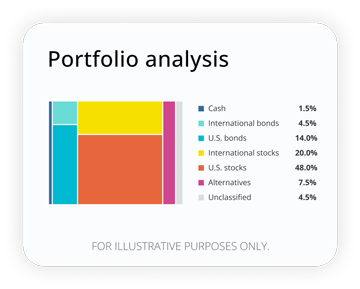
How well are your investments performing?
Analyze your portfolio in minutes and receive a target allocation for your goals.
1 UVA Today, "Here’s How To Build a Better Personal Budget," August 2024
2 Journal of Economic Psychology, "Eyes on the account size: Interactions between attention and budget in consumer choice," August 2023
3 University of Chicago Becker Friedman Institute for Economics, "Consumers’ Mental Representation of Expenditures: Implications for Spending and Savings Decisions," September 2024
4 CEPR, "Budget Depreciation: When Budgeting Early Increases Spending," November 2020
5 University of St Andrews School of Management, "The Influence of Budgets on Consumer Spending," February 2023
6 CEPR, "Budget Depreciation: When Budgeting Early Increases Spending," November 2020
7 CEPR, "Dynamic Budget Monitoring: When Access to Budget Feedback Leads to Increase in Spending," September 2020
8 Journal of Economic Behavior and Organization, "How consumers budget," July 2022
RO 4968377-1125
 Get The Currency newsletter



The Currency editors
Staff contributors
The CurrencyTM writers and editors cover the latest financial news and insights shaping how we live, work, and play. The team provides accurate, data-driven, and timely content aimed at empowering financial freedom for all.
The content contained in this blog post is intended for general informational purposes only and is not meant to constitute legal, tax, accounting or investment advice. You should consult a qualified legal or tax professional regarding your specific situation. No part of this blog, nor the links contained therein is a solicitation or offer to sell securities. Compensation for freelance contributions not to exceed $1,250. Third-party data is obtained from sources believed to be reliable; however, Empower cannot guarantee the accuracy, timeliness, completeness or fitness of this data for any particular purpose. Third-party links are provided solely as a convenience and do not imply an affiliation, endorsement or approval by Empower of the contents on such third-party websites. This article is based on current events, research, and developments at the time of publication, which may change over time.
Certain sections of this blog may contain forward-looking statements that are based on our reasonable expectations, estimates, projections and assumptions. Past performance is not a guarantee of future return, nor is it indicative of future performance. Investing involves risk. The value of your investment will fluctuate and you may lose money.
Certified Financial Planner Board of Standards Inc. (CFP Board) owns the certification marks CFP®, CERTIFIED FINANCIAL PLANNER™, CFP® (with plaque design), and CFP® (with flame design) in the U.S., which it authorizes use of by individuals who successfully complete CFP Board's initial and ongoing certification requirements.