

How to buy an IPO: A step-by-step guide
How to buy an IPO: A step-by-step guide
Investors can get in on an initial public offering at the offer price or after trading starts. Learn how allocations work, what to research, and the risks to consider
How to buy an IPO: A step-by-step guide
Investors can get in on an initial public offering at the offer price or after trading starts. Learn how allocations work, what to research, and the risks to consider
09.08.2026
Key takeaways
- There are two main ways to buy an IPO — requesting shares at the IPO price through a participating brokerage or buying the stock at the market price once public trading begins.
- Access and eligibility for an IPO vary, and you may receive all, some, or none of the shares you request.
- When considering an IPO, it’s important to research the company, understand the risks, and assess how the investment fits with your goals, risk tolerance, and overall portfolio.
When a private company becomes a public one, it offers its shares to the public for the first time as an initial public offering (IPO). This allows it to raise capital from public investors.
For some, the idea of buying an IPO may seem like an exclusive opportunity. While the process is less straightforward than simply looking up a stock ticker and clicking “buy,” individual investors do have two main ways in.1
IPOs can be risky by nature. Here’s what to know before buying one.
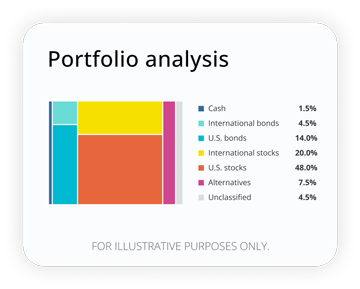
How well are your investments performing?
Analyze your portfolio in minutes and receive a target allocation for your goals.
How buying an IPO works
There are two routes for investors to buy an IPO. Typically, an investment bank serves as an underwriter to manage, market, and sell the IPO.2 If you’re a customer of one of those firms, you may be able to request shares at the public offering price. But access can be limited, and requesting shares doesn’t mean you’ll get them. Institutions often distribute most IPO shares to high net worth and institutional clients.3
A simpler and more common option is to wait until the stock begins trading publicly and buy it through your brokerage account at current market price.4
At IPO allocation | After trading starts | |
Price | Public offering price | Current market price |
Access | Limited and broker-dependent | Generally available once trading starts |
Guaranteed? | No — you may get some, all, or none of the shares requested | Execution depends on your order and market conditions |
The IPO price isn't the same as the stock's opening price. The IPO price is set by the company and the underwriters before public trading begins. The offering price may be very different from the subsequent trading price — once the stock starts trading, the price can fluctuate almost immediately.
For illustration purposes, say a hypothetical IPO is priced at $20 per share. When public trading starts, high demand pushes the opening price to $26. Investors who received an IPO allocation pay $20; investors buying once trading begins may pay $26 or another market price. Conversely, a stock can also open — or later fall — below its IPO price.
Read more: What is an IPO? Initial public offerings explained
How to buy IPO shares at the offer price
If you want an opportunity to buy an IPO before regular trading starts, the process generally follows a few steps (but the details can vary by institution and offering).
1. Find out if your brokerage offers the IPO
Not every brokerage gets access to every deal. You may be able to see what’s available if your brokerage features IPO or “new issues” information on their site. If you’re newer to investing, start by familiarizing yourself with how a brokerage account works.
2. Check whether you’re eligible
Brokerages may have requirements for participating in an IPO. Eligibility may depend on your account type, investing experience, assets, available cash, or other factors.5 Again, rules can vary by brokerage and offering.
3. Do your homework
IPOs can be surrounded by some buzz — so before making a move to buy one, it’s important to do some research. Companies conducting IPOs file a registration statement with the SEC that includes a prospectus. For many U.S. companies, this is filed on Form S-1.6 They’re available to the public through the SEC's Electronic Data Gathering, Analysis, and Retrieval (EDGAR) database. This information can help you distinguish the business story from any possible hype.
As part of your research you may want to focus on some key areas:7
- The business: How does the company actually make money?
- Financials: What do the company’s revenue, profits, cash flow, and debt look like?
- Risk factors: What are the risks that could derail the company’s plans?
- Use of proceeds: Where is the IPO money going?
- Competition: What makes the company different — and can that advantage last?
- Management and ownership: Who will control the company after the IPO?
- Valuation: Does the price make sense compared with similar public companies?
The SEC reviews IPO disclosures as part of the registration process, but that doesn’t mean it approves or recommends the investment.
4. Request shares
If you’re eligible to participate, your brokerage may ask you to submit an indication of interest or conditional offer to buy.8 Essentially, this is a statement expressing how many shares you’d like to buy or how much money you’d like to invest. Underwriters can use these requests to help gauge investor demand for an IPO. It’s important to note that requesting shares doesn’t guarantee you’ll get them.
5. Watch for pricing and confirmation
Once the IPO price has been set, you can check the company’s final prospectus for details, available through the SEC’s EDGAR database. Your brokerage firm may also provide pricing information and any next steps if you requested shares.
6. See what you got
IPO shares can be limited, especially when demand is high. You may get your full request, a smaller allocation, or potentially no shares at all. If you do receive shares, check your brokerage’s rules before making your next move. Some brokerage IPO programs may discourage selling allocated IPO shares soon after trading begins, a practice known as “flipping.”9 Selling shares quickly could affect your ability to participate in future IPOs, depending on the brokerage’s policies.
How to buy IPO stock after it starts trading
Once an IPO starts trading on an exchange such as the NYSE or Nasdaq, investors can generally buy shares just as they would other publicly traded stocks. However, an IPO may not begin trading right at the opening bell — and its first market price can look very different from its offering price.
When purchasing on the secondary market, you'll also need to choose an order type.10 A market order prioritizes getting the trade executed but doesn't guarantee the price. A limit order lets you set the maximum price you're willing to pay, but the trade may never go through. This distinction of how your order is executed can matter — particularly on a busy first trading day, when prices may move quickly.11
Read more: Understanding IPOs: What is an IPO and its benefits?
What are the risks of buying an IPO?
There’s risk associated with any investment — and getting in early on a new stock can come with extra uncertainty and price volatility. Newly public companies may have a limited track record under the public-market microscope. Their shares can be especially volatile as investors work out what the business is worth. Certain existing shareholders, such as company insiders and other pre-IPO investors, may be subject to lock-up agreements — a temporary limit on selling for a period following the IPO.12 This can potentially add more shares to the market when those restrictions expire.
There’s also a more familiar investing risk: putting too many eggs in one basket. An IPO is still an individual stock, and its value potentially can rise above or fall below what you paid.
Final thoughts
An IPO may feel like a one-time event, but becoming a public company is just the beginning of its life on a stock exchange. Investors may have plenty of opportunities to buy later when the decision is driven more by the business than any IPO excitement. Whatever you decide, these basics are the same: Know what you're buying, understand the risks, and consider how the investment fits into your bigger financial picture.
IPO FAQs
How much should you invest in an IPO?
There’s no magic number. Instead, look at how an IPO fits into your bigger financial picture. For example, would buying it make one company or industry a large part of your portfolio? Is this money you might need soon? Could you handle a substantial — or even complete — loss? Your risk tolerance, time horizon, and portfolio diversification can all help put the decision in perspective. It can also be helpful to ask whether you’d want to own company if nobody were talking about its IPO. If you’re unsure, it may be worth doing a little more homework.
Can anyone buy shares in an IPO?
Individual investors may be able to request shares at the IPO price through a brokerage participating in the offering. However, eligibility requirements vary and shares can be limited. Once the stock begins publicly trading, anyone can generally buy it through a brokerage like other publicly traded stocks.
What if you don’t get IPO shares?
If your request for IPO shares results in a lower (or no) allocation, you can wait for the stock to begin trading. This gives you an opportunity to reassess the price. You can also follow the company’s earnings and public filings and wait to invest until it has a longer track record as a public company. Or you may even decide not to invest at all.
Is the IPO price the same as the opening price?
The IPO price and opening price often can be different. The IPO price is set before public trading begins and is the price paid by investors who receive shares in the offering. Once trading starts, supply and demand determine the market price, which may be higher or lower than the IPO price.
Can you sell IPO shares immediately?
Investors generally can sell allocated shares once public trading begins. But some brokerage IPO programs have policies intended to discourage quick selling, or “flipping.” Selling quickly could affect future IPO access, depending on the broker and offering. Check your brokerage’s current rules.
Investing involves risk, including possible loss of principal. This content is intended for general informational purposes and is not intended to constitute investment, legal, tax or accounting advice.
1 Securities and Exchange Commission, “Investor Bulletin: Investing in an IPO,” accessed August 2026.
2 Ibid.
3 Ibid.
4 Ibid.
5 Securities and Exchange Commission, “Initial Public Offerings: Eligibility to Get Shares at Broker-Dealers, accessed August 2026.
6 Securities and Exchange Commission, “Investor Bulletin: Investing in an IPO,” accessed August 2026.
7 Ibid.
8 Ibid.
9 Ibid.
10 Securities and Exchange Commission, “Types of Orders,” accessed August 2026.
11 Securities and Exchange Commission, “Executing an Order,” accessed August 2026.
12 Securities and Exchange Commission, “Initial Public Offerings: Lockup Agreements,” accessed August 2026.
RO5889076-0926
 Get The Currency newsletter


The Currency editors
Staff contributors
The CurrencyTM writers and editors cover the latest financial news and insights shaping how we live, work, and play. The team provides accurate, data-driven, and timely content aimed at empowering financial freedom for all.
The content contained in this blog post is intended for general informational purposes only and is not meant to constitute legal, tax, accounting or investment advice. You should consult a qualified legal or tax professional regarding your specific situation. No part of this blog, nor the links contained therein is a solicitation or offer to sell securities. Compensation for freelance contributions not to exceed $1,250. Third-party data is obtained from sources believed to be reliable; however, Empower cannot guarantee the accuracy, timeliness, completeness or fitness of this data for any particular purpose. Third-party links are provided solely as a convenience and do not imply an affiliation, endorsement or approval by Empower of the contents on such third-party websites. This article is based on current events, research, and developments at the time of publication, which may change over time.
Certain sections of this blog may contain forward-looking statements that are based on our reasonable expectations, estimates, projections and assumptions. Past performance is not a guarantee of future return, nor is it indicative of future performance. Investing involves risk. The value of your investment will fluctuate and you may lose money.
Certified Financial Planner Board of Standards Inc. (CFP Board) owns the certification marks CFP®, CERTIFIED FINANCIAL PLANNER™, CFP® (with plaque design), and CFP® (with flame design) in the U.S., which it authorizes use of by individuals who successfully complete CFP Board's initial and ongoing certification requirements.