


Taking Stock - September 17, 2025 FOMC Meeting
Taking Stock - September 17, 2025 FOMC Meeting
Taking Stock - September 17, 2025 FOMC Meeting
This is consistent with near term concerns around the labor market, but it doesn't suggest a material deterioration in the economy.
The Fed lowered rates by twenty five basis points or a quarter of a percent as expected today, but the real question center around how the Fed's view of the economy has shifted and what this really means for the path of rates going forward. Marta, you just watched the press conference coming out of the meeting today and that press conference. How would you describe the Fed's view of the economy?
Well, there's been an interesting shift since July. In July, the sense was one of balance. The Fed used the word uncertainty, but emphasized a solid labor market. Meanwhile, the Fed was watching the tariff effect, but generally thought the impact on inflation would be transitory.
Of course, we had two dissents, but the broader sense of the Fed was one of patience. In fact, in the last summary of economic projections, seven participants anticipated no cuts at all in twenty twenty five. So that sets the stage for today where the Fed shared a much more cautious tone on the labor market focused on the downside risks, but here is something interesting. The estimate for GDP actually moved up a bit from the summer.
The Fed also continue continued to emphasize the upside risk to inflation.
So while the Fed pointed to the labor market as the reason for lower rates, it was perhaps an aggregate a bit less dovish than the market hoped.
And we know Paul works really hard to try to keep the committee aligned. Does it seem like we saw consensus among fed officials with this one?
So we had one more descent this month compared with two last meetings. So perhaps there was a bit more consensus around this particular decision, But the forward expectations, particularly for twenty twenty six, that range is quite wide and it speaks to the conflict that exists between these two different mandates and perhaps a bit of the ingrained bias of each individual to maybe give more weight to one mandate over the other. It also gives us a sense for how opaque the evidence is. We have collapsing payrolls, but not a pickup in layoff, and we have a decline in labor supply as well.
Meanwhile, inflation has made minimal progress to the Fed's two percent goal even without the tariff effect. So how much weight should the committee give to that stall in inflation? I think it's it's hard to say. So while monetary policy is always complicated, today it seems more complex than ever.
Yeah. The data is essentially pulling the fed in in two different directions. Let's talk a little bit, Marta, about the path of rates from here. How has that changed and what are your expectations?
So another compare and contrast. Previously, the fed had roughly two cuts penciled in over twenty twenty five and one in twenty twenty six. With that longer term fed funds rate average expectation of roughly three percent, that's a pretty modest expectation.
Today, the fed is projecting three cuts in twenty twenty five and that's including today's cut and maybe one to two in twenty twenty six. And this is consistent with near term concerns around the labor market, but it doesn't suggest a material deterioration in the economy. And it also still doesn't meet market expectations for rates to fall below that three percent long term fed funds rate by this time next year. Of course, if the committee makeup changes materially, we could see a far more dovish decision making.
So why is the market projecting rates to fall so much faster? Do you think.
Remember the market has projected greater cuts throughout this period and has consistently had to lower its spec expectations to meet those of the fed. So there is some bias that we can observe there, but ultimately if you look at performance of asset classes, the strong rung in the equities that we've seen this year suggest stock investors aren't overly concerned about the economy while the future is pricing suggests rates should come down. And when you put those two views together, perhaps the market is saying inflation is a non issue and the federal will be lowering rates because inflation swiftly falls back to two percent and not because the labor market falls apart.
Do you share that market optimism?
Well, not entirely. Inflation has been much stickier than economists or investors anticipated. We don't have a big tariff impact in the numbers, yet we are seeing very little progress on the inflation front. For me, that reinforces this idea that we shouldn't assume we have perfect knowledge on the timing of how economic conditions may change. In essence, I think at this particular moment when there are so many economic variables pointing in different directions, we should plan for a range of outcomes rather than having perfect confidence in how things play out.
So Marta, given all the uncertainty is diversification the right play here, do you think?
I would argue to some degree. I also think investors need to keep assets in their portfolios that respond differently depending on how the economy shakes out. So in my view, yes, have AI exposure there, but also have areas that look a bit cheaper, like small caps or healthcare, which respond differently to economic conditions. For example, historically healthcare has tended to be, more defensive and difficult market environments. Meanwhile, small caps have historically tended to do better if economic growth surprises to the upside.
And we know you'll be tracking the data very closely as it comes in over the next couple of weeks and months. Marta, thank you so much. Marta and her team just put the finishing touches on her q four outlook. We're gonna be back soon to share her deep dive on what to expect for the rest of the year. We'll see you soon.
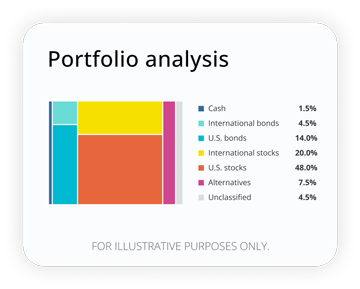
How well are your investments performing?
Analyze your portfolio in minutes and receive a target allocation for your goals.
 Get The Currency newsletter
News and know-how for whatever money decision comes next.
*If you’re already registered with Empower, please use the same email address as your existing account.